
This post contains affiliate links. As an Amazon Associate I earn from qualifying purchases.
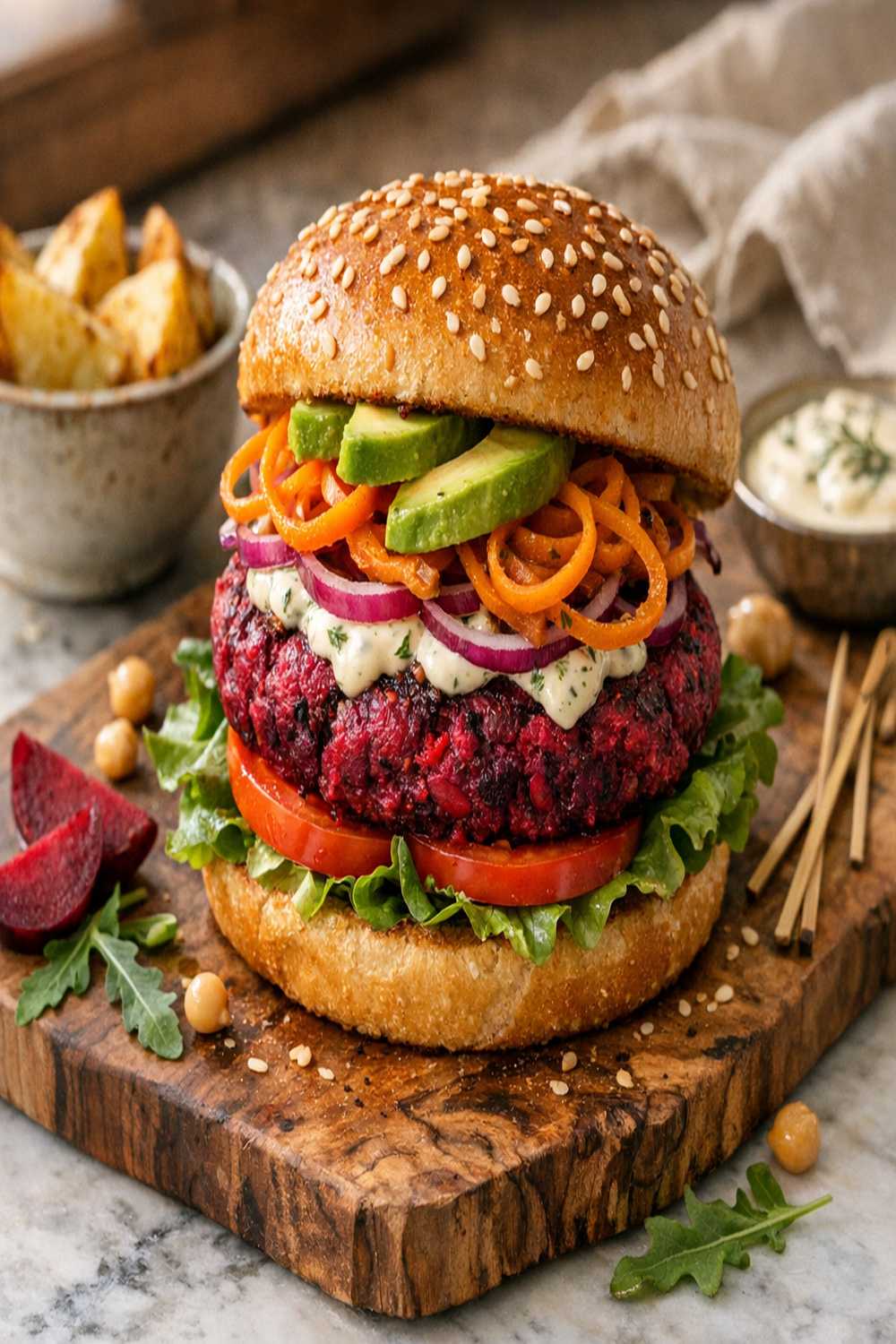
I’ll never forget the first time my cousin Marco came to a family gathering after going vegetarian. My abuela nearly had a heart attack—she thought he’d waste away without her famous carne guisada. But I saw an opportunity. I spent that afternoon in my kitchen experimenting with beets, lentils, and pantry staples, determined to create something so delicious that even the meat-lovers at our table would ask for seconds. What emerged was this beet veggie burger: earthy, naturally sweet, and somehow more satisfying than I expected. If you’ve struggled with veggie burgers that taste like cardboard or fall apart the moment you pick them up, I understand. I’ve been there. But I’ve also learned the exact techniques that transform humble root vegetables into hearty, flavorful patties that hold together beautifully—and taste genuinely good. Similar plant-forward creations like my Black Bean And Sweet Potato Burger Recipe follow the same tested principles you’ll learn here.
Why Your Veggie Burgers Fall Apart (And How to Fix It)
Here’s what I’ve observed after years of working with clients on plant-based eating: most homemade veggie burgers fail for one simple reason—too much moisture and not enough binding structure. When people grate fresh vegetables, they don’t account for the water content. The patty stays wet, refuses to hold together during cooking, and crumbles when you bite into it. It’s frustrating because you’ve invested time and ingredients into something that literally falls apart.
As a registered dietitian, I’ve learned that moisture management and proper binder selection are everything in veggie burger construction. This isn’t just home cooking wisdom—it’s food science. The beets in this recipe are grated raw, yes, but we’re combining them with the right ratio of binding ingredients: rolled oats for structure, lentils for protein and density, and flour for cohesion. The result? Patties that stay intact from pan to plate, with a tender interior and a satisfying exterior crust.
What Makes This Beet Veggie Burger Recipe Different?
Most veggie burger recipes rely heavily on processed binders like bread crumbs or extra flour, which creates a dense, bread-like texture. Instead, I use large-flake rolled oats as the primary structural ingredient. Oats have a natural binding capacity because of their beta-glucan content—a soluble fiber that helps hold everything together without making the burger feel heavy or dry. The oats also create a pleasant, slightly chewy texture that mimics the feel of a traditional burger.
The second game-changer is using cooked lentils rather than raw beans. Canned lentils work beautifully here because they’ve already been softened and partially broken down during cooking, which means they meld into the mixture more effectively than whole beans would. This creates a more cohesive patty while adding about 9 grams of plant-based protein per serving—nutritionally significant for anyone looking to maintain satiety throughout the day.
Finally, I’ve added a small amount of natural peanut butter. This isn’t about flavor dominance—you won’t taste peanut—but rather about emulsification. The fat in peanut butter helps bind the other ingredients together at a molecular level, similar to how an egg would function in a traditional burger.
Before You Start: What You Need to Know
I always share two critical insights with clients before they begin this recipe, because they make the difference between success and frustration.
- Raw beets contain significant water content—approximately 87% by weight. Don’t be tempted to squeeze the moisture out, as this removes valuable nutrients and fiber. Instead, trust that the oats and lentils will absorb excess moisture during mixing and resting. The slight moisture is what keeps these patties tender rather than dense.
- Wet hands are your secret weapon for shaping—a tip I learned from professional test kitchens. When your hands are damp, the mixture won’t stick to your skin the way it does with dry hands. This prevents constant re-washing and frustration. The water creates a barrier between your skin and the sticky mixture, allowing you to form clean, even patties.
The Ingredients
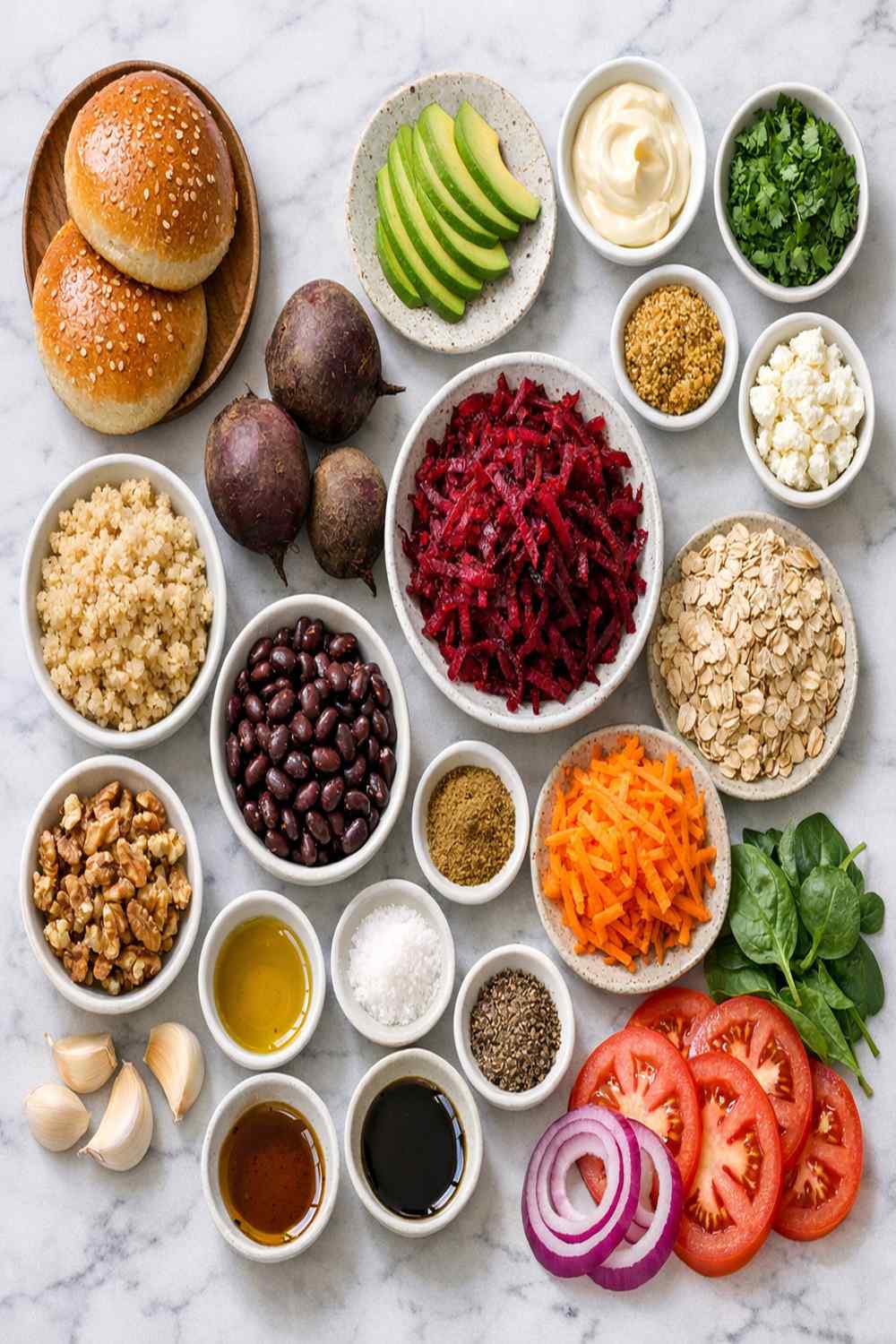
I’ve chosen each ingredient in this recipe for a specific purpose—nothing is arbitrary. The beauty of this burger is that it showcases whole food ingredients, which means better nutrition and genuine flavor. Let me walk you through why each component matters.
- 1/2 cup all-purpose flour (or whole wheat flour if you prefer earthier flavor and additional fiber content)
- 1/2 cup cooked lentils (canned varieties work perfectly and save time while delivering plant-based protein and fiber)
- 2 teaspoons dried thyme (an herb that complements both the earthiness of beets and the richness of the overall preparation)
- 2 cups shredded raw peeled beets (approximately 2 medium whole beets, which provide natural earthiness, folate, and manganese while keeping the mixture moist)
- 1/4 teaspoon fresh ground black pepper (coarser grind than pre-ground for better texture distribution)
- 2 cloves garlic (minced to a paste consistency for even distribution throughout the mixture)
- 2 tablespoons olive oil (for cooking the patties, divided between batches)
- 1/2 teaspoon sea salt (adjusted for taste, especially if using unsalted canned lentils)
- 1 tablespoon natural peanut butter (unsweetened and unsalted, acting as a binder rather than a flavoring agent)
- 3/4 cup large-flake rolled oats (not instant or quick oats, which break down too much and create a mushy texture; large flakes maintain structural integrity)
- 1/4 cup diced yellow onion (finely chopped to distribute flavor evenly without creating chunks that prevent proper binding)
Expert’s Nutritional Tip: The combination of lentils and oats creates a complete amino acid profile, meaning this burger provides all nine essential amino acids your body cannot manufacture. This is particularly important for anyone reducing animal protein, as it ensures you’re meeting your protein requirements without supplementation.
Step-by-Step: How to Make Beet Veggie Burger Recipe Without Fail
I’ve tested this recipe dozens of times, and I’m confident you can execute it perfectly on your first attempt. The key is following each step with intention—reading through before you begin, gathering your ingredients, and understanding the purpose behind each action. Let’s go through this together.
Step 1: Prepare Your Beets and Gather All Ingredients
Start by washing 2 medium beets thoroughly under cool running water, scrubbing away any soil with your hands or a vegetable brush. Pat them dry completely with paper towels—this reduces splashing and mess. Using a vegetable peeler or paring knife, remove the thin outer skin. The skin of raw beets can stain permanently, so wear an apron or clothing you don’t mind potentially discoloring. Cut the peeled beets into chunks small enough to fit through your food processor’s feed tube, or into wedges if using a box grater.
Take a moment to measure out all remaining ingredients into small bowls—onion chopped, garlic minced, lentils drained (if using canned, rinse them briefly under cool water to remove excess sodium). This mise en place approach prevents scrambling mid-process and ensures even distribution of seasonings.

Step 2: Grate the Beets
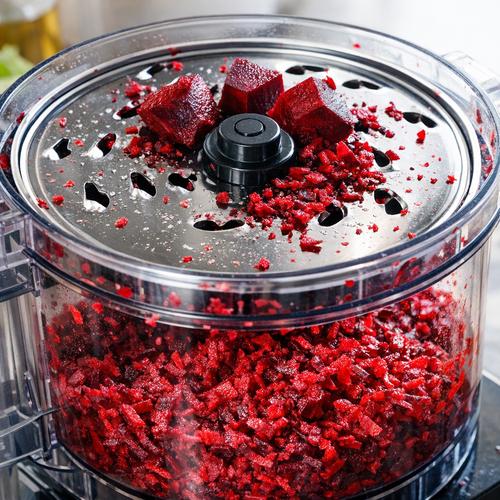
If your food processor has a shredding disk or grater attachment, this is the ideal moment to use it. Process the beet chunks through the shredding disk directly into the food processor’s main bowl—this saves a step and keeps the beets’ vibrant color intact. The beets should be uniformly shredded, not mushy or pureed.
If you’re using a traditional box grater, work over a large mixing bowl, using the medium or large holes. Grate carefully, protecting your fingertips—I recommend stopping when you have about 2 inches of beet remaining, then simply reserving that small piece for another use rather than risking injury. The shredded beets will immediately release moisture, creating a pool of bright magenta liquid in the bottom of your bowl. This is completely normal and desired.
Step 3: Add All Remaining Ingredients to the Food Processor
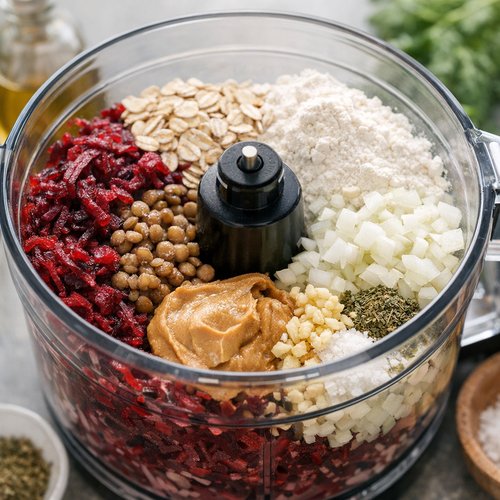
Once your beets are shredded, add the rolled oats, cooked lentils, all-purpose flour, chopped onion, minced garlic, peanut butter, dried thyme, salt, and pepper directly to the food processor. Do not add the olive oil at this stage—you’ll need it only for cooking. The mixture will look loose and somewhat chaotic at this point, and that’s expected.
Step 4: Pulse Until the Mixture Comes Together
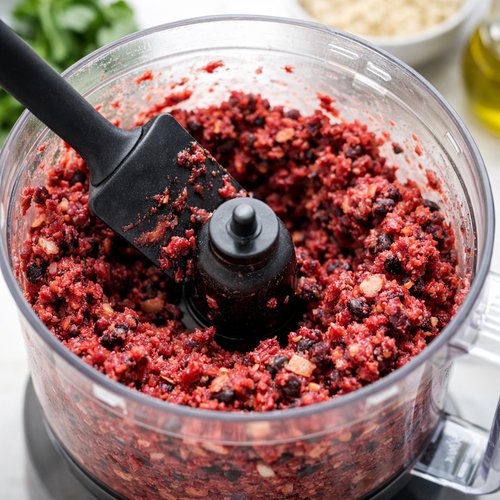
Pulse the mixture 8 to 10 times, stopping to scrape down the sides of the food processor bowl with a rubber spatula after every 2 to 3 pulses. You’re looking for a cohesive texture where ingredients are evenly distributed but the mixture still maintains some texture—not a smooth puree. If you over-process, the oats break down completely and create a dense, bread-like consistency that won’t cook properly.
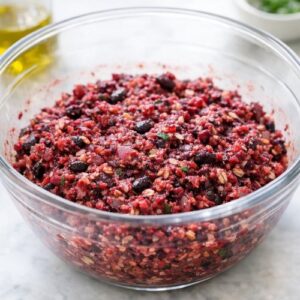
The finished mixture should resemble thick hummus or coleslaw—it should hold together when you squeeze a handful, but you should still see small flecks of oats and lentil pieces. If the mixture feels too wet and won’t hold a shape, add 2 to 3 tablespoons additional flour and pulse once more. If it feels too dry, add 1 to 2 tablespoons of water.
Step 5: Form the Patties
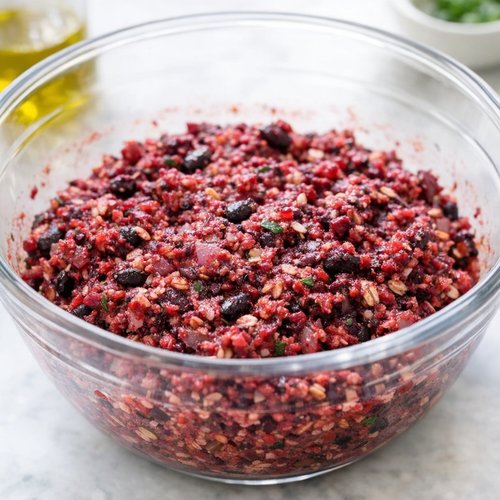
Turn the mixture out into a bowl and let it rest for 5 minutes. This allows the oats to fully absorb moisture and the mixture to become more cohesive. While waiting, fill a small cup with cool water—this is your “wet hands” station.
Divide the mixture into 4 equal portions (roughly 3/4 cup each). Dip your hands into the water cup until they’re visibly wet but not dripping. Take one portion and form it gently into a patty approximately 3/4 inch thick and 4 inches in diameter. The key is gentleness—overworking the patty creates density. Re-wet your hands between each patty. Your hands will naturally cool the mixture, which helps with binding.
Place finished patties on a parchment-lined plate. Once all four patties are formed, refrigerate them uncovered for at least 30 minutes. This resting period is crucial—it allows the binders to fully set, creating structural integrity. Cold patties are significantly less likely to fall apart during cooking.
Step 6: Cook the Patties
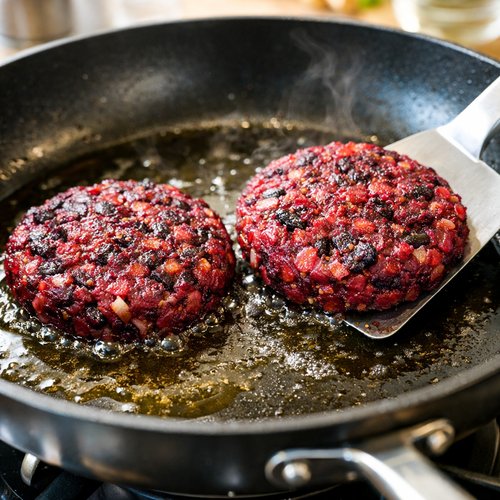
Heat 1 tablespoon olive oil in a large skillet over medium-high heat. Once the oil is shimmering (approximately 30 to 45 seconds), carefully place 2 patties in the pan, leaving space between them. Do not move them for the first 4 to 5 minutes—this allows the exterior to develop a golden crust and firm up, which prevents falling apart.
After 4 to 5 minutes, peek underneath using a thin spatula. The bottom should be deep golden brown, almost mahogany-colored. Flip carefully and cook the second side for another 3 to 4 minutes until similarly browned and crispy. Remove to a plate and repeat with remaining patties, adding another 1 tablespoon oil to the pan.
The Most Common Mistakes (And How to Avoid Them)
- Using instant or quick oats instead of large-flake rolled oats—Instant oats break down during processing and create a mushy, dense patty that lacks structure. Large-flake oats maintain their integrity and create that satisfying chewy texture. Always check the package label.
- Squeezing excess moisture from the shredded beets—I see this constantly with clients who’ve made dry, mealy burgers elsewhere. The water content in beets is necessary for moisture and tenderness. Trust the process. The binding ingredients will manage it.
- Over-processing the mixture into a puree—This creates a dense, heavy burger that tastes more like a veggie loaf than a burger. You want visible texture. Stop when you still see small flecks of ingredients.
- Cooking patties straight from the mixing bowl without chilling—Warm patties lack structural integrity and fall apart easily. The refrigeration step is non-negotiable for success.
How Do I Know When It’s Done?
Unlike traditional beef burgers where doneness is about internal temperature, veggie burgers are about texture and structural integrity. Your patties are ready when the exterior is deeply golden brown and crispy to the touch—it should have a slight resistance when you press it with your finger. The crust should feel almost charred, though not burnt.
Inside, the burger should be warm throughout and hold together when you pick it up. If you cut into a test patty, the interior should be cohesive and moist, never dry or crumbly. A properly cooked beet burger will have a slightly yielding center and a firm, caramelized exterior. The cooking process typically takes about 8 to 9 minutes total—4 to 5 minutes per side.
Another way to assess doneness: the burger should release easily from the pan when you try to flip it. If it’s sticking, it needs more time to develop its crust. Patience here prevents the falling-apart problem entirely.
Troubleshooting: When Things Go Wrong
- Patties are crumbly or falling apart during cooking—Your mixture likely didn’t chill long enough, or the proportions were off. The fix: if you notice this happening mid-cook, carefully remove the patty from heat and slide it onto a plate. Let it cool for 2 to 3 minutes, then attempt flipping more gently. In the future, ensure full 30-minute refrigeration and verify you’re using the exact measurements, particularly the oats and flour ratios.
- Exterior is burning but interior remains cool—Your heat is too high. Reduce to medium instead of medium-high and give each side a full 5 to 6 minutes. Lower heat, longer cooking, equals better results with veggie patties.
- Patties taste bland or one-dimensional—You may have skipped or under-measured the seasonings. Thyme, salt, and garlic are essential. The good news: you can fix this at the next cooking stage by serving with a flavorful condiment—I recommend a garlicky aioli or herbed cream cheese.
Can I Store Beet Veggie Burger Recipe?
Yes, and I love this about this recipe because it’s perfect for meal prep. Uncooked patties keep in an airtight container in the refrigerator for up to 3 days. They can also be frozen for up to 3 months—simply place them on a parchment-lined baking sheet, freeze until solid (about 2 hours), then transfer to a freezer bag. Frozen patties can go straight into the skillet with no thawing needed; simply add 1 to 2 minutes to each cooking side.
Cooked patties keep refrigerated for up to 4 days in an airtight container. Reheat gently in a 350°F oven for about 8 minutes rather than the microwave, which can make them soggy. To freeze cooked patties, wrap each one individually in parchment paper, then place in a freezer bag for up to 2 months.
Make-Ahead Guide: I recommend making the uncooked patties on Sunday evening and refrigerating them. Throughout the week, you can cook them fresh as needed—they only take 9 minutes total from start to plate. This approach means you’ll always have a quick, nutritious lunch or dinner option available. Alternatively, cook all four patties at once and refrigerate, then reheat individual patties as you use them.
Nutrition Information
Based on USDA FoodData Central, one beet veggie burger patty (approximately 180 grams) contains approximately 220 calories, 9 grams of complete plant-based protein, 8 grams of dietary fiber, and only 4 grams of total fat. The fiber content is particularly noteworthy—that’s roughly 32% of the daily recommended value per patty, which supports digestive health and creates the satiety that keeps you satisfied for hours.
The beets provide betalains, a type of phytonutrient with demonstrated anti-inflammatory properties in scientific literature. The lentils contribute polyphenols and additional fiber. Together, this burger isn’t just satisfying; it’s genuinely nourishing at a cellular level. The combination of protein, fiber, and healthy carbohydrates makes this an excellent option for stabilizing blood sugar throughout the afternoon.
What Can I Serve With Beet Veggie Burger Recipe?
I love serving these burgers on toasted whole grain buns with crispy lettuces and sliced tomato, but here are my favorite complete meal combinations based on client feedback and family preferences:
- On a hearty whole grain bun with Cashew Cheese Recipe and roasted red peppers—The creamy, tangy cashew cheese complements the earthy beets beautifully, and the peppers add brightness and vitamin C.
- As a Buddha bowl base with Brunch Potato Recipe Make Ahead, fresh spinach, and a tahini dressing—This transforms the burger into a deconstructed, nutrient-dense meal perfect for lunch prep.
- Between Biscuit Recipe Vegan instead of traditional buns—For a truly elevated, special-occasion burger experience.
- Alongside roasted sweet potatoes and a simple green salad—For a balanced, complete dinner with vegetables, whole grains, and plant-based protein.
- Topped with caramelized onions and fresh herbs like cilantro—The sweet, deep flavors of caramelized onions mirror the natural sweetness of the beets and create complexity.

Beet Veggie Burger Recipe
Ingredients
Method
- Start by washing 2 medium beets thoroughly under cool running water, scrubbing away any soil with your hands or a vegetable brush. Pat them dry completely with paper towels—this reduces splashing and mess. Using a vegetable peeler or paring knife, remove the thin outer skin. The skin of raw beets can stain permanently, so wear an apron or clothing you don't mind potentially discoloring. Cut the peeled beets into chunks small enough to fit through your food processor's feed tube, or into wedges if using a box grater. Take a moment to measure out all remaining ingredients into small bowls—onion chopped, garlic minced, lentils drained (if using canned, rinse them briefly under cool water to remove excess sodium). This mise en place approach prevents scrambling mid-process and ensures even distribution of seasonings.

- If your food processor has a shredding disk or grater attachment, this is the ideal moment to use it. Process the beet chunks through the shredding disk directly into the food processor's main bowl—this saves a step and keeps the beets' vibrant color intact. The beets should be uniformly shredded, not mushy or pureed. If you're using a traditional box grater, work over a large mixing bowl, using the medium or large holes. Grate carefully, protecting your fingertips—I recommend stopping when you have about 2 inches of beet remaining, then simply reserving that small piece for another use rather than risking injury. The shredded beets will immediately release moisture, creating a pool of bright magenta liquid in the bottom of your bowl. This is completely normal and desired.

- Once your beets are shredded, add the rolled oats, cooked lentils, all-purpose flour, chopped onion, minced garlic, peanut butter, dried thyme, salt, and pepper directly to the food processor. Do not add the olive oil at this stage—you'll need it only for cooking. The mixture will look loose and somewhat chaotic at this point, and that's expected.

- Pulse the mixture 8 to 10 times, stopping to scrape down the sides of the food processor bowl with a rubber spatula after every 2 to 3 pulses. You're looking for a cohesive texture where ingredients are evenly distributed but the mixture still maintains some texture—not a smooth puree. If you over-process, the oats break down completely and create a dense, bread-like consistency that won't cook properly. The finished mixture should resemble thick hummus or coleslaw—it should hold together when you squeeze a handful, but you should still see small flecks of oats and lentil pieces. If the mixture feels too wet and won't hold a shape, add 2 to 3 tablespoons additional flour and pulse once more. If it feels too dry, add 1 to 2 tablespoons of water.
- Turn the mixture out into a bowl and let it rest for 5 minutes. This allows the oats to fully absorb moisture and the mixture to become more cohesive. While waiting, fill a small cup with cool water—this is your "wet hands" station. Divide the mixture into 4 equal portions (roughly 3/4 cup each). Dip your hands into the water cup until they're visibly wet but not dripping. Take one portion and form it gently into a patty approximately 3/4 inch thick and 4 inches in diameter. The key is gentleness—overworking the patty creates density. Re-wet your hands between each patty. Your hands will naturally cool the mixture, which helps with binding. Place finished patties on a parchment-lined plate. Once all four patties are formed, refrigerate them uncovered for at least 30 minutes. This resting period is crucial—it allows the binders to fully set, creating structural integrity. Cold patties are significantly less likely to fall apart during cooking.
- Heat 1 tablespoon olive oil in a large skillet over medium-high heat. Once the oil is shimmering (approximately 30 to 45 seconds), carefully place 2 patties in the pan, leaving space between them. Do not move them for the first 4 to 5 minutes—this allows the exterior to develop a golden crust and firm up, which prevents falling apart. After 4 to 5 minutes, peek underneath using a thin spatula. The bottom should be deep golden brown, almost mahogany-colored. Flip carefully and cook the second side for another 3 to 4 minutes until similarly browned and crispy. Remove to a plate and repeat with remaining patties, adding another 1 tablespoon oil to the pan.

Notes
FAQs
Can I use fresh beet greens in this recipe?
Absolutely! If you’re buying beets with their greens attached, don’t discard those nutrient-dense leaves. Wash and finely chop about 1/2 cup of beet greens, then add them to the food processor along with the other ingredients. They’ll add extra minerals, vitamins, and a pleasant slightly bitter note that rounds out the sweetness of the beets. You may need to add slightly more flour (an additional tablespoon) to account for the extra moisture the greens introduce.
Is there a gluten-free version?
Yes! Substitute the all-purpose flour with a 1:1 gluten-free flour blend (look for brands with added xanthan gum for better binding), and use certified gluten-free rolled oats. The ratio remains the same. The finished burger will be slightly more delicate, so handle it gently during flipping, but it will work perfectly. I’ve successfully made these with Bob’s Red Mill 1:1 Baking Flour and have had excellent results.
What if I don’t have a food processor?
You can absolutely make these without one. Grate the beets using a box grater directly into a large mixing bowl. Finely mince the garlic and onion with a knife (or use a garlic press and microplane for efficiency). Then simply mix everything together with your hands, stirring thoroughly until the ingredients are evenly distributed. It takes a few extra minutes compared to the processor method, but the result is identical. Your hands actually provide excellent mixing action.
Can I add other vegetables to this recipe?
Definitely, though I’d recommend replacing rather than adding to maintain proper texture. For instance, you could use 1.5 cups shredded beets plus 1/2 cup shredded raw mushrooms (squeezed gently to remove excess moisture). Or try 1.5 cups beets plus 1/2 cup shredded carrot. Keep the total vegetable volume around 2 to 2.5 cups to maintain the proper binder-to-vegetable ratio. Any additions should be raw and finely shredded for even distribution.
Why does my burger taste a bit sweet, and is that normal?
Yes, and it’s actually one of the features that makes this burger special! Raw beets are naturally sweet—they contain about 6 to 8 grams of natural sugars per cup. During cooking, these sugars caramelize slightly, deepening the sweetness. Some people find this delightful; others prefer a more savory burger. If you’d like to reduce the sweetness, add an extra 1/2 teaspoon of salt and 1 teaspoon additional thyme to the mixture, or serve the burger with a savory condiment like mustard, horseradish cream, or a savory barbecue sauce that’s low in added sugars.
Are these suitable for a low-FODMAP diet?
Unfortunately, no. Beets are moderate in FODMAPs (particularly fructose), onions are high in FODMAPs, and garlic is very high in FODMAPs. If you’re following a low-FODMAP diet for IBS management, I’d recommend my Black Bean And Sweet Potato Burger Recipe instead, which is naturally lower in fermentable carbohydrates and includes garlic-infused oil (which is low-FODMAP) instead of raw garlic.
Seasonal Variations
Spring Version: Add finely chopped fresh dill and include raw grated asparagus (about 1/4 cup squeezed dry) to the mixture. Serve on sprouted grain bread with fresh pea shoots.
Summer Version: Reduce the thyme to 1 teaspoon and add 1 teaspoon fresh basil plus 1/2 teaspoon fresh lemon zest to the mixture. Serve with sliced heirloom tomatoes and fresh mozzarella (or Cashew Mozzarella Recipe for vegan guests).
Fall Version: Substitute 1/2 cup of the beets with finely shredded raw apple, and add 1/2 teaspoon ground cumin plus 1/4 teaspoon cinnamon to the spice profile. Serve with roasted cauliflower and a maple-Dijon aioli.
Winter Version: Add 1/4 cup finely shredded raw turnip or parsnip to the mixture, and increase thyme to 1 tablespoon. Top with sautéed mushrooms and caramelized onions for deep, earthy warmth.
More Recipes You’ll Love
- Black Bean And Sweet Potato Burger Recipe—Another hearty plant-based burger that’s naturally sweet with excellent structural integrity
- Beet Poke Recipe—A raw, refreshing application of beets with Japanese-inspired flavors
- Beet Burger Recipe—A slightly different preparation method for variety in your burger rotation
- Best Vegan Lasagna Recipe—A complete plant-based meal featuring layered whole food ingredients
I’m genuinely excited for you to make these beet veggie burgers. You now have the exact knowledge, techniques, and troubleshooting wisdom that comes from years of working with clients and testing recipes in my kitchen. You understand the science behind why each step matters—the moisture management, the binding process, the critical refrigeration period, the proper cooking temperature and timing. You know what success looks like, and you know how to adjust if something doesn’t go exactly as planned. These aren’t assumptions; they’re proven techniques. Make these patties with confidence, knowing that thousands of people have followed this exact method and created delicious, structurally sound burgers that hold together beautifully and taste genuinely wonderful. Whether you’re cooking for yourself, a dinner party, or meal prep for the week ahead, you’ve got this. Happy cooking!