This post contains affiliate links. As an Amazon Associate I earn from qualifying purchases.
Picture this: it’s Saturday evening, my kitchen is buzzing with family, and I’m plating up a spread of loaded nachos for my cousins. Someone reaches for the sour cream container, and I hand them a bowl of my homemade cashew version instead. Their eyes light up the moment they taste it—that perfect tang, that luxurious creaminess, that realness that only whole food can deliver. That’s the moment I knew this recipe deserved to be shared. Whether you’re building a taco bar, topping a baked potato, or adding richness to your Black Bean and Sweet Potato Burger, this cashew sour cream will become your new go-to.
Cashew Sour Cream Recipe: The Game-Changing Topping Your Kitchen Needs
I grew up watching my mother transform simple ingredients into magic at the stove. But it wasn’t until I became a registered dietitian that I truly understood why homemade matters. When my brother went dairy-free five years ago, I refused to let him miss out on family dinners. I started experimenting with whole food alternatives, and this cashew sour cream emerged as the star. At my grandmother’s 80th birthday party last March, I brought three bowls of this to accompany the main course. By the end of the night, they were all empty—and nobody asked where the dairy version was. That’s when I knew: real, wholesome food speaks for itself.
When to Make Cashew Sour Cream Recipe
This recipe isn’t just for special occasions—it’s your answer to dozens of everyday moments when you want something better than store-bought. Here are the times I reach for it:
- Taco Night and Build-Your-Own Bowls – A creamy base that doesn’t overpower your carefully seasoned proteins and fresh toppings. It melts into warm foods beautifully while adding protein-rich satisfaction.
- Holiday Appetizer Spreads – Guests consistently ask for the recipe when they see this dolloped on roasted vegetables or served alongside crackers and fresh herbs. It feels elevated, not basic.
- Weeknight Baked Potato Dinners – When you’re feeding your family something simple but nourishing, this transforms a humble potato into something restaurant-worthy in seconds.
- Summer Picnics and Outdoor Entertaining – It travels beautifully in an airtight container and stays stable in warm weather better than dairy versions. Perfect for cookouts when you want to impress without dairy sensitivity worries.
- Late-Night Comfort Food Moments – Loaded sweet potatoes, chili garnishes, or even spoonfuls straight from the bowl when you need something real and nourishing at midnight.
What Makes This Cashew Sour Cream Recipe Special
From my clinical nutrition perspective, this recipe hits the sweet spot between indulgence and wholesomeness. Raw cashews are nutritional powerhouses—packed with minerals like magnesium and copper that support bone health and energy production. The fermentation acid from lemon juice and vinegar doesn’t just create that classic tangy flavor; it also supports your gut’s natural digestive processes. This isn’t a trick recipe trying to fake something; it’s a genuine whole-food creation that nourishes your body while tasting absolutely decadent.
What elevates this above store-bought versions is transparency. You know exactly what’s in it. No stabilizers, no gums, no unpronounceable additives. Just real ingredients that your body recognizes. When I serve this at gatherings, I love watching people taste it without knowing what it’s made from—their surprise when I tell them it’s cashew-based is priceless. It proves that nourishing food doesn’t mean sacrificing flavor or texture.
Scaling for Your Crowd
The beauty of this recipe is how effortlessly it scales. Whether you’re plating for two or preparing for twenty, the technique stays exactly the same—only the quantities change. Here’s my guidance from years of meal planning for my large family:
- For 2 People (Intimate Dinner) – Use ½ cup raw cashews, ¼ cup filtered water, ½ lemon juiced, ¼ teaspoon vinegar, and a pinch of salt. Blend for 30 seconds, scrape, and blend for 10 more seconds. This yields about ¾ cup of finished sour cream, perfect for a romantic dinner with leftovers for your morning toast.
- For 4-6 People (Family Dinner) – Stick with the full recipe as written: 1 cup cashews, ½ cup water, 1 large lemon, 1 teaspoon vinegar, and ¼ teaspoon salt. This is my standard batch that makes about 1½ cups, serving a typical family with enough for seconds or a simple snack the next day.
- For 12+ People (Party or Holiday Gathering) – Double or triple the entire recipe. Make separate batches rather than overloading your blender—your final texture will be noticeably smoother and creamier. Two batches made back-to-back takes about 10 minutes total and ensures even consistency. Transfer to multiple containers for easier serving and portion control.
The Ingredients
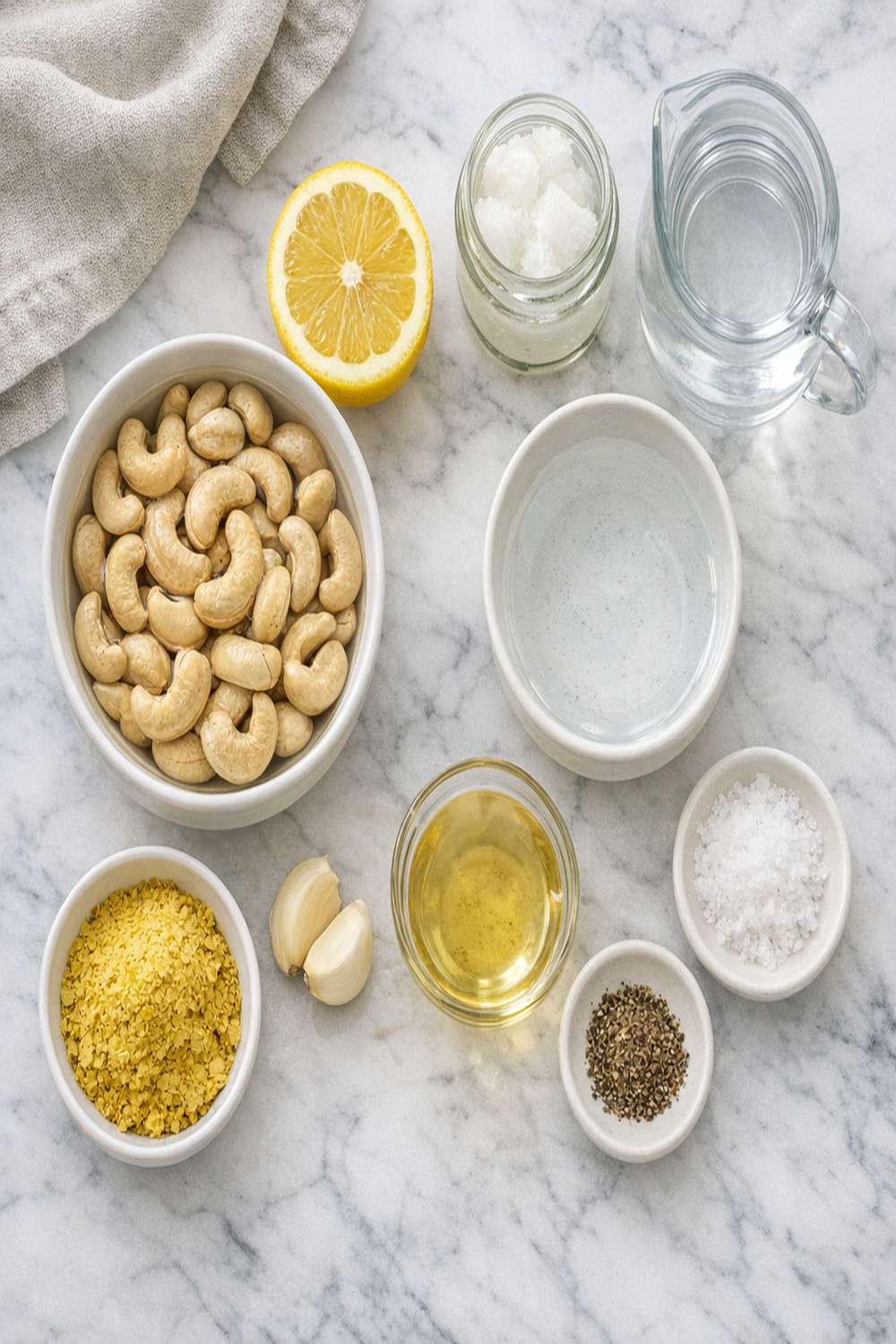
Here’s everything you need to create a bowl of pure, creamy comfort. Every ingredient serves a purpose—there’s nothing extra, nothing unnecessary:
- 2 tablespoons nutritional yeast, optional (adds a subtle umami note and B-vitamins for extra nutritional depth)
- 1 teaspoon apple cider vinegar or white distilled vinegar (apple cider adds subtle depth; white vinegar is sharper and more traditional)
- 1 tablespoon fresh dill or chives, finely minced, optional (transforms this into an herb-infused version perfect for baked potatoes or roasted vegetables)
- 1 large lemon, freshly juiced (approximately 3-4 tablespoons of juice; Meyer lemons are slightly sweeter if you prefer a gentler tang)
- ½ cup filtered water (use ⅔ cup if you have a standard blender instead of high-speed; tap water works in a pinch, but filtered tastes fresher)
- 1 cup raw cashews (unsalted, soaked in hot water for 15 minutes if your blender isn’t high-powered—this softens them for smoother blending)
- ¼ teaspoon fine sea salt (this brightens all the flavors and prevents the finished cream from tasting flat)
Yield: Makes approximately 1½ cups of finished sour cream, enough for 6-8 servings as a topping or spread.
How to Make Cashew Sour Cream Recipe for Your Occasion
This recipe is delightfully foolproof once you understand the two key principles: blend high and blend long, then let time do the rest. The waiting isn’t passive—it’s when the magic of texture transformation happens. I’ve made this hundreds of times, and the consistency is always reliable when you follow these steps:
Step 1: Prepare Your Cashews Properly
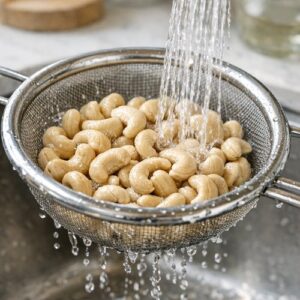
Pour 1 cup of raw, unsalted cashews into a fine-mesh strainer and rinse them under cool running water for about 30 seconds. This removes surface dust and any residual processing residue. Critical safety note: Always use raw cashews, never roasted or salted varieties—the roasting process changes their texture and the salt will make your final product unpalatably salty. If your blender isn’t a high-powered model, place your rinsed cashews in a bowl and pour hot (not boiling) water over them. Let them soak for 15-20 minutes until noticeably softened. This step is essential for standard blenders; skip it if you have a Vitamix or similar high-performance machine.
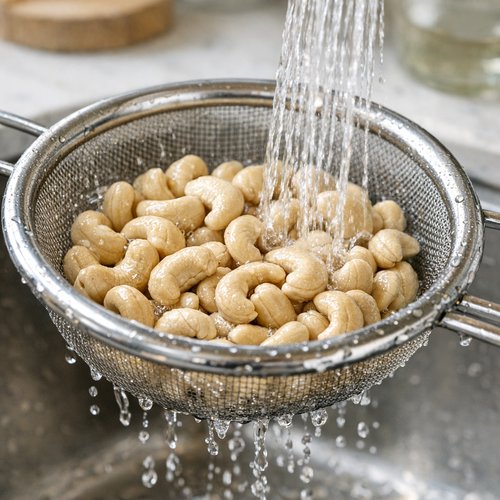
Step 2: Combine All Ingredients in Your Blender
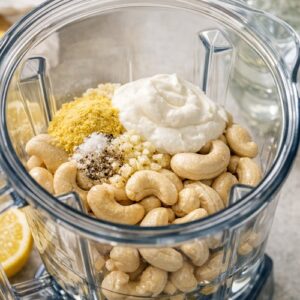
If you soaked your cashews, drain them well and pat dry with a clean kitchen towel. Add the drained (or unsoaked, if using a high-powered blender) cashews to your blender jar first, followed by the filtered water. Juice your lemon directly into the blender—catching any seeds that escape. Add the vinegar and salt. Don’t add optional ingredients yet; we’ll taste and adjust those last. Pro tip: Start with slightly less water than the recipe calls for; you can always add more to thin it out, but you can’t remove water once blended.
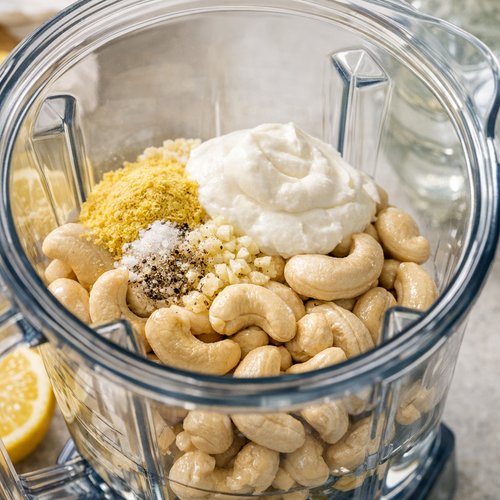
Step 3: Blend at Highest Speed Until Completely Smooth
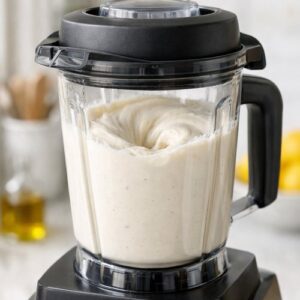
Secure your blender lid firmly and position yourself where you can safely watch the progress without leaning over the machine. Set the speed to maximum (or pulse mode if you’re nervous about overheating a standard blender). Blend continuously for 45 full seconds—I know this feels long, but this is exactly when cashews transition from chunky to creamy. You’ll actually see the mixture transform: it starts dense and pale, then gradually becomes smoother and whiter as the nuts release their oils. Stop the blender and carefully remove the lid.
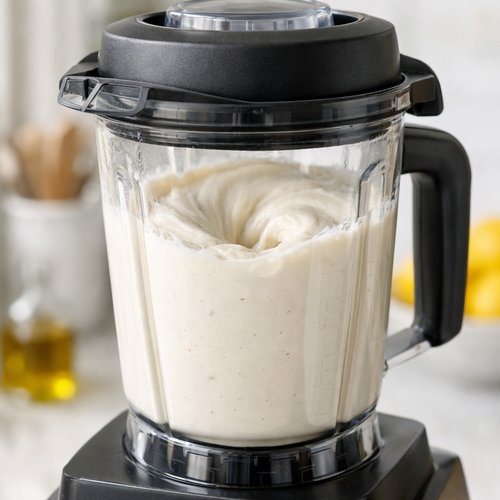
Step 4: Scrape and Blend Again for Perfectly Smooth Texture
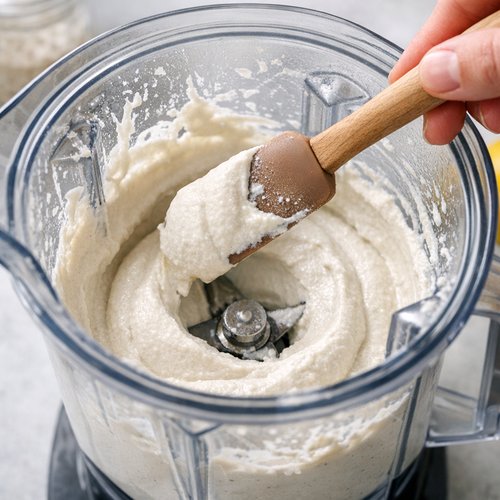
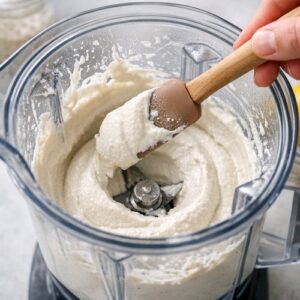
Use a silicone or wooden mini spatula to scrape down the sides and bottom of the blender, folding any thick cashew paste from the edges back toward the center. This ensures even blending. Important safety warning: Never use your fingers or a metal utensil to scrape while the blender is running. Replace the lid and blend for exactly 15 more seconds at maximum speed. This final pulse integrates the scraped portions and brings everything to silky completion.
Step 5: Taste and Customize Your Flavor Profile
Pour a small spoonful into a clean dish and let it cool slightly—tasting at temperature is important because warm foods taste less tangy. Consider: Is it tangy enough for you? Add a few more drops of lemon juice if needed. Does it taste a bit flat? Add a tiny pinch more salt. If you’d like herb versions, now’s the time to fold in finely minced fresh dill, chives, or cilantro—about 1-2 tablespoons depending on how herby you want it. For an umami-rich version that pairs beautifully with savory dishes, add 1-2 tablespoons of nutritional yeast and blend briefly. Taste again and adjust until it’s exactly what you’re craving.
Step 6: Transfer and Refrigerate for Optimal Thickness
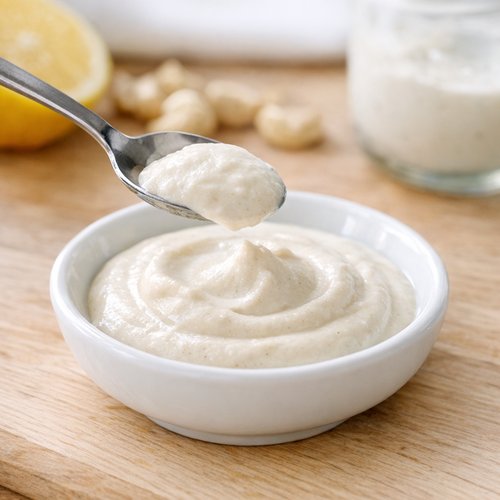
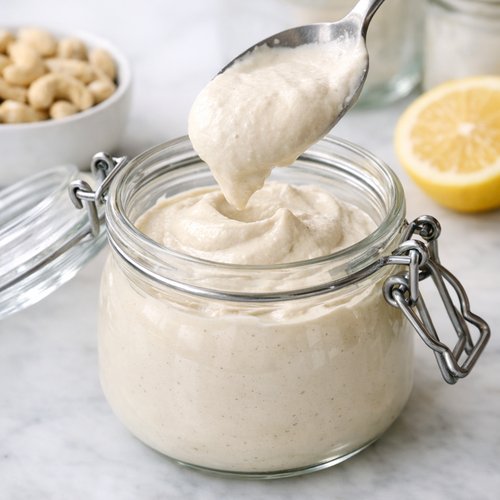
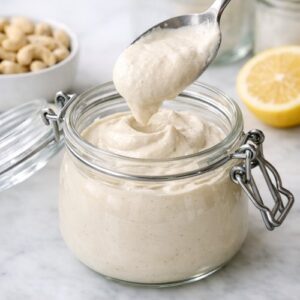
Spoon your finished cashew sour cream into an airtight glass container—glass is better than plastic because it won’t stain and allows you to see what’s inside. You can serve it immediately if you’re in a hurry; it will have a pourable, yogurt-like consistency. However, refrigerating it for at least 2-3 hours (and ideally overnight) allows the mixture to thicken naturally through a combination of cooling and slight separation of the cashew proteins and oils. This creates that signature sour cream texture you’re after. The flavor also deepens and becomes more cohesive after chilling, much like how marinara sauce improves overnight.
Expert’s Nutritional Tip
As a registered dietitian, I want to highlight something that makes cashews particularly special: they’re one of the few nuts with a lower omega-6 to omega-3 ratio, and they contain significant amounts of monounsaturated fats—the same heart-healthy fats found in olive oil and avocados. One quarter cup of raw cashews provides about 5 grams of protein, magnesium for muscle function, and copper for connective tissue health. When you make this sour cream from whole cashews rather than buying a processed version, you’re getting all these nutrients intact. The lemon juice adds bioavailable vitamin C that helps your body absorb the iron and other minerals in the cashews—so this isn’t just delicious, it’s synergistic nutrition. This is exactly the kind of whole-food cooking that nourishes deeply.
Common Mistakes to Avoid
I’ve watched people stumble on this recipe in just a few consistent ways. Here’s what to avoid:
- Using pre-roasted or salted cashews: This is the number one mistake I see. Roasting changes the fat profile and creates a slightly grainy texture that’s hard to smooth out. Salted cashews make the final product unpalatably salty no matter how much you dilute. Always double-check your cashew label—it should say “raw” in plain text.
- Not blending long enough: Impatience ruins this recipe. If you stop blending at 20 seconds, you’ll get a gritty, separated mess. Those full 45 seconds matter because they allow the nuts to fully break down and their natural oils to emulsify. Your blender needs time to do its job.
- Skipping the second blend after scraping: All the thick cashew paste accumulates on the sides. If you don’t scrape and re-blend, your final texture will be inconsistent—some spoonfuls creamy, others grainy. This 15-second final blend is non-negotiable.
- Using tap water in hard water areas: If you have mineral-heavy tap water, it can interfere with the smooth texture. This is why I recommend filtered water. I learned this the hard way when visiting my sister in Arizona—the same recipe gave different results due to water minerality. A simple pitcher filter solves this.
Make-Ahead Timeline
- Up to 1 Week Before – Purchase your raw cashews from a reputable source with good turnover. Store them in an airtight container in your pantry or freezer. Fresh cashews make noticeably better sour cream than old ones; the fats can go rancid over time.
- 2-3 Days Before – Make the full batch and refrigerate in an airtight glass container. It will continue thickening and the flavors will marry beautifully. If serving at an event, this timing ensures everything is ready without last-minute stress.
- Day Before – If you prefer it even thicker, prepare it now. The overnight rest allows complete textural development. Do any optional herb additions this morning rather than days ahead—fresh herbs taste brightest when added within 12 hours of serving.
- Day Of – Remove from refrigerator 30 minutes before serving if your kitchen is cool, or just 10-15 minutes if it’s warm. This brings it to ideal serving temperature. Give it a gentle stir; sometimes a tiny bit of liquid separates on top, which is completely normal and easily mixed back in. Transfer to a serving bowl and garnish with fresh herbs or a drizzle of quality olive oil just before guests arrive.
How to Present and Plate Cashew Sour Cream Recipe
Presentation matters because people eat with their eyes first. This cashew sour cream is naturally beautiful—that pristine white color with subtle depth—but a few thoughtful touches elevate it from good to memorable:
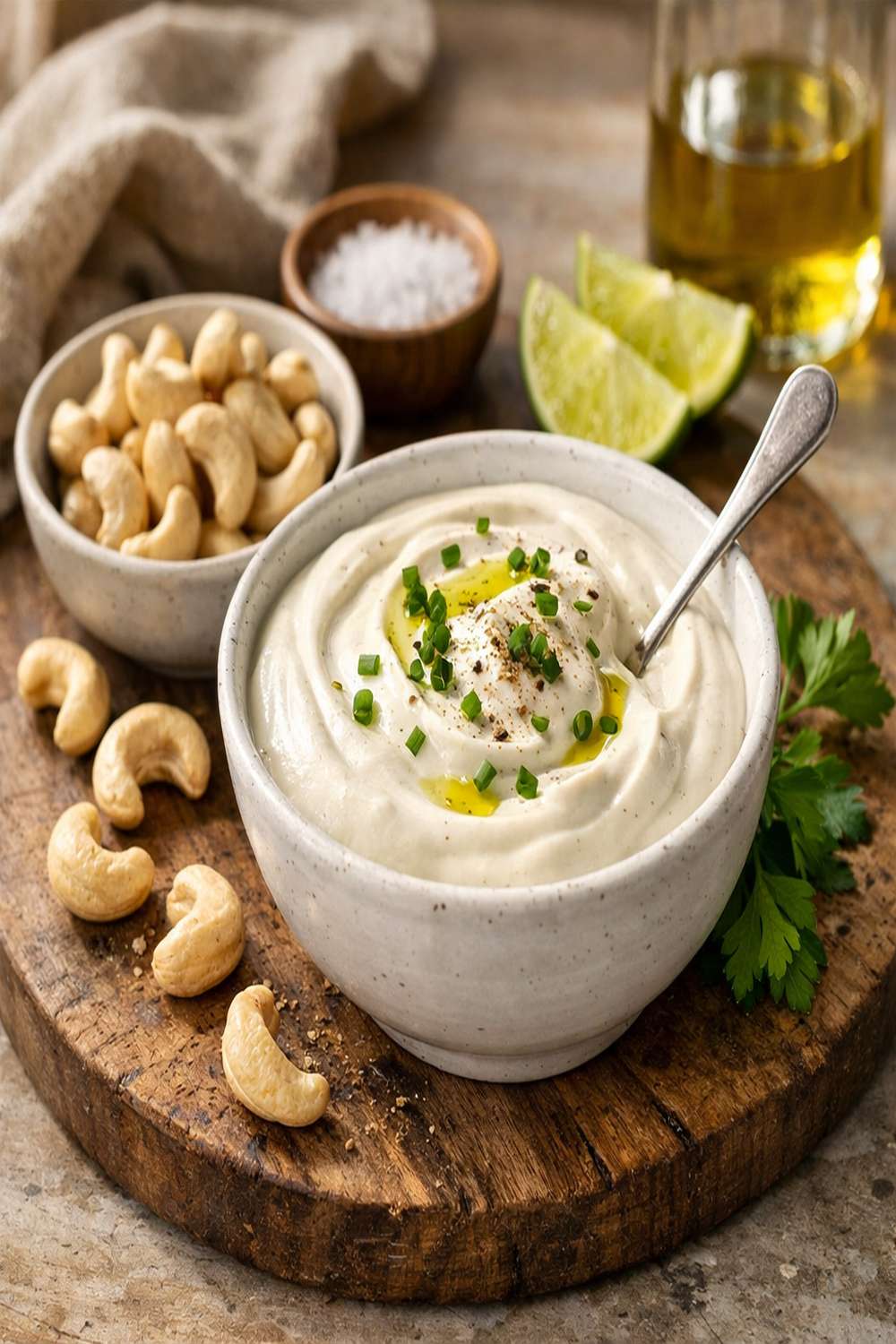
- Serve in a shallow, elegant bowl rather than a standard ramekin: The wider surface area showcases the creamy color and allows guests to see its gorgeous texture. White or pale ceramic bowls make the cream look even more luxurious by contrast. A glass bowl also works beautifully if you want the visual drama of the cashew base showing through.
- Create a shallow well in the center with the back of a spoon: This visual touch signals “this is intentional and elegant” rather than “here’s a scoop of something.” Then drizzle a small amount of quality extra virgin olive oil into that well—it catches the light and adds a professional touch that costs nothing but looks expensive.
- Garnish with fresh microgreens, cracked black pepper, or a light dusting of paprika: One tablespoon of fresh chives, dill, or cilantro scattered across the top moments before serving adds color and signals the flavor sophistication inside. A few cracks of fresh black pepper look intentional and upscale.
- Position near warm foods or serve in bowls on ice if it’s summer: The contrast of cool, creamy cashew sour cream against warm tacos, baked potatoes, or chili is part of what makes it special. Cold presentation keeps it refreshing longer at buffet-style meals.
Seasonal Variations
While this base recipe is perfect year-round, small ingredient swaps keep it feeling fresh and aligned with what’s in season:
- Spring and Summer Version (Bright and Herbaceous): Keep the base recipe exactly the same, but add 1 tablespoon of fresh tarragon or chervil (delicate herbs that shine in warm months), the zest of your lemon, and a pinch of white pepper instead of black. Serve alongside fresh spring vegetables or light, herb-forward dishes. If you’re serving this with grilled foods, add a tiny pinch of smoked paprika for subtle depth that complements summer cooking.
- Fall and Winter Version (Deep and Warming): Substitute half of your lemon juice with white wine vinegar (adds complexity that pairs with roasted root vegetables), add ¼ teaspoon of freshly grated nutmeg, and include 1 teaspoon of Dijon mustard for sophistication. This version becomes the perfect companion to hearty soups, roasted winter squash, and rich bean dishes. The mustard and nutmeg create a flavor profile that feels cozy and intentional.
What to Serve Alongside Cashew Sour Cream Recipe
This sour cream is incredibly versatile, but pairing it thoughtfully with the right dishes creates truly memorable meals. Here’s how I build around it:
- Taco and Burrito Nights – Serve this alongside your protein and toppings. It pairs beautifully with seasoned beans, grilled vegetables, and fresh salsas. The creaminess balances heat and acidity perfectly.
- Loaded Baked Potatoes and Sweet Potatoes – A dollop on top of a perfectly baked potato with roasted broccoli and crispy tempeh creates a complete, nourishing meal that tastes indulgent but keeps you feeling energized.
- Chili and Soup Toppings – A generous spoonful stirred into hot chili or bean soup adds richness and cuts through spice beautifully. This is how my grandmother serves it with her famous three-bean chili every winter.
- Vegetable Curry Dishes – A dollop on the side of coconut-based curries adds creamy contrast that balances coconut richness and spice. This is particularly lovely with plant-based lasagna or other hearty Italian dishes that need richness.
- Crudités and Vegetable Boards – Serve a bowl of this alongside fresh, raw vegetables as an elegant appetizer. The herb-infused version is particularly stunning here. Add a sprinkle of everything bagel seasoning on top for textural interest.
- Baked Fries and Roasted Vegetables – Use it as a dipping sauce for crispy baked fries or roasted root vegetables. The tangy creaminess transforms simple roasted food into restaurant-quality sides.
Can I Store Cashew Sour Cream Recipe?
Storage is where this recipe truly shines—it keeps beautifully and actually improves with time as flavors meld. Here’s my professional guidance:
Refrigerator Storage: In an airtight glass container, this cashew sour cream keeps for up to 7 days in your refrigerator. I often make a double batch on Sunday for the entire week’s meal prep. The flavor deepens after day 2 or 3, so it’s actually better midweek than fresh. The texture remains perfectly creamy throughout—no separation or deterioration.
Freezer Storage: You can absolutely freeze this in airtight containers for up to 3 months. When you thaw it, it may separate slightly (the liquid rising to the top), which is completely normal. Simply stir it back together when thawing in the refrigerator overnight. The texture will be slightly looser than freshly made, but completely usable. I freeze it in two-tablespoon portions using ice cube trays, then pop the frozen cubes into a freezer bag for easy single servings.
Travel Note: If you’re bringing this to a potluck or picnic, keep it in an insulated container with an ice pack. It travels beautifully and stays stable for up to 4 hours at room temperature, which is longer than dairy sour cream thanks to its natural fat content and lack of whey.
Nutrition Information
According to USDA nutrient data for raw cashews, one ¼ cup serving (approximately 2 tablespoons) of this cashew sour cream contains approximately 90 calories, 7 grams of fat (mostly heart-healthy monounsaturated), 4 grams of carbohydrates, and 3 grams of protein. The lemon juice adds 2 calories and valuable vitamin C, while the salt provides minimal sodium when used as measured. Compared to dairy sour cream (which contains 60 calories and 6 grams of fat per 2 tablespoons), this version is slightly more calorie-dense due to cashew concentration, but offers superior mineral content and the beneficial monounsaturated fats associated with cardiovascular health. If you add nutritional yeast as I suggest, you gain additional B vitamins, particularly B12 for those avoiding animal products. This is real food nutrition—every calorie comes from whole ingredients your body actually recognizes.

Cashew Sour Cream Recipe
Ingredients
Method
- Pour 1 cup of raw, unsalted cashews into a fine-mesh strainer and rinse them under cool running water for about 30 seconds. This removes surface dust and any residual processing residue. Critical safety note: Always use raw cashews, never roasted or salted varieties—the roasting process changes their texture and the salt will make your final product unpalatably salty. If your blender isn't a high-powered model, place your rinsed cashews in a bowl and pour hot (not boiling) water over them. Let them soak for 15-20 minutes until noticeably softened. This step is essential for standard blenders; skip it if you have a Vitamix or similar high-performance machine.
- If you soaked your cashews, drain them well and pat dry with a clean kitchen towel. Add the drained (or unsoaked, if using a high-powered blender) cashews to your blender jar first, followed by the filtered water. Juice your lemon directly into the blender—catching any seeds that escape. Add the vinegar and salt. Don't add optional ingredients yet; we'll taste and adjust those last. Pro tip: Start with slightly less water than the recipe calls for; you can always add more to thin it out, but you can't remove water once blended.
- Secure your blender lid firmly and position yourself where you can safely watch the progress without leaning over the machine. Set the speed to maximum (or pulse mode if you're nervous about overheating a standard blender). Blend continuously for 45 full seconds—I know this feels long, but this is exactly when cashews transition from chunky to creamy. You'll actually see the mixture transform: it starts dense and pale, then gradually becomes smoother and whiter as the nuts release their oils. Stop the blender and carefully remove the lid.
- Use a silicone or wooden mini spatula to scrape down the sides and bottom of the blender, folding any thick cashew paste from the edges back toward the center. This ensures even blending. Important safety warning: Never use your fingers or a metal utensil to scrape while the blender is running. Replace the lid and blend for exactly 15 more seconds at maximum speed. This final pulse integrates the scraped portions and brings everything to silky completion.
- Pour a small spoonful into a clean dish and let it cool slightly—tasting at temperature is important because warm foods taste less tangy. Consider: Is it tangy enough for you? Add a few more drops of lemon juice if needed. Does it taste a bit flat? Add a tiny pinch more salt. If you'd like herb versions, now's the time to fold in finely minced fresh dill, chives, or cilantro—about 1-2 tablespoons depending on how herby you want it. For an umami-rich version that pairs beautifully with savory dishes, add 1-2 tablespoons of nutritional yeast and blend briefly. Taste again and adjust until it's exactly what you're craving.
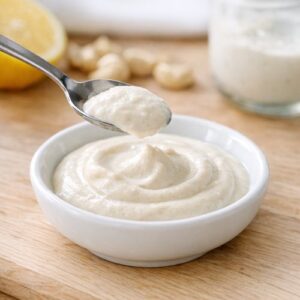
- Spoon your finished cashew sour cream into an airtight glass container—glass is better than plastic because it won't stain and allows you to see what's inside. You can serve it immediately if you're in a hurry; it will have a pourable, yogurt-like consistency. However, refrigerating it for at least 2-3 hours (and ideally overnight) allows the mixture to thicken naturally through a combination of cooling and slight separation of the cashew proteins and oils. This creates that signature sour cream texture you're after. The flavor also deepens and becomes more cohesive after chilling, much like how marinara sauce improves overnight.
Notes
FAQs
Can I Make This Without a High-Speed Blender?
Absolutely. The key is soaking your cashews in hot water for 15-20 minutes before blending. This pre-softening does the work that a high-powered motor would otherwise accomplish. Your blending time might extend slightly (maybe 60-75 seconds instead of 45), and the final texture might be infinitesimally less silky, but it will still be creamy and delicious. I made this for years with a basic kitchen blender before upgrading. The results were always reliable.
What If My Finished Sour Cream Is Too Thin?
This usually means you used too much water relative to your blender’s power. The good news: it still tastes perfect, just needs refrigeration time. Pop it in the fridge for 4-6 hours and it will thicken noticeably as the cashew particles settle and the mixture cools. If it remains pourable after 12 hours, strain it through a fine-mesh cheesecloth for 2-3 hours to remove excess liquid. What drains out can be whisked back in gradually until you reach desired thickness. I’ve also successfully thickened overly thin batches by blending in an extra tablespoon of cashew butter, which adds density and creaminess.
Is This Recipe Suitable for People With Tree Nut Allergies?
Unfortunately, no. Cashews are tree nuts, so this recipe isn’t safe for anyone with tree nut allergies. However, the exact same technique works beautifully with sunflower seeds or hemp seeds as a nut-free alternative. Use the same quantities and follow identical steps—sunflower seed sour cream has a slightly earthier flavor but the same luxurious texture. Always disclose ingredients clearly when serving to guests with allergies.
Can I Use Bottled Lemon Juice Instead of Fresh?
While fresh lemon juice is always better (it contains more of the volatile compounds that create brightness), bottled works in a pinch if you use high-quality, freshly bottled versions. The reconstituted bottled juice from concentrate tastes noticeably flat and won’t give you that vibrant tang. My recommendation: if you’re making this for a special occasion, invest the 30 seconds in fresh lemon. The difference is genuinely noticeable. For everyday eating, quality bottled juice is fine.
What’s the Best Way to Reheat or Adjust Consistency If It Gets Too Thick in the Fridge?
If your cashew sour cream becomes thicker than you’d like over several days (or if you’ve frozen and thawed it), simply whisk in a tablespoon of filtered water at a time until you reach your desired consistency. Don’t blend it again unless there’s visible separation—whisking gently usually brings it to perfect serving texture. If you do need to re-blend, use the “pulse” setting rather than high speed to avoid overworking it and creating air bubbles. I find that gentle warming (not hot) also helps when consistency is the issue—place the container in a warm water bath for 5 minutes and whisk before serving.
More Recipes for Your Table
- Cashew Cheese Recipe – Transform this base into a spreadable cheese for sandwiches, crackers, and elegant appetizers
- Alfredo Sauce Recipe Dairy Free – Use your cashew cream skills to create a silky pasta sauce that rivals the traditional version
- Avocado Spread Recipe – Layer your cashew sour cream with fresh avocado for a creamy sandwich spread that’s absolutely transcendent
Making this cashew sour cream has become one of my favorite small rituals—those five minutes at the blender, the smell of fresh lemon, the transformation of simple nuts into something creamy and luxurious. It reminds me why I became a dietitian in the first place: because nourishing food brings people together. When you serve this at your table, you’re not just offering a condiment. You’re offering intention, care, and the message that the people you’re feeding deserve real, wholesome ingredients. So blend with confidence, taste fearlessly, and watch your guests’ faces light up when they discover what this magic is made from. Happy cooking!