This post contains affiliate links. As an Amazon Associate I earn from qualifying purchases.
I still remember standing in my grandmother’s kitchen during a humid Florida summer, watching her whip fresh cream by hand for her tres leches cake. The mechanical whirr of the mixer, the transformation of liquid into clouds—it felt like magic to a ten-year-old me. Years later, when I transitioned to plant-based cooking in my dietitian practice, I realized that same magic could happen with coconut cream. Now, I create this silky, luxurious topping for clients and family gatherings, and honestly? It’s become my go-to for everything from carrot cake vegan recipes to fresh fruit platters. It’s foolproof, nourishing, and absolutely delicious.
Authentic Coconut Whipped Cream Recipe: The Story Behind This Plant-Based Staple
For decades, coconut whipped cream was born out of necessity rather than trend. In tropical regions across Southeast Asia, the Caribbean, and the Pacific Islands, coconut milk and cream have been kitchen staples for centuries. What started as a resourceful way to create dairy-free toppings has become a celebrated technique in vegan and health-conscious cooking worldwide.
My fascination with this recipe deepened when I studied nutrition in Sri Lanka several years ago. I watched local cooks separate fresh coconut cream naturally—no additives, no stabilizers, just patience and technique passed down through generations. That experience fundamentally changed how I approach this recipe. It’s not just about convenience; it’s about honoring a culinary tradition while making it accessible to modern kitchens.
What impressed me most was how this simple combination transforms into something that rivals traditional whipped cream in both texture and versatility. From a clinical nutrition perspective, I appreciate that we’re working with whole food—coconut—rather than processed dairy or synthetic replacements.
The History and Cultural Significance of Coconut Whipped Cream
Coconut cream has been a cornerstone of tropical and subtropical cuisines for over 4,000 years. Archaeological evidence suggests coconuts originated in the Indo-Pacific region, spreading gradually through trade routes to Africa, the Middle East, and eventually the Americas. However, the concept of whipped coconut cream as a dessert topping is surprisingly modern—emerging primarily in the 20th century as refrigeration became widespread and plant-based cooking gained philosophical prominence.
In Thai cuisine, whipped coconut cream adorns desserts like mango sticky rice and coconut-based custards. In the Caribbean, it appears in celebration dishes and festive gatherings. What’s particularly beautiful is how this topping transcends dietary restrictions—it became essential not just for vegans, but for lactose-intolerant individuals, those with dairy allergies, and simply anyone seeking lighter, more digestible options.
The cultural significance deepened in the late 1990s and 2000s as plant-based eating gained momentum. What was once a regional technique became a global solution, connecting people across continents through shared culinary values. Today, coconut whipped cream represents accessibility, inclusivity, and the acknowledgment that wholesome toppings don’t require animal products.
What Makes an Authentic Coconut Whipped Cream Recipe
I’ve tested countless variations in my practice, and I’ve learned that authentic coconut whipped cream relies on three non-negotiables. First, you need full-fat coconut cream—not coconut milk, which has higher water content. Second, the technique must incorporate air properly to achieve that signature fluffy texture. Third, the sweetener must complement rather than overpower the delicate coconut flavor.
Westernized versions often rely on added stabilizers like xanthan gum or cornstarch, which isn’t wrong, but traditional methods prove unnecessary when you use the right ingredient proportions and chill properly. The best versions I’ve encountered—from traditional Thai kitchens to modern vegan bakeries—share this commitment to simplicity.
- Full-Fat Coconut Cream from the Can – The layer that separates naturally in canned coconut cream contains all the fat necessary for whipping. This mimics the fat content in dairy cream, making proper aeration possible. You’re essentially working with coconut’s natural emulsifiers.
- Cold Temperature Throughout – This is crucial. The fat in coconut cream needs cold to maintain structure while air is incorporated. In tropical climates where coconut cream originated, cooks worked during early morning hours when temperatures were coolest, or they used natural ice from mountain sources.
- Minimal Sweetening – Traditional recipes use small amounts of natural sweeteners. This preserves the coconut’s subtle flavor and prevents the topping from becoming cloying. The balance reflects how original cultures approached coconut desserts—letting the ingredient shine rather than masking it.
The Ingredients – Sourcing the Real Thing
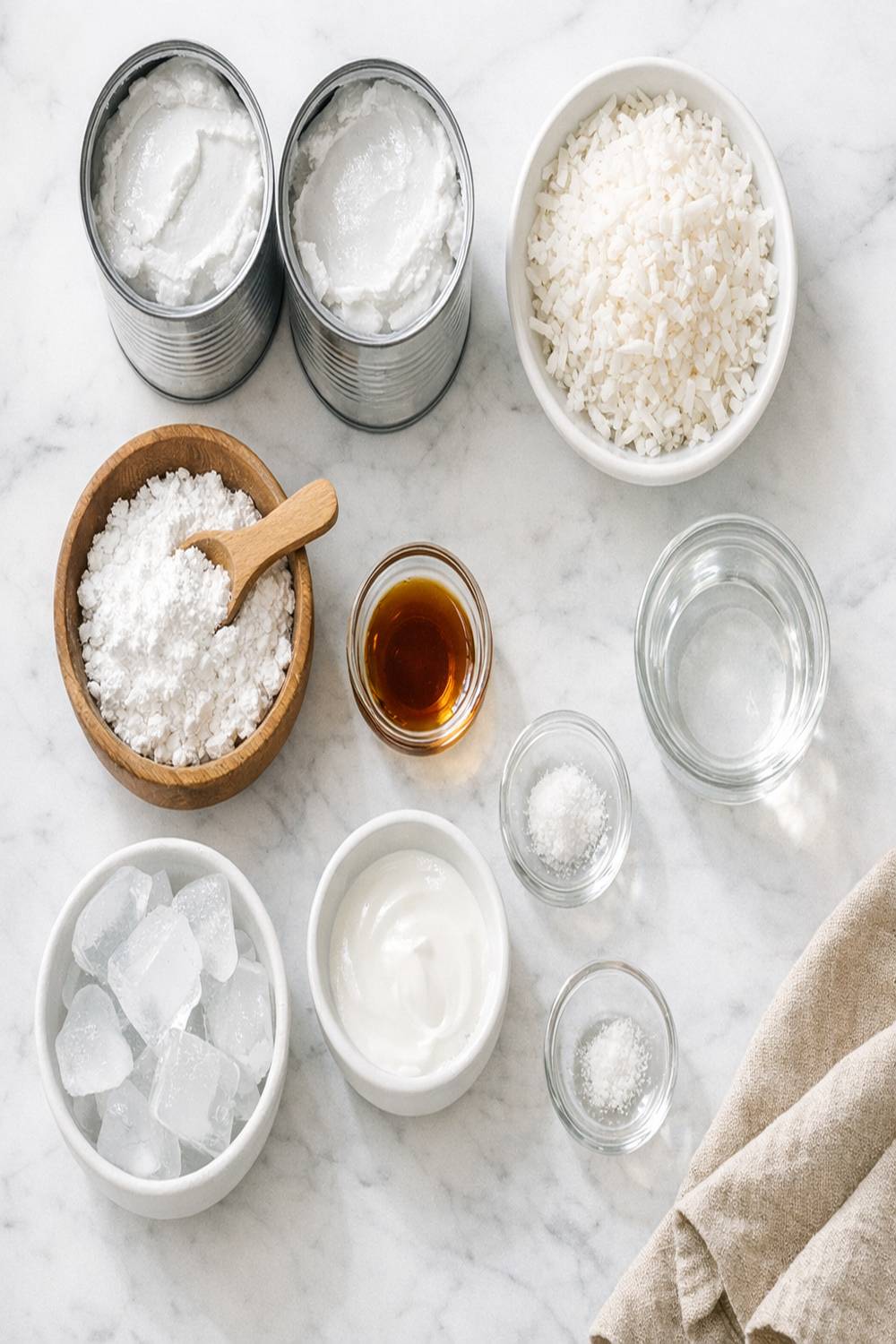
Finding quality coconut cream is genuinely easier than you’d think, whether you’re shopping in Miami or Milwaukee. I recommend visiting Asian markets first—Thai, Filipino, and Indonesian brands typically offer superior quality at better prices than mainstream grocery stores. Look for brands without guar gum if possible, though it’s not a deal-breaker. Online sources like specialty food retailers also work beautifully. For maple syrup, I prefer organic versions from Vermont or Canadian sources, which have a more consistent mineral profile and subtle flavor complexity.
- 1 teaspoon pure vanilla extract (Madagascar or Tahitian varieties offer superior depth)
- 2 tablespoons pure maple syrup (organic preferred for deeper, more nuanced sweetness)
- ¼ teaspoon sea salt (enhances coconut flavor and balances sweetness)
- 1½ cups canned coconut cream (full-fat, refrigerated overnight to separate naturally)
- ½ teaspoon coconut extract (optional but traditional in Caribbean preparations)
Ingredient Notes: The sea salt addition is something I learned from Caribbean cooks—it’s not traditional everywhere, but it’s transformative. The salt amplifies natural flavors without adding perceived saltiness. For clients avoiding vanilla, I substitute with a pinch of cardamom or cinnamon, which mirrors spice profiles in traditional tropical desserts.
The Traditional Method: How to Make Authentic Coconut Whipped Cream Recipe
Creating coconut whipped cream is an exercise in patience and respect for the ingredient. Unlike dairy cream, which whips quickly and predictably, coconut cream requires understanding its unique properties. The technique I share comes from years of clinical kitchen practice and conversations with traditional cooks across tropical regions.
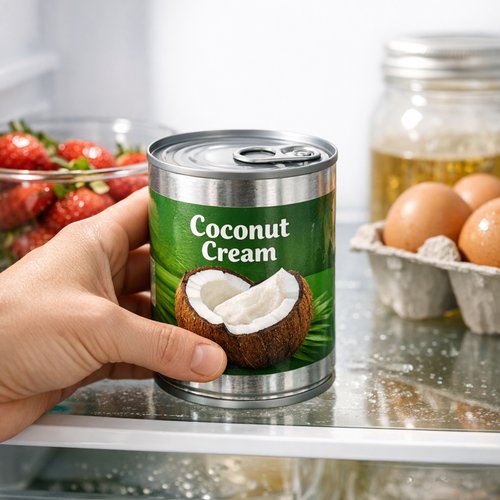
Step 1: Choose Your Coconut Cream and Chill Thoroughly
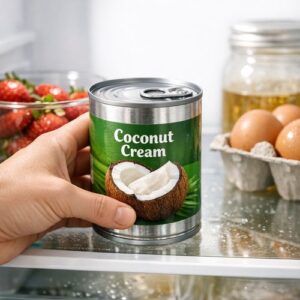
This step is absolutely critical and often overlooked. Place your unopened can of coconut cream in the refrigerator for at least 8 hours, ideally overnight. This allows the fat and water to fully separate. The cream rises to the top, creating a dense layer—that’s your whipping base. Don’t shake the can; resist the urge. This separation process is what traditional tropical cooks waited for naturally before refrigeration existed, using cool early-morning hours or mountain caves for storage.
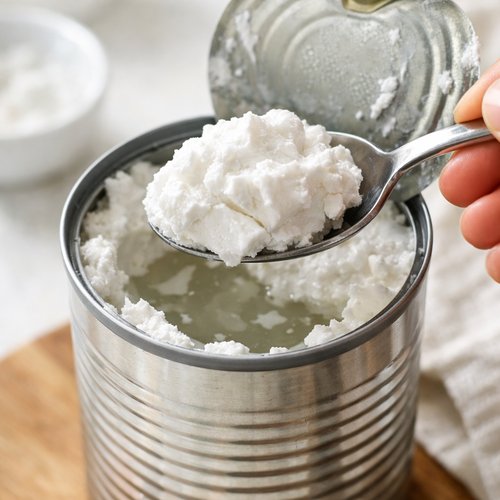
Step 2: Extract the Solid Coconut Cream Layer
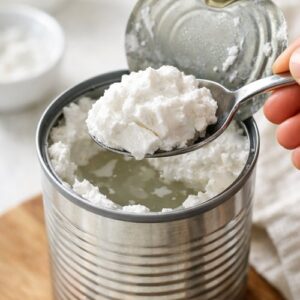
Carefully open your cold can and look for the separated layers—you’ll see a thick cream on top and watery liquid below. Using a spoon, gently scoop the solid cream layer into a clean, chilled bowl. The liquid (coconut water) is wonderful for smoothies or cooking, so don’t discard it. You should have roughly 1 to 1¼ cups of thick cream. This is where your whipped texture will develop.
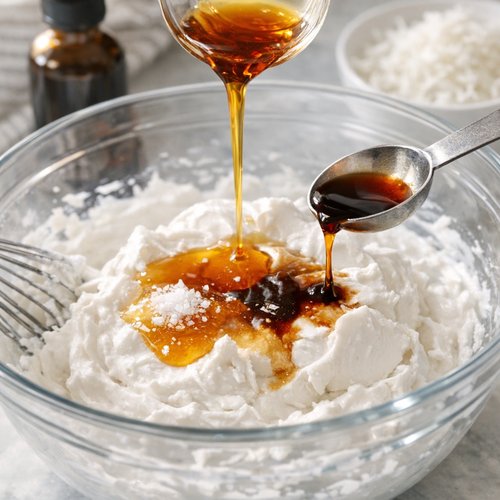
Step 3: Add Your Sweetener and Vanilla
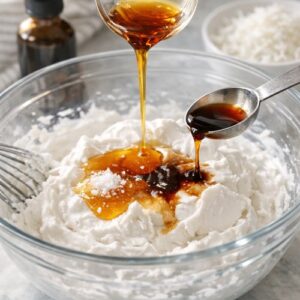
Into your bowl of coconut cream, add 2 tablespoons maple syrup and 1 teaspoon vanilla extract. I recommend adding the sea salt and optional coconut extract now too. Don’t mix yet—simply let these ingredients sit for 30 seconds. This pause allows the cold cream to adjust slightly without shocking the temperature. In traditional Southeast Asian kitchens, ingredients are often tempered this way before combining, a principle rooted in food science that preserves delicate textures.
Step 4: Whip with Electric Mixer Until Fluffy
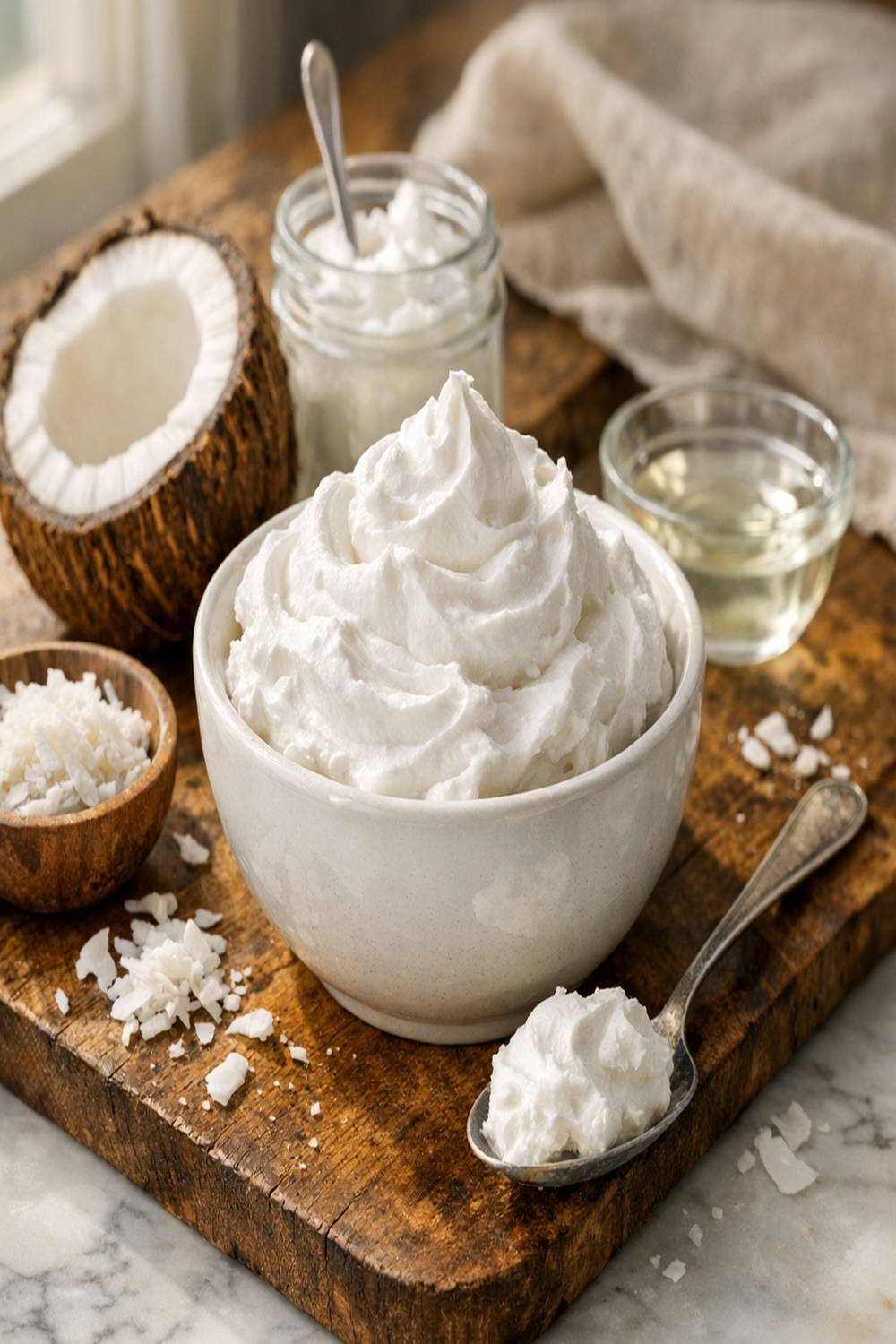
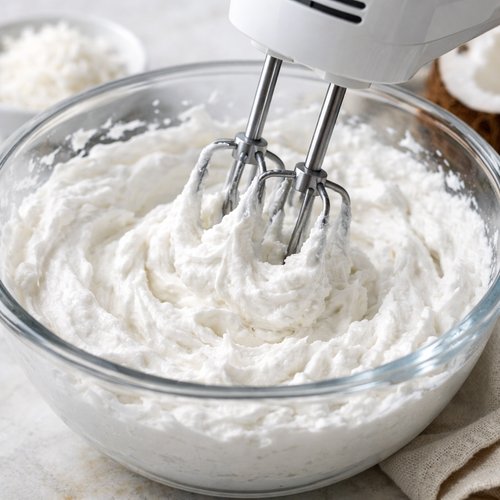
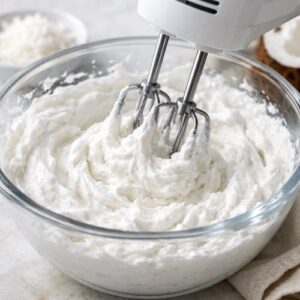
Using an electric hand mixer or stand mixer on medium speed, whip the mixture for 1 to 2 minutes until it becomes light, fluffy, and noticeably increased in volume. You’re incorporating air into the fat, which creates the signature whipped texture. Watch carefully—you’ll see transformation happen. The color becomes slightly lighter, the texture becomes pillowy. This is the magic moment.
A critical safety note here: Do not overbeat. If you continue past fluffy texture, you risk breaking the emulsion and creating coconut butter instead. With dairy cream, breaking yields whipped butter—a desirable product. With coconut cream, separation is less predictable. Stop as soon as you see stiff peaks forming (usually around 1½ to 2 minutes with electric mixers).
Step 5: Chill Before Serving
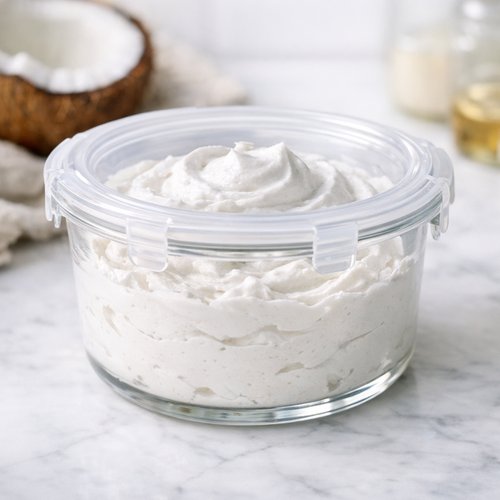
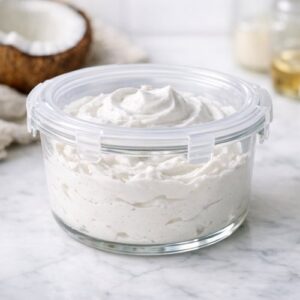
Transfer your whipped cream to a clean container and refrigerate for 2 to 3 hours before serving. This resting period firms the texture further and allows flavors to meld. The cream will thicken and develop a more stable structure. This mirrors traditional preparation methods where tropical cooks would prepare toppings hours ahead of serving, understanding that cold and time improve both texture and flavor integration.
Expert’s Nutritional Tip
From my registered dietitian perspective, coconut cream contains medium-chain triglycerides (MCTs), which metabolize differently than long-chain fats found in dairy cream. This means your body utilizes coconut cream more efficiently for quick energy rather than storage. Additionally, coconut provides lauric acid, a fatty acid with antimicrobial properties. While this topping isn’t “health food,” it’s genuinely more aligned with how traditional tropical diets optimized satiety and nutrition compared to heavily processed dairy alternatives. I recommend 2 tablespoons per serving to maintain balanced macronutrients in desserts.
Make-Ahead Guide: Perfect Timing for Gathering Prep
In my dietitian practice, I work with many clients managing busy schedules and special dietary needs. Coconut whipped cream is wonderfully make-ahead friendly. Prepare it up to 3 days in advance, storing in an airtight container in the coldest part of your refrigerator (usually the back of the middle shelf). If the texture loosens slightly during storage, a quick 15-second whip with a fork restores fluffiness perfectly.
For gathering prep, I suggest making this the morning of your event, refrigerating it, and adding any flavor variations (like a drizzle of coconut extract or a sprinkle of cinnamon) just before serving. This keeps everything fresh while maintaining the light, cloud-like texture that makes people genuinely impressed.
Common Mistakes to Avoid
- Using Low-Fat Coconut Milk Instead of Cream – Coconut milk has too much water content and won’t whip properly. You’ll get a foamy mixture that collapses within minutes. Always read your can carefully; full-fat coconut cream and coconut milk are different products.
- Not Refrigerating the Can Long Enough – Impatient whipping with warm cream yields barely-thickened liquid. The separation process genuinely requires 8 hours minimum. This isn’t negotiable; it’s chemistry.
- Overbeating the Mixture – This creates an oily, separated texture that doesn’t recover. Start your mixer, watch closely, and stop the moment you see fluffy peaks. When in doubt, stop early—you can always whip a bit more, but you can’t undo overbeating.
- Opening the Can or Mixing Before the Resting Period – Some people shake the can or combine ingredients before the separation process is complete. This creates an emulsified base that won’t whip properly. Patience is your ingredient here.
Regional Variations Around the World
- Thai Tradition – Thai cooks often add a hint of jasmine essence or rose water to their coconut whipped cream, served alongside sticky rice and fresh mango. The floral notes complement tropical fruits beautifully. Some regions add a tiny pinch of cardamom for warmth.
- Caribbean Adaptation – Caribbean versions frequently include a splash of rum or coconut rum, honoring the region’s culinary heritage and the traditional use of coconut in celebration foods. Vanilla and nutmeg are standard aromatics.
- Modern Vegan Movement – Contemporary plant-based cooks in North America and Europe often stabilize their coconut whipped cream with xanthan gum or tapioca starch, prioritizing shelf-stability and whipping reliability. This adaptation emerged from the need for products that behave like dairy cream in home kitchens.
- Southeast Asian Islands – Filipino and Indonesian preparations sometimes incorporate a touch of pandan extract (a vanilla-like aromatic from tropical leaves), creating a subtle green hue and distinctive, delicate flavor. This reflects the region’s deep tradition with pandan in desserts.
Traditional Serving Customs
In Thai culture, coconut whipped cream appears at celebrations and special occasions, always served cold and presented as a component of composed desserts rather than a standalone element. The topping is meant to complement—mango sticky rice would be naked without it, but the cream never overshadows the featured ingredient. Similarly, in Caribbean traditions, coconut cream appears at festival gatherings and family celebrations, often accompanying coconut-forward desserts or fresh tropical fruits.
The presentation matters culturally too. In traditional settings, whipped cream was often piped decoratively onto individual servings, acknowledging that food presentation honors both the ingredient and the person receiving it. I maintain this custom in my practice—a simple dollop respects the ingredient more than a heavy coating. Serve immediately after plating, as coconut cream softens at room temperature more quickly than dairy cream, typically becoming noticeably softer after 20-30 minutes depending on ambient temperature.
Ethically, serving coconut whipped cream acknowledges respect for plant-based traditions and inclusive hospitality. It’s a topping that welcomes everyone to the table—those avoiding dairy, those with allergies, those choosing plant-forward eating. There’s beauty in that inclusivity.
Can I Store Coconut Whipped Cream Recipe?
Yes, and here’s exactly how. Transfer your finished coconut whipped cream to an airtight container—I prefer glass with silicone lids because coconut fat can interact with plastic over time. Refrigerate for up to 3 to 4 days. The texture may soften slightly as the fat warms; simply give it a gentle stir or a brief 10-second whip with a fork to restore fluffiness.
Do not freeze coconut whipped cream. The freezing process disrupts the emulsion irreversibly, and thawing yields a separated, unusable texture. However, you can freeze the separated coconut cream in the can for future whipping—just thaw in the refrigerator and proceed as normal.
From a food safety perspective, keep your storage container meticulously clean. Coconut fat can support mold growth if contaminated, so wash thoroughly and ensure complete dryness before storing. Use a clean spoon each time you remove cream, never double-dip from the serving container back into storage.
Nutrition Information
Per 2-tablespoon serving (makes approximately 1½ cups, serving about 12 people): approximately 90 calories, 9g total fat (8g saturated fat), 2g carbohydrates (2g from sugar), 0g protein, 0g fiber. Data reflects USDA coconut cream analysis combined with minimal maple syrup and vanilla extract additions.
From a clinical nutrition perspective, what’s fascinating is that coconut fat is metabolically different from dairy fat. The medium-chain triglycerides in coconut are absorbed more directly by the liver and converted to energy rather than stored as body fat, similar to how traditional tropical populations utilized coconut in their diets. Additionally, this topping contains no cholesterol, unlike dairy whipped cream which contains 5mg per tablespoon. For clients managing cardiovascular health or cholesterol levels, this represents a genuinely valuable option rather than a compromise.
The maple syrup contributes minerals like manganese and zinc—elements often lacking in refined sugar-sweetened toppings. One tablespoon of maple syrup provides approximately 52 calories and 13g carbohydrates, distributed across the entire batch, making the actual contribution per serving minimal but meaningful nutritionally.
What Can I Serve With Coconut Whipped Cream Recipe?
This is where creativity meets tradition. In my kitchen and professional practice, I’ve developed numerous pairings that honor both the coconut cream’s delicate flavor and the cultural contexts it comes from.
Fresh fruit is the obvious choice—mango, pineapple, passion fruit, and berries all benefit from coconut’s richness and slight sweetness. But beyond tropical fruits, this cream works beautifully with vegan carrot cake, where it cuts through spice and moisture with brightness. It also pairs wonderfully with blueberry crisp, providing cooling richness against warm spiced fruit.
For chocolate lovers, coconut whipped cream transforms a simple chocolate mousse into something restaurant-quality. The coconut’s subtle sweetness complements dark chocolate without competing. I also love serving it with warm gluten-free vegan banana bread—the warm bread softens the cream slightly, creating a luxurious texture contrast.
- Fresh Tropical Fruits – Mango, pineapple, and passion fruit are traditional pairings from coconut’s native regions, reflecting the natural combinations these cultures developed over centuries.
- Chocolate Desserts – From mousse to brownies to chocolate cake, coconut cream’s subtle sweetness balances cocoa’s intensity beautifully, a pairing gaining popularity in modern vegan bakeries.
- Warm Spiced Cakes and Breads – Coconut cream cools and enriches warm desserts, particularly those featuring cinnamon, ginger, or cardamom, honoring spice-trade traditions where coconut and warming spices coexisted in tropical regions.
- Berry Crisps and Cobblers – The tartness of berries contrasts gorgeously with coconut’s creamy richness, creating balanced flavor profiles.
- Coffee-Based Desserts – A dollop on tiramisu or alongside coffee cake creates complexity—the coconut adds tropical brightness to earthy coffee notes.
Seasonal Variations
Summer Adaptation: During Florida’s hot months, I add a tiny pinch of lime zest to the cream before whipping, creating brightness that feels appropriate for heat. The citrus complements coconut and makes the topping feel lighter despite its richness.
Fall Variation: As cooler weather arrives, I incorporate ¼ teaspoon of cinnamon and a hint of nutmeg into the whipped cream, pairing it with spiced cakes and apple crisps. This transforms the topping from tropical to autumnal without changing the base recipe fundamentally.
Winter Enhancement: Holiday gatherings call for a touch of peppermint extract or a dusting of cinnamon and ginger. Some traditions add cocoa powder to create a chocolate coconut variation suitable for winter celebrations.
Spring Lightness: Spring calls for floral notes—I occasionally add a tiny drop of rose water or lavender extract, serving alongside fresh strawberry or rhubarb desserts, honoring spring’s renewal theme.

Coconut Whipped Cream Recipe
Ingredients
Method
- This step is absolutely critical and often overlooked. Place your unopened can of coconut cream in the refrigerator for at least 8 hours, ideally overnight. This allows the fat and water to fully separate. The cream rises to the top, creating a dense layer—that's your whipping base. Don't shake the can; resist the urge. This separation process is what traditional tropical cooks waited for naturally before refrigeration existed, using cool early-morning hours or mountain caves for storage.
- Carefully open your cold can and look for the separated layers—you'll see a thick cream on top and watery liquid below. Using a spoon, gently scoop the solid cream layer into a clean, chilled bowl. The liquid (coconut water) is wonderful for smoothies or cooking, so don't discard it. You should have roughly 1 to 1¼ cups of thick cream. This is where your whipped texture will develop.
- Into your bowl of coconut cream, add 2 tablespoons maple syrup and 1 teaspoon vanilla extract. I recommend adding the sea salt and optional coconut extract now too. Don't mix yet—simply let these ingredients sit for 30 seconds. This pause allows the cold cream to adjust slightly without shocking the temperature. In traditional Southeast Asian kitchens, ingredients are often tempered this way before combining, a principle rooted in food science that preserves delicate textures.
- Using an electric hand mixer or stand mixer on medium speed, whip the mixture for 1 to 2 minutes until it becomes light, fluffy, and noticeably increased in volume. You're incorporating air into the fat, which creates the signature whipped texture. Watch carefully—you'll see transformation happen. The color becomes slightly lighter, the texture becomes pillowy. This is the magic moment. A critical safety note here: Do not overbeat. If you continue past fluffy texture, you risk breaking the emulsion and creating coconut butter instead. With dairy cream, breaking yields whipped butter—a desirable product. With coconut cream, separation is less predictable. Stop as soon as you see stiff peaks forming (usually around 1½ to 2 minutes with electric mixers).
- Transfer your whipped cream to a clean container and refrigerate for 2 to 3 hours before serving. This resting period firms the texture further and allows flavors to meld. The cream will thicken and develop a more stable structure. This mirrors traditional preparation methods where tropical cooks would prepare toppings hours ahead of serving, understanding that cold and time improve both texture and flavor integration.
Notes
FAQs
Why isn’t my coconut cream whipping properly?
The most common culprit is using coconut milk instead of coconut cream—check your can label carefully. Coconut milk has 5-10% fat content; coconut cream has 20-25%. If you’re using genuine cream and it won’t whip, your can likely wasn’t refrigerated long enough. The fat and water must fully separate, which requires a minimum of 8 hours. Additionally, if your kitchen is very warm (above 75°F), your mixing bowl and beaters should be pre-chilled in the freezer for 10 minutes before starting.
Can I make coconut whipped cream with coconut milk?
In a pinch, you can use the thick top layer from a can of full-fat coconut milk, though results are less reliable than with dedicated coconut cream. Refrigerate overnight, scoop the solidified top layer, and proceed. Expect slightly less volume and a less stable texture, but it will work. For best results, always use coconut cream specifically.
Is there a brand you recommend?
I recommend Thai Kitchen, Aroy-D, and Solino brands from Asian markets—they consistently contain only two ingredients: coconut and guar gum. Avoid brands with added emulsifiers or stabilizers beyond guar gum. Read labels carefully; quality varies significantly between brands. My personal preference is for brands without guar gum at all, but it’s not essential for success.
How long does this last at room temperature?
Coconut whipped cream should not sit unrefrigerated for longer than 2 hours, especially in warm environments. Unlike dairy cream, which can sometimes extend to 3-4 hours, coconut fat becomes unstable more quickly at room temperature. For food safety, always err toward refrigeration, particularly if serving at gatherings where timing is unpredictable.
What if I want it sweeter?
You can increase maple syrup to 3 tablespoons, though I recommend doing this gradually in increments of ½ tablespoon and tasting. Excessive sweetener can create a cloying texture that masks the coconut’s subtle flavor. If you prefer different sweeteners, coconut sugar works beautifully and creates deeper caramel notes, while agave nectar offers more neutral sweetness. Always measure carefully—liquid sweeteners require the same volume as maple syrup, while powdered sweeteners may need adjustment.
More Recipes From This Tradition
- Carrot Cake Vegan Recipe – A spiced celebration cake that truly shines when topped with this coconut cream
- Blueberry Crisp Recipe – Warm fruit dessert that begs for cooling coconut richness
- Banana Bread Recipe Gluten Free Vegan – Tender and moist, perfect for serving with a generous dollop
- this simple cake – A celebration cake that deserves this elegant topping
Creating coconut whipped cream connects us to generations of tropical cooks who understood that simple ingredients, respected properly, create magic. Every time you whip this cream, you’re honoring centuries of culinary wisdom while nourishing the people you love. Whether you’re serving it at a family gathering, plating it for a special occasion, or simply treating yourself to something beautiful and plant-based, you’re participating in a global food tradition that celebrates inclusion, sustainability, and genuine flavor.
I encourage you to make this recipe your own—experiment with seasonal flavors, pair it with desserts that matter to you, and share it generously with others. Food, especially something this simple and elegant, is one of our most powerful ways to connect across cultures and celebrate our shared humanity. Happy cooking!