This post contains affiliate links. As an Amazon Associate I earn from qualifying purchases.
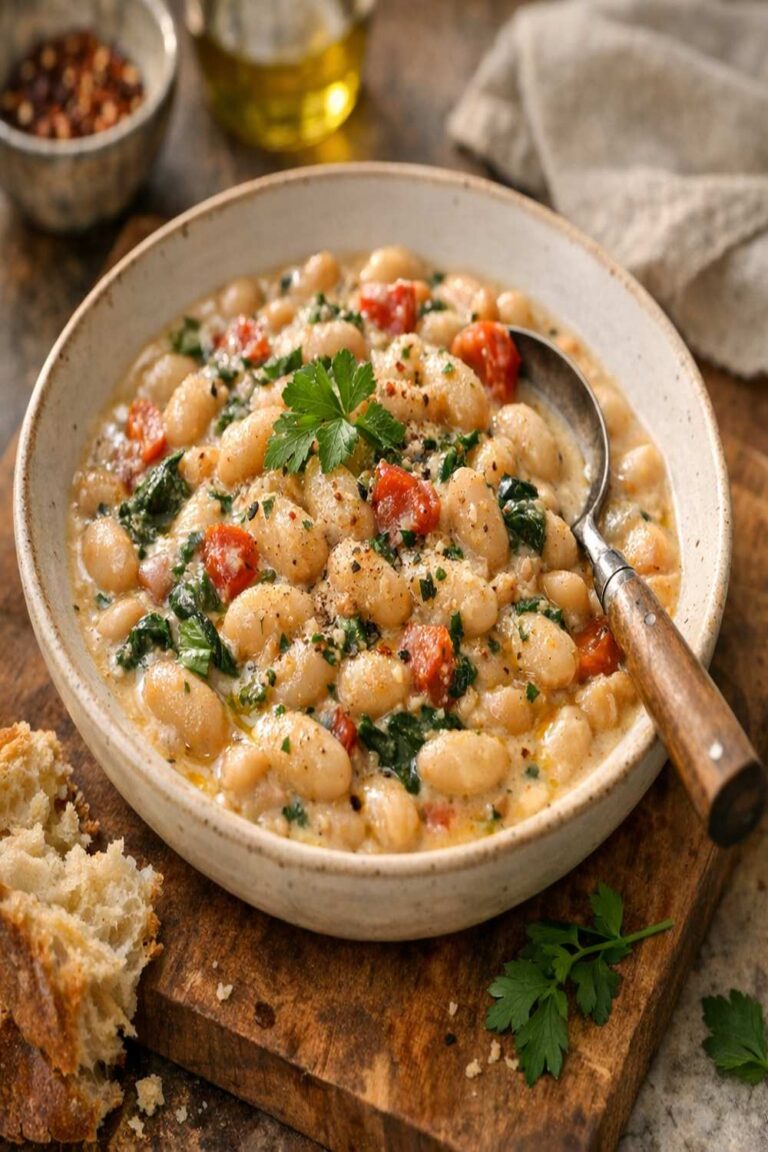
Getting kids to eat cornbread feels impossible—until you try this approach. I’ve watched countless families in my nutrition practice struggle with getting their children excited about wholesome, homemade baked goods. The secret? A recipe that tastes like comfort, bakes up perfectly every time, and sneaks in real nutrition without anyone noticing. This golden cornbread made with creamy almond milk has become my go-to when I need something that works for everyone at the table, from toddlers discovering new textures to teenagers who think they’re too cool for “healthy” food. When you pair this with hearty sides like this cozy soup, you’ve got a meal that nourishes bodies and builds memories.
Golden Cornbread with Almond Milk: The Whole Family Will Actually Eat (Picky Eaters Included)
I’ll never forget the Tuesday evening when my niece Emma—who survived on approximately three foods and white bread only—asked for a second slice of this cornbread. Her mom nearly fell off her chair. Emma had been diagnosed with a severe dairy sensitivity, and we’d been searching for baked goods that didn’t leave her feeling isolated at family dinners. I developed this recipe specifically for her, swapping traditional buttermilk for unsweetened almond milk while keeping every ounce of that tender crumb and slightly sweet flavor families crave.
What surprised me most wasn’t just that Emma loved it—it was that everyone else did too. Her older brother, who typically dismisses anything “healthy,” grabbed a warm piece before it even cooled. That’s when I realized this recipe had something special: it delivers authentic cornbread joy without compromise, whether your family needs dairy-free options, wants cleaner ingredients, or simply deserves a foolproof weeknight side dish that tastes homemade.
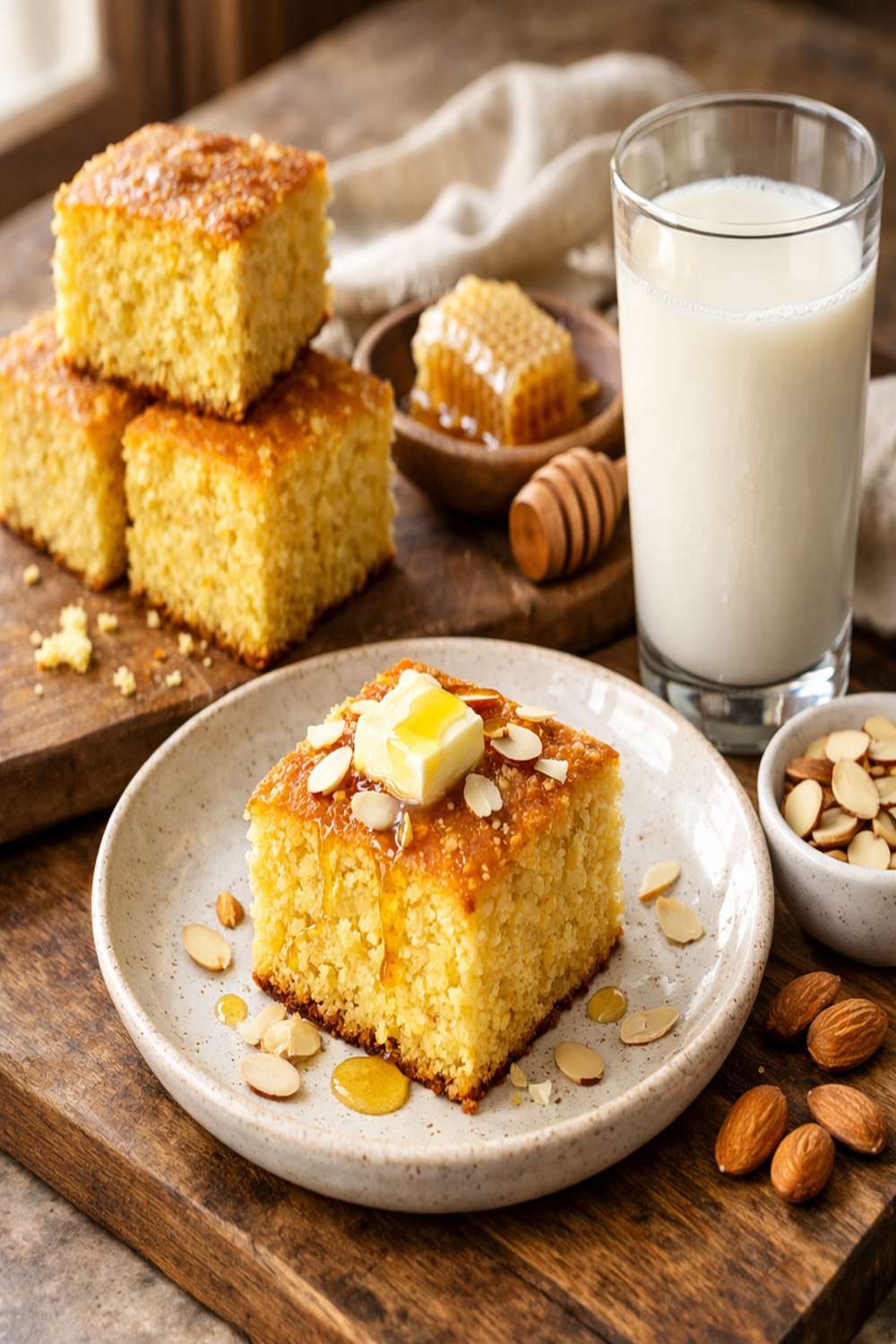
Why Kids Love This Version
This cornbread checks every box that makes children genuinely excited to eat something homemade. The texture is tender and slightly crumbly—nothing dense or heavy that turns kids away. The flavor is subtly sweet without being dessert-like, which means it pairs beautifully with dinner proteins and vegetables. And from a sensory perspective, the golden-brown exterior with that warm, buttery aroma is basically irresistible to young eaters.
- The Perfect Tender Crumb — Cornmeal creates that distinctive texture kids recognize and love, while almond milk keeps everything moist without the heaviness of traditional dairy. Children respond to familiar textures, and this hits that comfort-food mark perfectly.
- Natural Sweetness Without Guilt — The sugar in this recipe is moderate and balanced, creating a slightly sweet profile that feels like a treat while still being nutritionally appropriate for regular meals. Kids who reject “healthy” baking often accept this because it tastes genuinely good, not like a compromise.
- It’s Interactive and Sensory-Rich — From mixing to the aroma while baking, kids engage with all their senses. That warm-from-the-oven moment? That’s when even reluctant eaters become interested.
How to Get Kids Involved in Making This
One of my favorite nutrition insights is that children who help prepare food are significantly more likely to eat it—sometimes up to 90% more willing to try new flavors. This recipe is perfectly designed for multi-age participation, which means your kitchen becomes a teaching moment, not a logistical nightmare.
- Ages 3-5: The Pouring and Stirring Station — Toddlers can pour pre-measured ingredients into the mixing bowl with supervision and stir the dry ingredients with a wooden spoon. This builds confidence and creates ownership. Assign an adult helper specifically for safety, and use lightweight bowls.
- Ages 6-9: Measuring and Mixing Partners — School-age children can measure dry ingredients (with verification), pour liquids into measuring cups with guidance, and operate an electric mixer on low speed with an adult’s hands guiding. This is where they learn actual cooking skills and mathematical concepts through real application.
- Ages 10+: Real Responsibility — Older kids can manage the entire mixing process independently, grease the baking pan, and check doneness using the toothpick test under supervision. They can also preheat the oven and set timers, building kitchen competence that lasts a lifetime.
The Ingredients—Hidden Nutrition, Visible Deliciousness
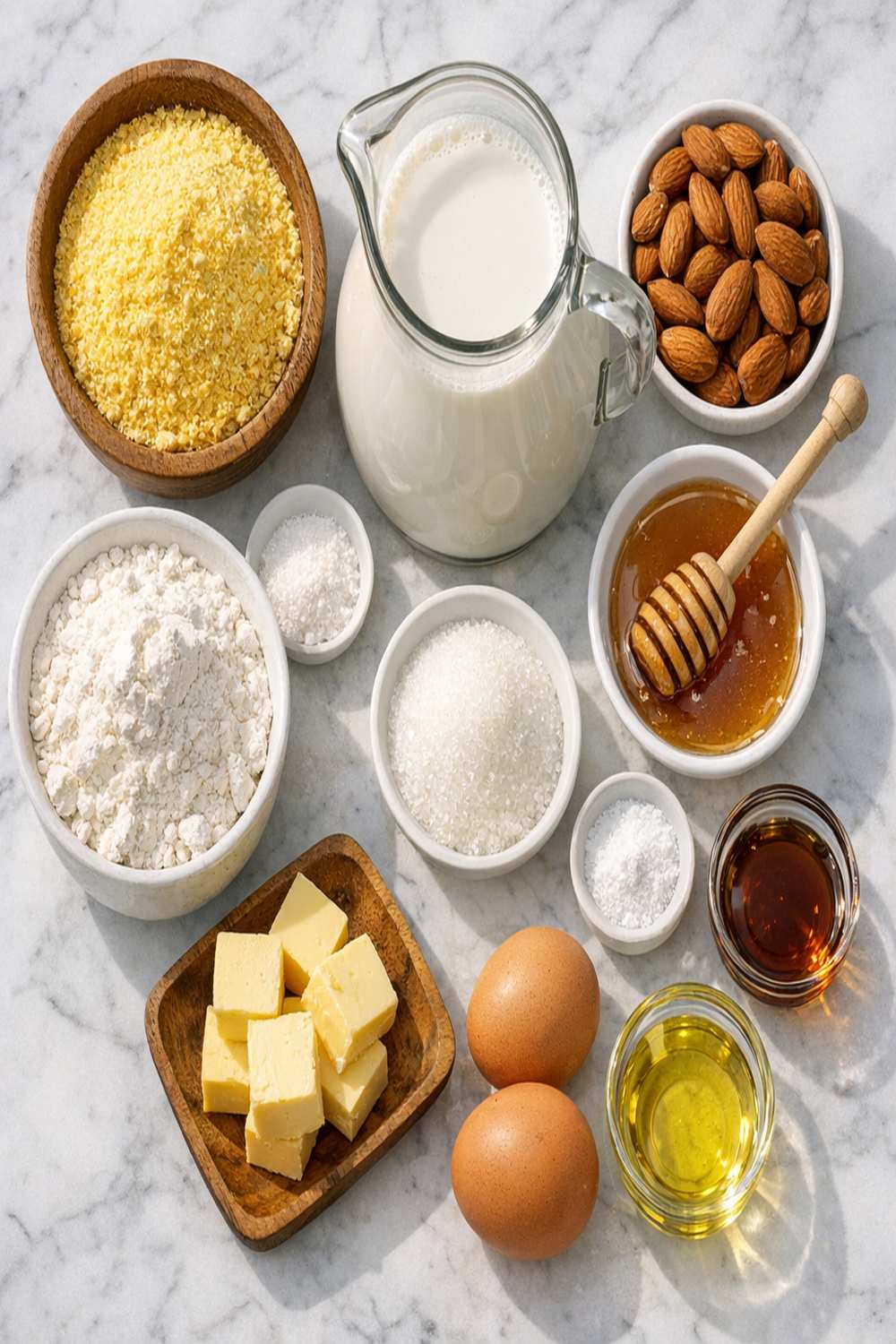
I love how straightforward this ingredient list is. No mysterious additives, no substitutions that compromise flavor. Each component serves a specific purpose: the cornmeal delivers that signature taste and texture, the almond milk provides moisture and makes this accessible for dairy-free families, and the oil creates that tender, moist crumb. There are no hidden vegetables here, but there is intentional nutrition in every spoonful. The cornmeal provides B vitamins and minerals, the almond milk adds calcium and vitamin E, and this recipe avoids the excess saturated fat of traditional versions.
- 1 teaspoon fine sea salt (balances sweetness and enhances corn flavor)
- 1/2 teaspoon vanilla extract (amplifies warmth and depth, optional but recommended)
- 1 and 1/4 cups all-purpose flour (spooned and leveled, never packed down)
- 1 cup yellow cornmeal (stone-ground if available for deeper flavor)
- 2/3 cup granulated sugar (creates the slightly sweet profile kids recognize)
- 1/3 cup canola oil (neutral flavor allows cornmeal to shine)
- 1 tablespoon baking powder (fresh is critical—test before using if opened over 6 months ago)
- 1 and 1/4 cups unsweetened almond milk (room temperature for best results)
Makes: 9 generous servings (one 8×8-inch square pan) or 12 smaller servings
How to Make Golden Cornbread with Almond Milk for the Whole Family
This is the part where cooking becomes a joyful family activity rather than a rushed task you’re checking off a list. I recommend gathering everyone in the kitchen about 30 minutes before you want to eat. That gives you time to work together without stress, and it means your cornbread comes out warm just as you’re sitting down to the table.
Step 1: Prepare Your Oven and Baking Pan
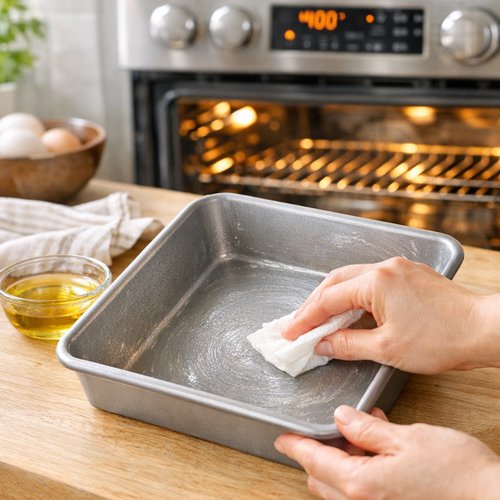
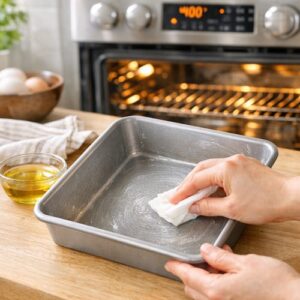
Set your oven to 400 degrees Fahrenheit and position a rack in the center. While the oven preheats (this takes about 10-12 minutes), lightly grease an 8×8-inch square baking pan or 9-inch round cake pan using a neutral oil or cooking spray. Make sure you coat the bottom and all sides evenly—this is where younger kids can help by spraying under adult supervision. Never let children handle the oven door or place items inside; this is an adult-only task due to burn hazard.
Step 2: Combine All Dry Ingredients
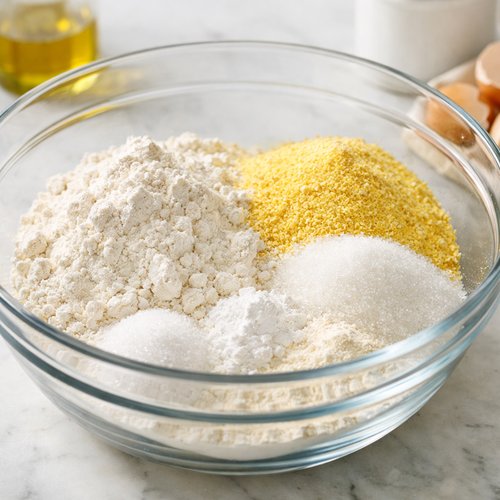
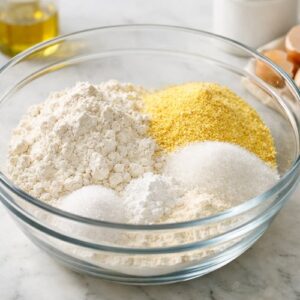
In a large mixing bowl, add the all-purpose flour, yellow cornmeal, granulated sugar, baking powder, and fine sea salt. This is the perfect job for kids ages 6 and up—measuring each ingredient carefully and pouring it into the bowl. Use a whisk or fork to stir everything together until the mixture looks uniform with no visible clumps of baking powder. This step is crucial: uneven distribution of leavening agents means uneven rise and texture. Spend a full minute stirring to ensure everything is fully combined. If anyone in your family has a dust sensitivity, have them wear a light mask during this step, as cornmeal powder can irritate airways.
Step 3: Create a Well and Add Wet Ingredients
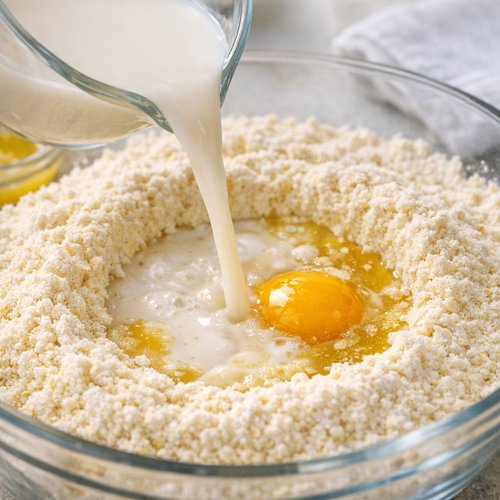
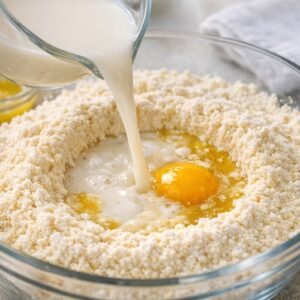
Make a small well or indent in the center of your dry mixture—this helps distribute the wet ingredients evenly rather than creating lumps. Pour the unsweetened almond milk and canola oil directly into that well, then add the vanilla extract. Now here’s where I see most beginners make mistakes: they overmix. You want to stir just until the dry ingredients are moistened and incorporated. A few small lumps are completely fine and actually preferable to overmixing, which toughens the crumb. Stir for about 30-45 seconds using a wooden spoon or spatula.
Step 4: Transfer Batter to Prepared Pan
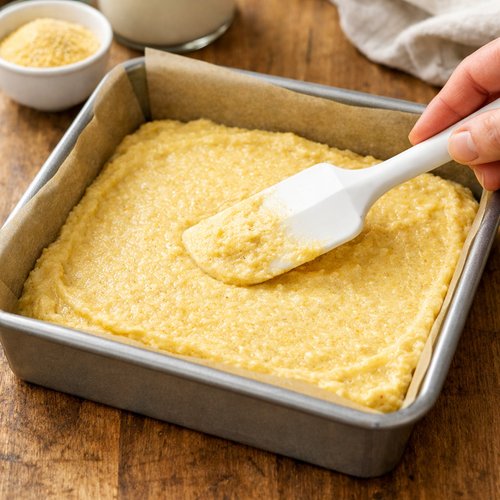
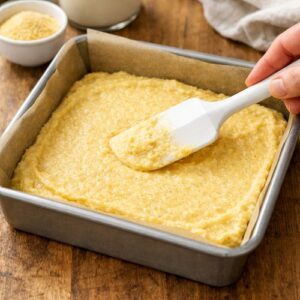
Pour the batter into your prepared baking pan, spreading it gently with a spatula until it reaches the corners evenly. The batter should be slightly thick and pourable, not watery. If your children are helping, they can do the pouring with guidance, but keep adult hands nearby. The batter won’t be perfectly smooth, and that’s normal—don’t overmix trying to make it look perfect.
Step 5: Bake Until Golden and Set
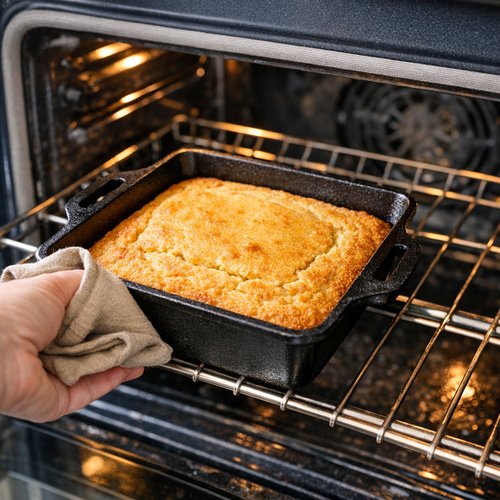
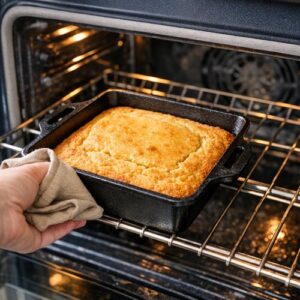
Place the pan in your preheated 400-degree oven on the center rack. Adult placement only—never allow children to place items in the hot oven. Set a timer for 20 minutes, then check for doneness. The top should be light golden brown, and when you insert a toothpick into the very center, it should come out clean or with just a tiny crumb or two clinging to it. If it comes out wet with batter, bake for an additional 2-3 minutes and check again. Total baking time is typically 20-25 minutes, though this varies based on your oven’s actual temperature.
Step 6: Cool and Serve
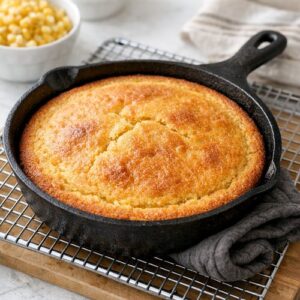
Remove the cornbread from the oven and place it on a heat-safe surface or cooling rack. Warn everyone that the pan is extremely hot—even if it doesn’t look like it. Keep hands away for at least 2-3 minutes. Let it cool for about 5 minutes in the pan, then cut into squares and serve. It’s wonderful warm with a tiny drizzle of honey, a spread of almond butter, or simply as-is alongside your main meal.
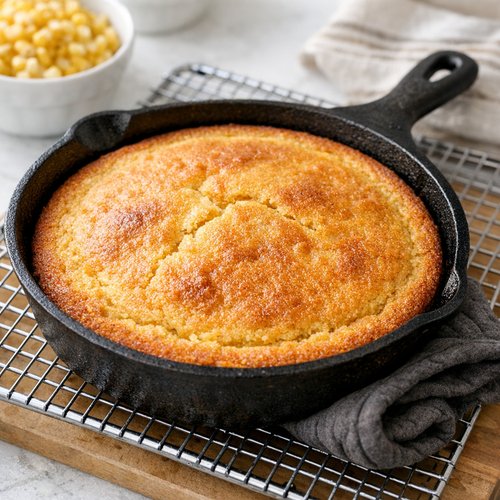
Expert’s Nutritional Tip: The Almond Milk Advantage
From my clinical nutrition background, here’s what excites me about using unsweetened almond milk in baking: you’re eliminating the lactose concerns for sensitive kids while keeping the moisture profile intact. Almond milk has a fat content around 2.5-3%, which is actually ideal for tender cakes and quick breads. It won’t create the dense crumb you’d get with fat-free milk, and it avoids the heaviness of whole milk. Additionally, unsweetened almond milk provides about 30 IU of vitamin E per cup—an antioxidant that supports growing children’s immune function. By using dairy-free options, you’re not sacrificing nutrition; you’re creating an inclusive recipe that works for every family composition.
Customization Station: Let Everyone Build Their Own
Here’s a psychology principle I’ve observed in my practice: when kids feel they have control over what they’re eating, resistance drops dramatically. Set up a simple toppings station alongside this warm cornbread, and watch even your most selective eaters engage.
- Spread Options — Offer unsalted butter, almond butter, or sunflower seed butter. Some kids want richness; others prefer healthier fats. Let them choose based on what sounds good to them.
- Sweet Add-Ons — Small bowls of raw honey, fruit jam, or a tiny drizzle of pure maple syrup. The key is offering choices rather than making assumptions about what they’ll accept.
- Savory Direction — A small bowl of shredded cheese, a few sliced olives, or even a tiny amount of hummus. This teaches kids that cornbread doesn’t have to be sweet—it’s a versatile side that adapts to meals.
Scaling for Different Family Sizes
One of the best parts about this recipe is how easily it adapts. Whether you’re cooking for two or feeding six hungry kids, the proportions stay consistent.
For a Family of 2-3: Make the full recipe anyway. Cornbread stays fresh for 3-4 days and actually makes excellent lunchbox additions or quick breakfasts. You’ll be grateful to have extras.
For a Family of 4-5: This recipe yields exactly the right amount in an 8×8-inch pan. Everyone gets a generous serving with maybe one small piece left over.
For a Family of 6+: Double the entire recipe. Use two 8×8-inch pans or one 9×13-inch pan, and increase baking time by about 5-8 minutes (total 25-30 minutes). Bake on the same 400-degree setting.
Can I Store Golden Cornbread with Almond Milk?
Room Temperature (Best for 1-2 days): Store in an airtight container or wrapped tightly in foil. The cornbread remains tender and is perfect for grabbing throughout the day. This is ideal for lunchboxes—cut a square, wrap it individually in parchment paper, and it stays fresh and moist for the entire school day.
Refrigerator (3-4 days): Keep covered in an airtight container. The texture remains good, though it may feel slightly less moist. Before eating, warm briefly in a 300-degree oven for 5 minutes to restore softness.
Freezer (Up to 3 months): Wrap individual squares tightly in plastic wrap, then place in a freezer bag with the date written on it. Thaw at room temperature for about 2 hours, or reheat directly from frozen in a 350-degree oven for 8-10 minutes wrapped in foil. Frozen cornbread is perfect for busy mornings—pull it out the night before and it’s ready for breakfast or lunch.
Lunchbox Strategy: If packing for school, include a small container of almond butter or honey on the side so the cornbread doesn’t get soggy. Pack it in the coolest part of the lunchbox, away from warm items.
Nutrition Information
Per serving (based on 9 servings): Approximately 240 calories, 9g fat, 35g carbohydrates, 1g fiber, 14g sugar, 3g protein, 280mg sodium, and 45mg calcium. The USDA recommends that children ages 4-8 get about 1,000mg calcium daily, and this cornbread contributes meaningfully, especially when paired with other calcium sources throughout the day.
What I love about this nutritional profile from a pediatric perspective: it’s calorie-appropriate for a side dish without being heavy, it includes whole grains (cornmeal), and the fat content from canola oil is heart-healthy polyunsaturated fat rather than saturated fat. The B vitamins from cornmeal support energy production—something active kids desperately need—while the modest sugar content keeps this suitable for regular family meals rather than occasional treats only. This isn’t a “health food” that tastes like punishment; it’s genuinely nutritious food that happens to taste wonderful.
What to Serve Alongside for a Complete Family Meal
This cornbread truly shines as part of a balanced plate. I recommend pairing it with proteins and vegetables to create meals that satisfy everyone. If your family loves warmth and comfort, serve alongside Hash Brown Potato Soup for a cozy evening that makes even reluctant eaters feel nourished. For warmer months, cornbread pairs beautifully with grilled chicken, fresh salads, and roasted vegetables.
- Chili or Bean-Based Dishes — The slight sweetness of cornbread balances savory, spiced meals perfectly. Kids who are cautious about “boring” vegetables often accept them more readily when there’s cornbread on the plate as an anchor.
- Slow-Cooker Pulled Pork or Chicken — Tender proteins with mild flavors work beautifully alongside cornbread. The combination feels substantial enough that kids feel satisfied rather than looking for additional snacks 30 minutes later.
- Roasted Vegetables with Light Seasoning — Carrots, green beans, or zucchini roasted with a touch of olive oil and salt become more interesting when served alongside warm cornbread. Kids will often eat vegetables they’d normally refuse because the whole meal feels more approachable.
- Simple Green Salad with Mild Dressing — For families practicing balanced eating, a side salad adds greens and fiber. The cornbread’s subtle sweetness prevents the meal from feeling too “healthy” in a way that triggers resistance.
Make-Ahead Guide for Busy Families
From my experience working with families juggling multiple schedules, strategic make-ahead planning transforms weeknight stress into actual relaxation time.
The Night Before: Mix all dry ingredients (flour, cornmeal, sugar, baking powder, salt) in a bowl, cover loosely, and store on the counter. In the morning or an hour before dinner, measure your almond milk and oil into a separate container. When you’re ready to bake, combine the wet and dry ingredients, and you’ve cut active prep time to literally 3 minutes of mixing. This is game-changing for busy mornings when you need breakfast or emergency side dishes.
The Weekend Batch Method: Make a double or triple batch on Sunday afternoon when things feel calmer. Cool completely, then freeze in individual portions. Throughout the week, pull out exactly what you need, reheat gently, and you’ve got homemade cornbread without any weeknight effort. This is particularly brilliant for families with children who have food sensitivities or preferences—you’re providing consistent, controlled nutrition rather than relying on last-minute grocery store options.
Common Mistakes to Avoid
Overmixing the Batter: This is the number one reason cornbread turns out tough and dense. Once your wet and dry ingredients are combined, step away. Those tiny lumps disappear during baking and actually create a more tender crumb. I typically see home bakers mixing for a full minute or more when 30-45 seconds is perfect.
Using Sweetened or Vanilla Almond Milk: I specify unsweetened for good reason—flavored varieties add extra sugar and vanilla flavor that competes with the natural corn taste. You want the almond milk to be a neutral liquid vehicle, nothing more. Check the label before you buy.
Opening the Oven Door Repeatedly: Every time you peek, you drop the internal temperature and risk uneven baking or a sunken center. Trust your timer. Set it for 20 minutes, and don’t open that door until the timer sounds.
Not Checking Your Baking Powder’s Age: Baking powder loses potency over time, especially in humid climates like Florida where I’m based. If your cornbread comes out flat and dense, old leavening is usually the culprit. Write the date you open containers and replace every 6 months if you live in a warm, humid area.
Seasonal Variations
Spring/Summer Version: Add 1/2 cup fresh or frozen corn kernels and 2 tablespoons finely minced jalapeño (seeds removed for less heat). This creates a slightly savory, fresher variation that’s beautiful alongside grilled proteins. The corn amplifies the corn flavor, while jalapeño adds sophistication without overwhelming young palates.
Fall/Winter Version: Reduce sugar to 1/2 cup and add 1 teaspoon of cinnamon plus 1/4 teaspoon of nutmeg to the dry ingredients. Include 1/2 cup finely shredded zucchini (squeezed very dry) mixed into the wet ingredients. This creates a warmer, spice-forward version that feels seasonal without being overly “holiday.” Kids love the subtle spice complexity.
Year-Round Protein-Boosted Version: For families focusing on higher protein intake, substitute 1/4 cup of the all-purpose flour with unsweetened plant-based protein powder. This adds texture without dramatically changing flavor, and it boosts protein content by about 3-4g per serving.

Cornbread Almond Milk Recipe
Ingredients
Method
- Set your oven to 400 degrees Fahrenheit and position a rack in the center. While the oven preheats (this takes about 10-12 minutes), lightly grease an 8x8-inch square baking pan or 9-inch round cake pan using a neutral oil or cooking spray. Make sure you coat the bottom and all sides evenly—this is where younger kids can help by spraying under adult supervision. Never let children handle the oven door or place items inside; this is an adult-only task due to burn hazard.
- In a large mixing bowl, add the all-purpose flour, yellow cornmeal, granulated sugar, baking powder, and fine sea salt. This is the perfect job for kids ages 6 and up—measuring each ingredient carefully and pouring it into the bowl. Use a whisk or fork to stir everything together until the mixture looks uniform with no visible clumps of baking powder. This step is crucial: uneven distribution of leavening agents means uneven rise and texture. Spend a full minute stirring to ensure everything is fully combined. If anyone in your family has a dust sensitivity, have them wear a light mask during this step, as cornmeal powder can irritate airways.
- Make a small well or indent in the center of your dry mixture—this helps distribute the wet ingredients evenly rather than creating lumps. Pour the unsweetened almond milk and canola oil directly into that well, then add the vanilla extract. Now here's where I see most beginners make mistakes: they overmix. You want to stir just until the dry ingredients are moistened and incorporated. A few small lumps are completely fine and actually preferable to overmixing, which toughens the crumb. Stir for about 30-45 seconds using a wooden spoon or spatula.
- Pour the batter into your prepared baking pan, spreading it gently with a spatula until it reaches the corners evenly. The batter should be slightly thick and pourable, not watery. If your children are helping, they can do the pouring with guidance, but keep adult hands nearby. The batter won't be perfectly smooth, and that's normal—don't overmix trying to make it look perfect.
- Place the pan in your preheated 400-degree oven on the center rack. Adult placement only—never allow children to place items in the hot oven. Set a timer for 20 minutes, then check for doneness. The top should be light golden brown, and when you insert a toothpick into the very center, it should come out clean or with just a tiny crumb or two clinging to it. If it comes out wet with batter, bake for an additional 2-3 minutes and check again. Total baking time is typically 20-25 minutes, though this varies based on your oven's actual temperature.
- Remove the cornbread from the oven and place it on a heat-safe surface or cooling rack. Warn everyone that the pan is extremely hot—even if it doesn't look like it. Keep hands away for at least 2-3 minutes. Let it cool for about 5 minutes in the pan, then cut into squares and serve. It's wonderful warm with a tiny drizzle of honey, a spread of almond butter, or simply as-is alongside your main meal.
FAQs
My child is refusing to eat this because of the texture. How do I help them accept it?
Texture rejection is real and completely normal in child development. Start by letting them touch the cornbread and smell it—sensory exposure without pressure. Offer a tiny piece (smaller than their pinky nail) with no expectation of eating it. If they lick it, that’s success. Over repeated, pressure-free exposures, most children become willing to try. You might also crumble a small piece and mix it into applesauce or yogurt, so they’re getting the flavor in a more familiar texture. Never force or shame—that creates lasting food anxiety.
Can I use a different type of milk besides almond milk?
Absolutely. Oat milk is my second choice (creates a slightly richer crumb), followed by soy milk or coconut milk. Avoid any sweetened versions. You can also use regular dairy milk if there’s no sensitivity concern, though the cornbread may be slightly less moist. Use the same 1 and 1/4 cup measurement for any milk alternative.
Why did my cornbread turn out dry?
The most common culprits: oven temperature is running hot (use an oven thermometer to verify), you overmixed the batter, or you baked too long. Try reducing baking time by 2-3 minutes next attempt. Also ensure you’re using the exact oil measurement—too little oil means insufficient moisture. Finally, measure your flour correctly by spooning it into the measuring cup and leveling rather than packing it down.
Is this recipe safe for a tree nut allergy?
Almond milk comes from almonds, which are tree nuts. If your child has a tree nut allergy, this recipe isn’t safe as written. However, you can substitute with sunflower seed milk, pea milk, or oat milk (if not cross-contaminated in their facility). I recommend choosing certified allergen-free versions and consulting your allergist before serving.
Can I make cornbread muffins instead of a pan?
Yes! Fill a greased muffin tin two-thirds full with the same batter. Reduce baking time to 12-15 minutes. This creates individual portions that are perfect for lunchboxes and gives you portion control for families monitoring intake. Muffin versions are also wonderful for freezing and reheating individually.
More Family-Friendly Recipes
- Biscuit Recipe Vegan — Warm, flaky biscuits that work for breakfast or alongside dinner, and they’re completely dairy-free
- Cashew Mozzarella Recipe — A creamy, plant-based cheese that kids find exciting and versatile for adding to various meals
- this simple cake — A naturally sweet cake that hides vegetables and satisfies the dessert cravings while providing nutrition
- Best Vegan Lasagna Recipe — A complete comfort-food dinner that’s heartier and naturally draws even picky eaters to the table
There’s genuine magic in the kitchen when you stop fighting your family’s preferences and start building meals that work with their needs and tastes. This golden cornbread with almond milk has been my secret weapon for years—in my nutrition practice, in my family gatherings here in sunny Florida, and now, I’m sharing it with you. Every time you make it together, you’re not just feeding your family; you’re creating moments they’ll remember. That teenager might not admit it, but they’ll think of this cornbread when they’re grown and trying to recreate comfort. That toddler is building food memories and learning that homemade means love.
Whether you’re navigating dairy sensitivities, feeding a diverse group of eaters, or simply craving foolproof comfort food that tastes like genuine home cooking, this recipe delivers. Make it this week. Make it with whoever’s in your kitchen—little hands and big hands mixing together. Watch as the aroma fills your home and, just maybe, watch a picky eater ask for seconds.
Happy cooking!