 Barbara Brito
There’s nothing quite like spreading something creamy and vibrant onto warm toast or crispy crackers for breakfast, lunch, or a quick snack. This simple avocado spread brings together fresh, wholesome ingredients that nourish your body while tasting absolutely delicious. Whether you’re topping brunch potato recipes or layering it onto homemade vegan biscuits, this recipe becomes your secret weapon for effortless, satisfying meals.
A Simple Spread That Started at My Family Table
I grew up in a tight-knit family where every meal told a story. My abuela would gather us around her kitchen table in Miami, and there was always something fresh, something real being prepared. One summer afternoon, she taught me how to mash ripe avocados with just a squeeze of lime—nothing fancy, nothing complicated. She’d say, “Barbara, good food doesn’t need a long list of ingredients. It needs respect for what you’re working with.”
That philosophy stuck with me through dietitian school and into my practice today. Years later, I adapted her simple technique by adding a touch of creamy tang—Greek yogurt or sour cream—to create a spread that’s both lighter and more stable than traditional guacamole. It’s become my go-to when I want something that tastes like home but fits my modern, health-conscious kitchen. Now I’m sharing it with you, exactly as I’ve refined it.
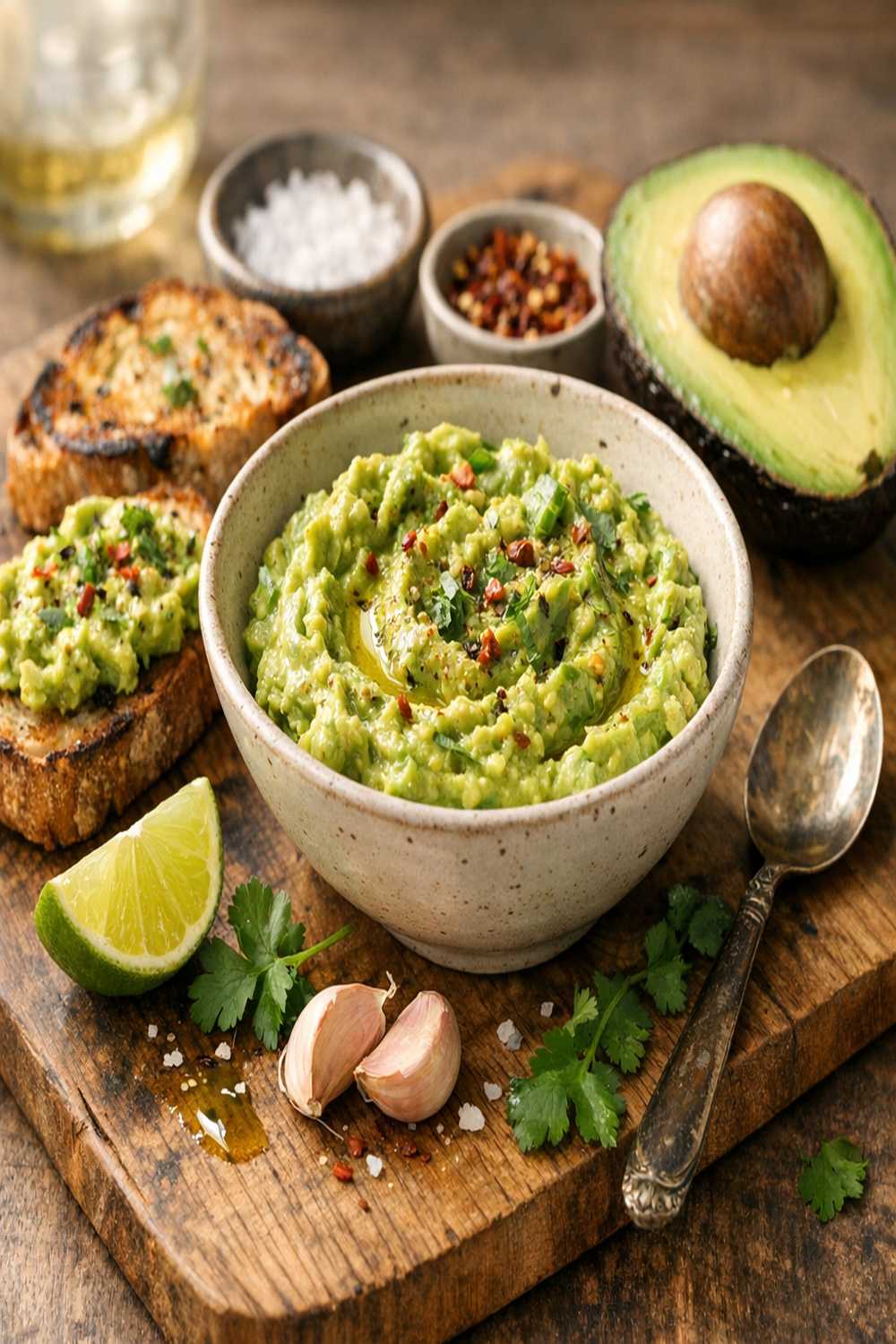
What is Avocado Spread Recipe?
Avocado spread is a creamy, nutrient-dense condiment that bridges the gap between guacamole and simple mashed fruit. Unlike traditional guacamole, which relies heavily on onions, cilantro, and tomatoes, this spread keeps the focus on the avocado itself—its buttery texture and subtle, clean flavor. The addition of lime juice brightens everything while preventing oxidation, and a modest amount of sour cream or Greek yogurt adds richness without heaviness.
This isn’t a dip meant for sharing chips around a party table. It’s an everyday spread designed to top toast, fill sandwiches, crown grain bowls, or layer into breakfast scrambles. It originated from my desire to create something more refined than quick guacamole but just as accessible—something you could make in five minutes without thinking twice.
Why You’ll Love This Avocado Spread Recipe
- Incredibly quick to prepare – From your kitchen counter to your plate in under five minutes, no advanced cooking skills required
- Packed with heart-healthy fats – Avocados contain monounsaturated fats that support cardiovascular health and help you absorb fat-soluble vitamins
- Versatile for any meal – Works beautifully at breakfast, lunch, dinner, or as a sophisticated snack option
- Requires minimal ingredients – Just five simple, whole-food components you likely already have on hand
- Naturally nutrient-dense – Offers fiber, potassium, vitamin E, and vitamin K without any processing or additives
- Perfect for meal prep – Makes enough for multiple servings and stores efficiently for quick grab-and-go meals
- Customizable to your taste – Easily adjust consistency, acidity, or creaminess based on your preferences
The Ingredients
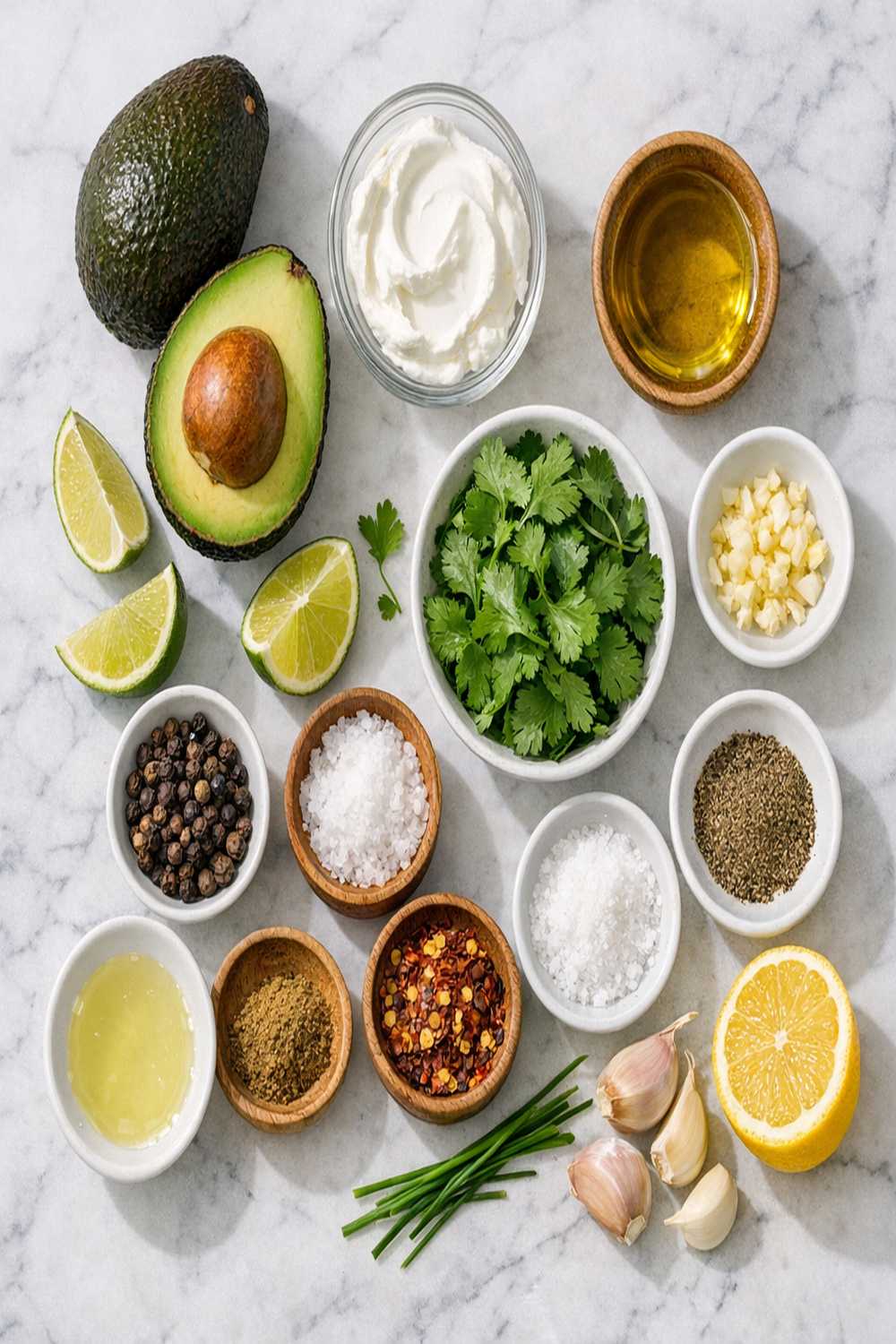
Every ingredient in this spread plays a purpose. I’ve chosen items that complement each other without overwhelming the delicate flavor of ripe avocado. Fresh citrus brightens, creamy dairy adds body, and seasoning rounds out the flavor profile. This recipe makes approximately one cup of spread—enough for four servings as a condiment or two generous servings as a meal component.
- ⅛ teaspoon freshly ground black pepper (freshly cracked, not pre-ground)
- 1½ teaspoons plain Greek yogurt or sour cream (full-fat creates the best texture)
- 1 large avocado (ripe but still firm, peeled and pitted)
- Optional: ¼ teaspoon smoked paprika or red pepper flakes for subtle depth
- 1 teaspoon fresh lime juice (bottled works, but fresh is notably superior)
- ¼ teaspoon fine sea salt (adjust to your sodium preference)
How to Make Avocado Spread Recipe?
This recipe’s success depends on technique more than timing. You’re looking to create a texture that’s creamy but still maintains a slight texture—not baby food, not chunky. I’ll walk you through each step with the precision I use in my nutrition practice, because even simple recipes benefit from intention.
Step 1: Select and Prepare Your Avocado
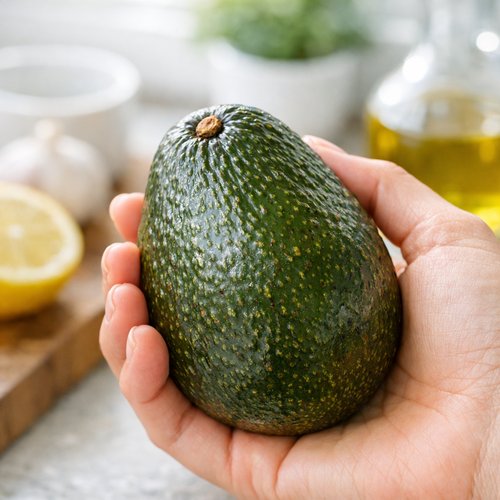
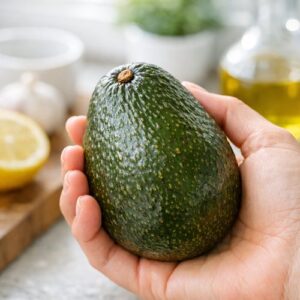
Begin by holding your avocado gently in your palm. It should yield slightly to pressure but feel firm—not soft or mushy. A ripe avocado is crucial; an underripe one will taste grassy and won’t blend smoothly, while an overripe one will be watery and oxidize rapidly. Cut the avocado lengthwise around the pit, then twist gently to separate the halves. Tap the pit firmly with a sharp knife blade, twist to remove it, and scoop the flesh into your food processor bowl. Work quickly once the flesh is exposed to minimize oxidation.
Step 2: Add Your Acidic Component Immediately
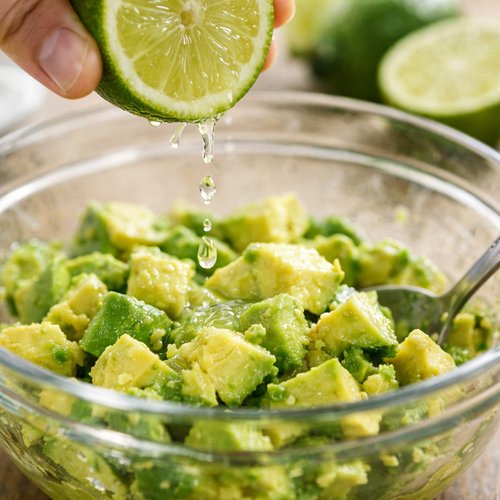
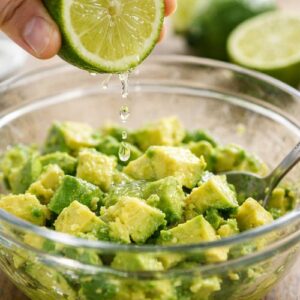
Squeeze your fresh lime juice directly over the avocado flesh. The citric acid immediately begins protecting against browning through a chemical process that prevents enzymatic oxidation. This step is non-negotiable and must happen right away. If you’re using bottled lime juice, measure exactly one teaspoon—too much creates bitterness, too little won’t provide adequate protection or flavor balance.
Step 3: Pulse to Break Down the Avocado
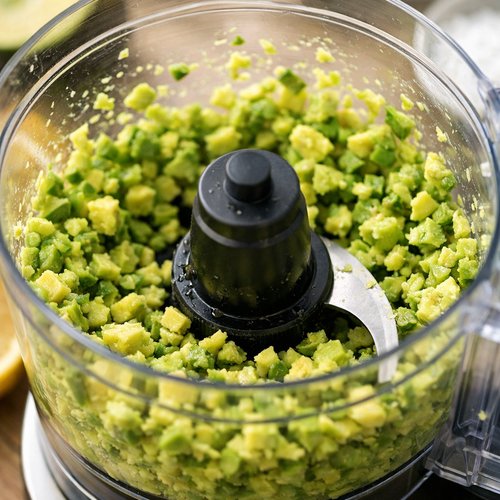
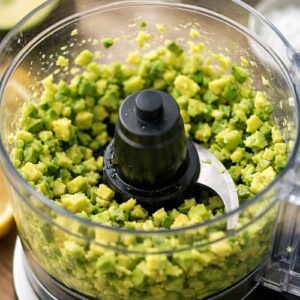
Pulse your food processor 4-5 times, holding each pulse for about one second. You’re looking to break the large avocado chunks into quarter-inch pieces. Don’t skip this step by diving straight into pureeing—the pulsing action helps incorporate air and creates a naturally light, pleasant texture rather than a dense, pasty spread. Listen to the sound change from a chunky disruption to a smoother, steadier tone.
Step 4: Add Dairy and Seasonings
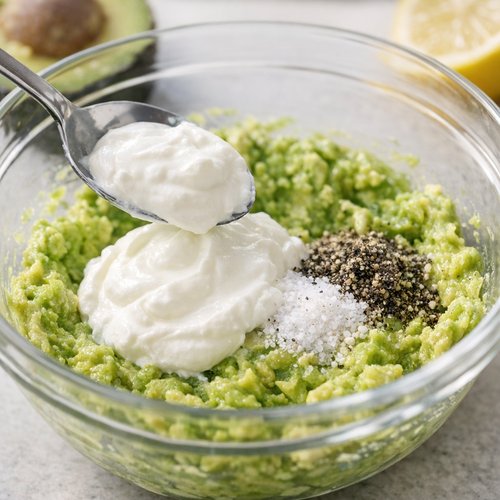
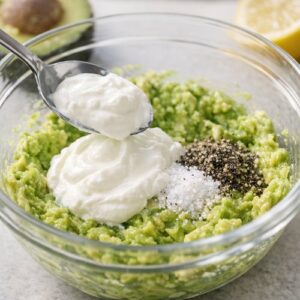
Spoon your Greek yogurt or sour cream directly onto the pulsed avocado. Add your salt and black pepper. The dairy acts as a stabilizer and prevents the spread from becoming too dense. Greek yogurt adds tanginess and extra protein, while sour cream contributes a richer mouth-feel. Start with the full amount, knowing you can always add more yogurt later if you prefer a thinner, dipping consistency.
Step 5: Puree Until Creamy
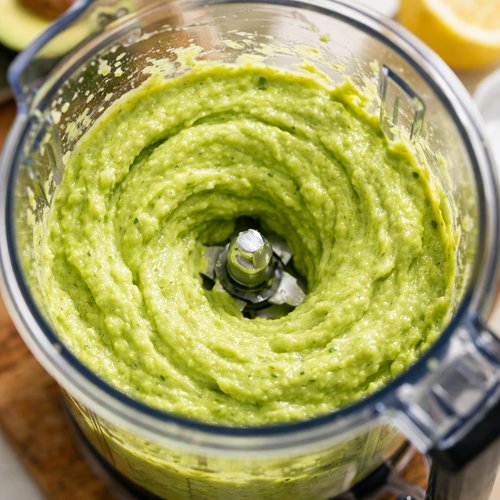
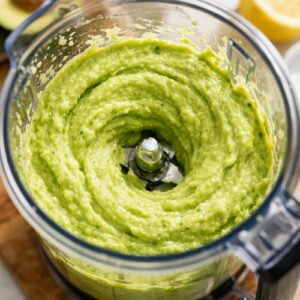
Process on high speed for 20-30 seconds total, pulsing every few seconds rather than running continuously. You want a texture where the avocado is completely smooth and creamy, but you can still see gentle ripples when you run a spoon through it. It shouldn’t look like baby food or be completely uniform. If you see small flecks of avocado texture remaining, that’s perfect. Overprocessing creates heat from friction, which can develop bitter, oxidized flavors.
Step 6: Taste and Adjust
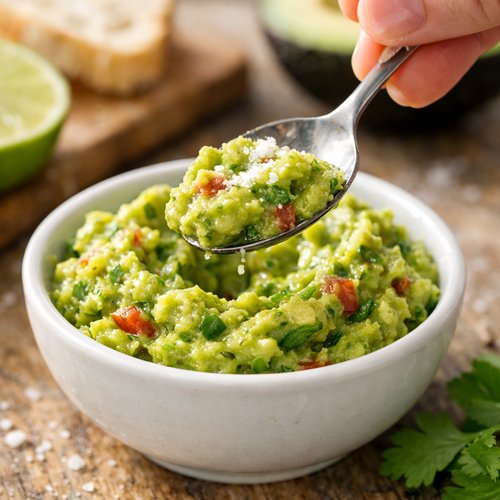
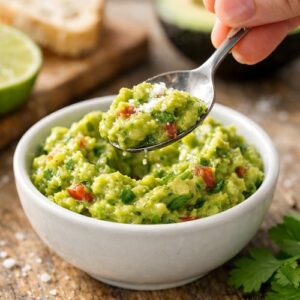
Transfer your spread to a small bowl or serving spoon and taste. Add a pinch more salt if needed—remember that salt should enhance, not dominate. If you want a thinner consistency for dipping or spreading more easily, pulse in an additional teaspoon of yogurt at a time. The spread will naturally thicken as it sits and cools slightly, so account for that. Serve immediately, or transfer to an airtight container if storing.
Expert’s Nutritional Tip
Here’s what my clinical nutrition background has taught me: the fat in avocados isn’t something to fear—it’s something to embrace. Avocados contain approximately 3 grams of monounsaturated fat per ounce, the same heart-protective fat found in olive oil. This type of fat helps reduce LDL cholesterol (the “bad” kind) while maintaining HDL cholesterol (the “good” kind). Additionally, avocados provide over 10% of your daily potassium requirement in just one medium fruit—more than a banana, gram for gram.
The fiber content—roughly 10 grams per fruit—supports digestive health and helps stabilize blood sugar when paired with complex carbohydrates. By adding Greek yogurt, you’re introducing probiotics and additional protein, creating a spread that provides sustained energy without the blood sugar spike you’d get from refined carbohydrates alone. This is why I recommend this spread for anyone managing energy levels, digestion, or metabolic health.
Make-Ahead Guide
As a registered dietitian and someone who values practical meal prep, I understand that most of us don’t have time to make fresh spread daily. Here’s my professional approach to preparing this in advance:
- Single-serving portions – Divide your spread into individual small glass jars (Weck jars work beautifully) with tight-fitting lids. Leave minimal air space at the top, as oxygen exposure accelerates browning. Label with the preparation date.
- Plastic wrap trick – Press plastic wrap directly onto the surface of your spread before sealing the container. This creates a barrier against air exposure and extends freshness by several hours.
- Citrus boost for storage – If preparing the full batch, add a few extra drops of lime juice (about ½ teaspoon additional) to provide extra protection during storage without noticeably affecting flavor.
- Refrigerator placement – Store in the coldest part of your refrigerator, usually the back of the bottom shelf, away from the door where temperature fluctuates.
- Maximum storage window – Use within 24 hours for optimal color and texture. After this window, enzymatic browning becomes visible and flavor begins to deteriorate.
Tips and Tricks
- Choose firm-ripe avocados from the produce section, not the bagged pre-cut ones – Pre-cut avocados oxidize faster and often contain preservatives. Handle whole avocados yourself for superior control and freshness.
- Lime juice is non-negotiable for flavor and preservation – The citric acid does two jobs simultaneously: it prevents browning through chemical protection and adds brightness that makes the spread more interesting. Bottled works, but fresh is worth the squeeze.
- Use full-fat dairy for the best results – Non-fat or low-fat yogurt creates a watery consistency that separates over time. Full-fat provides the creamy texture and stability you’re aiming for. Greek yogurt adds beneficial protein and tanginess, while sour cream contributes richness.
- Don’t skip the pulsing stage – A food processor’s continuous setting can overheat and oxidize your avocado rapidly. Pulse in short bursts to maintain freshness and control texture.
- Taste as you season – The salt should enhance avocado flavor, not announce itself. Add gradually and taste between additions.
- Serve immediately or chill slightly before serving – The spread is most flavorful at room temperature or after just 15 minutes of chilling. Extended refrigeration mutes the delicate avocado flavor.
Common Mistakes to Avoid
- Using underripe avocados – An underripe avocado won’t blend smoothly and tastes slightly bitter and grassy. Always squeeze-test before committing. The avocado should feel like a ripe pear—yielding to gentle pressure but not mushy.
- Over-processing the mixture – Continuous blending creates heat and accelerates oxidation. You want a few pulses followed by a brief puree, not a five-minute processing marathon. The spread should have slight texture, not be completely uniform.
- Adding ingredients that overpower delicate avocado flavor – Garlic, onion, or heavy spices can overpower rather than complement. This recipe celebrates avocado’s subtle richness, so restraint is your friend.
- Forgetting about oxidation during storage – Avocados brown because of enzymatic oxidation, not spoilage. While the browning isn’t dangerous, it indicates flavor degradation. Always use within 24 hours and store with minimal air exposure.
Seasonal Variations
While avocados are available year-round in most U.S. markets, their flavor profile and texture vary by season. Here’s how I adapt this recipe:
- Spring and early summer – California avocados are at peak ripeness and buttery richness. I use slightly less Greek yogurt during this season because the avocado itself provides abundant creaminess. The lime juice becomes even more important as it brightens the rich flavor.
- Late summer and fall – Mexican and Florida avocados appear with slightly different texture. They’re sometimes watery, so I increase the yogurt proportion slightly to compensate. The darker, more intense flavor pairs beautifully with smoked paprika.
- Winter months – Any avocado available will have traveled far, so I add an extra pinch of salt and perhaps a whisper of red pepper flakes to compensate for subtle flavor loss. The yogurt becomes essential for body and creaminess.
- Year-round herbal boost – Fresh cilantro or mint can be minced and stirred in (not processed) for subtle herbal notes. Keep these additions minimal so they don’t overwhelm.
Can I Store Avocado Spread Recipe?
Storage is the one limitation of this recipe, and I’m completely honest about it. Fresh avocado is perishable by nature. Once the fruit is cut and exposed to oxygen, enzymatic browning begins immediately—it’s not spoilage, but it does affect flavor and appearance.
I recommend storing your prepared spread in an airtight glass container in the coldest part of your refrigerator. Press plastic wrap directly onto the surface of the spread before sealing the container to minimize air exposure. Under these ideal conditions, your spread will maintain quality for up to 24 hours. The color will gradually shift from bright green to brownish-green as oxidation occurs, but the spread remains safe to eat.
If you notice browning on the surface, you can sometimes skim it away carefully. However, I prefer to use within that first day when the flavor and appearance are optimal. This is why I recommend making smaller batches more frequently rather than preparing large amounts infrequently. It’s a trade-off between convenience and quality that I’ve made peace with in my own kitchen.
Freezing is not recommended because avocado develops a grainy, unpleasant texture when thawed. The high water content and delicate cell structure don’t survive freezing well. I suggest making this fresh rather than attempting long-term storage.
Nutrition Information
Based on USDA FoodData Central analysis, one quarter-cup serving of this avocado spread (approximately 60 grams) contains approximately 100 calories, 9 grams of total fat (primarily monounsaturated), 5 grams of carbohydrates, 3 grams of fiber, 2 grams of protein, and 120 mg of potassium. The spread provides meaningful amounts of vitamin E, vitamin K, and folate—nutrients essential for cellular protection, bone health, and metabolic function.
The fiber-to-calorie ratio makes this spread particularly valuable for sustained satiety. When paired with whole grain toast or vegetables, you’re creating a complete snack that stabilizes blood sugar without spiking insulin. The monounsaturated fat helps your body absorb fat-soluble vitamins like the vitamin K in the avocado itself, creating nutritional synergy. From my practice perspective, this spread is a genuinely nourishing choice, not just a tasty one.
What Can I Serve With Avocado Spread Recipe?
The beauty of this spread is its adaptability across meals and applications. I’ve built countless combinations, and each one feels fresh and satisfying. Think of it as a foundation that accepts different partners depending on your mood and available ingredients:
- Whole grain or sourdough toast – The ultimate breakfast platform. Crispy exterior gives way to chewy interior, providing textural contrast. Top with a poached egg and everything bagel seasoning for a complete breakfast.
- Fresh vegetable crudités – Bell peppers, cucumber rounds, celery sticks, and cherry tomatoes all become vehicles for this spread. It’s more elegant than typical ranch and more interesting than hummus.
- Whole grain crackers – Choose crackers with seeds and minimal sugar. The avocado spread serves as glue, and you can add a small piece of smoked salmon or fresh herb for sophistication.
- Layered sandwiches – Replace mayo with this spread on turkey, roast beef, or veggie sandwiches. The avocado adds richness and nutrition without the processed oil typically found in mayo.
- Grain bowls – Dollop onto warm quinoa, farro, or brown rice bowls with roasted vegetables and your protein of choice. The spread melts slightly when warm, creating a creamy dressing effect.
- Topped on black bean burgers – I love this spread on black bean and sweet potato burgers, where it adds richness and prevents the burger from feeling dry.
- Breakfast scrambles or omelets – A spoonful stirred into warm eggs creates creaminess and adds nutritional value without butter or additional fat.
- Layered in brunch potatoes – Spread it onto warm roasted potatoes as part of brunch potato recipes for richness and nutrition.
Substitutes
- Mascarpone or crème fraîche instead of yogurt or sour cream – These Italian and French dairy products provide richness and tang. Use the same amount—they’re slightly richer, so slightly less goes further. The spread becomes more luxurious but also denser.
- Lemon juice instead of lime juice – Fresh lemon works beautifully, though the flavor profile shifts slightly more toward brightness and clarity. Use the same amount. Bottled lemon juice is acceptable if necessary, but fresh is superior.
- Coconut cream for dairy-free option – Use the thick portion from a can of full-fat coconut milk. It provides creaminess and creates a vegan version, though the flavor becomes noticeably different—more tropical, less tangy.
- Cashew cream for another dairy-free path – Blend soaked raw cashews with a touch of water to create a neutral, creamy base. This pairs beautifully with this spread, though you’ll lose the tangy element that makes Greek yogurt special.
- Cottage cheese for extra protein – Blended smooth, cottage cheese adds creaminess and substantial protein increase—this appeals to people building muscle or managing appetite. Choose small-curd varieties for smoother blending.

Avocado Spread Recipe
Ingredients
Method
- Begin by holding your avocado gently in your palm. It should yield slightly to pressure but feel firm—not soft or mushy. A ripe avocado is crucial; an underripe one will taste grassy and won't blend smoothly, while an overripe one will be watery and oxidize rapidly. Cut the avocado lengthwise around the pit, then twist gently to separate the halves. Tap the pit firmly with a sharp knife blade, twist to remove it, and scoop the flesh into your food processor bowl. Work quickly once the flesh is exposed to minimize oxidation.
- Squeeze your fresh lime juice directly over the avocado flesh. The citric acid immediately begins protecting against browning through a chemical process that prevents enzymatic oxidation. This step is non-negotiable and must happen right away. If you're using bottled lime juice, measure exactly one teaspoon—too much creates bitterness, too little won't provide adequate protection or flavor balance.
- Pulse your food processor 4-5 times, holding each pulse for about one second. You're looking to break the large avocado chunks into quarter-inch pieces. Don't skip this step by diving straight into pureeing—the pulsing action helps incorporate air and creates a naturally light, pleasant texture rather than a dense, pasty spread. Listen to the sound change from a chunky disruption to a smoother, steadier tone.
- Spoon your Greek yogurt or sour cream directly onto the pulsed avocado. Add your salt and black pepper. The dairy acts as a stabilizer and prevents the spread from becoming too dense. Greek yogurt adds tanginess and extra protein, while sour cream contributes a richer mouth-feel. Start with the full amount, knowing you can always add more yogurt later if you prefer a thinner, dipping consistency.
- Process on high speed for 20-30 seconds total, pulsing every few seconds rather than running continuously. You want a texture where the avocado is completely smooth and creamy, but you can still see gentle ripples when you run a spoon through it. It shouldn't look like baby food or be completely uniform. If you see small flecks of avocado texture remaining, that's perfect. Overprocessing creates heat from friction, which can develop bitter, oxidized flavors.
- Transfer your spread to a small bowl or serving spoon and taste. Add a pinch more salt if needed—remember that salt should enhance, not dominate. If you want a thinner consistency for dipping or spreading more easily, pulse in an additional teaspoon of yogurt at a time. The spread will naturally thicken as it sits and cools slightly, so account for that. Serve immediately, or transfer to an airtight container if storing.
Notes
FAQs
Why did my avocado spread turn brown?
Browning is enzymatic oxidation, not spoilage. When avocado flesh is exposed to air, polyphenol oxidase enzymes activate and cause browning through a process similar to what happens when you cut an apple. The lime juice slows this process by lowering pH, but doesn’t stop it completely. This is why I recommend using your spread within 24 hours and storing it with minimal air exposure. The browning indicates flavor degradation more than food safety concerns, so I prioritize freshness over shelf-life.
Can I make this spread without a food processor?
Absolutely. Use a fork and bowl instead. Cut your avocado into smaller chunks and mash against the bowl’s side, using firm pressure. This manual method gives you more control over texture—you’ll end up with a slightly chunkier spread, which many people prefer. It takes about two minutes of vigorous mashing. The result is equally delicious, just slightly grainier in texture. Some family recipes are best made by hand anyway, in my opinion.
Is this recipe the same as guacamole?
Not quite, though they’re cousins. Traditional guacamole includes onion, cilantro, tomato, and chile—elements that make it a complete salsa-like condiment. This avocado spread is simpler and more refined, focusing entirely on the avocado with minimal supporting players. Guacamole is meant for sharing from a bowl with chips; this spread is designed for individual servings on toast, crackers, or vegetables. You could call this a “guacamole lite” or “refined avocado spread,” but it’s intentionally different in both composition and application.
What happens if I add cilantro or other fresh herbs?
Fresh herbs can work beautifully, but the key is to mince them by hand and stir them in after the spread is done processing. Don’t blend them with the avocado itself, as the food processor will bruise them and turn them dark and bitter. A small amount of minced cilantro, parsley, or chives adds subtle flavor without overwhelming. Start with a teaspoon and taste—fresh herbs are potent. This variation still needs to be used within 24 hours, as the herbs speed oxidation slightly.
Can I use frozen avocado?
I recommend against it. Frozen avocado develops a grainy, mushy texture when thawed because the ice crystals rupture cell walls. While technically it’s still avocado, the texture becomes unpleasant and the result feels less fresh. This spread deserves fresh fruit. If you find yourself with ripe avocados you won’t use, it’s better to simply eat them as-is rather than freeze them for later spreading.
More Recipes You’ll Love
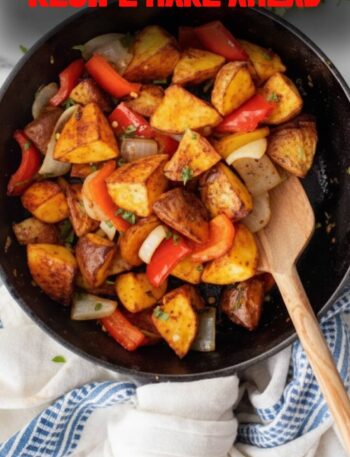
- Brunch Potato Recipe Make Ahead – Crispy roasted potatoes that serve as the perfect vehicle for this avocado spread, with make-ahead convenience built in
- Biscuit Recipe Vegan – Warm, fluffy biscuits that become an elevated breakfast when topped with this creamy spread and fresh herbs
- Black Bean And Sweet Potato Burger Recipe – Wholesome vegetarian burgers that benefit tremendously from this spread as a topping, adding nutrition and richness
There you have it—my simple, elegant avocado spread recipe that tastes like it came from a fancy restaurant but lives in your everyday kitchen. This is the kind of recipe I make on Monday mornings when I want something nourishing but effortless, on Wednesday afternoons when I need a satisfying snack that actually sustains me, and on weekend mornings when family gathers and everything tastes like home.
The best part? Once you understand these five ingredients and how they interact, you’ll stop needing the recipe at all. You’ll simply know: ripe avocado, fresh lime, creamy dairy, salt, pepper—that’s all it takes to create something genuinely delicious. That’s what I learned from my abuela, and that’s what I’ve carried into my practice as a dietitian. Respect your ingredients, use simple technique, taste as you go, and let the food speak for itself.
I hope this spread brings the same comfort and satisfaction to your table that it brings to mine. Happy cooking!