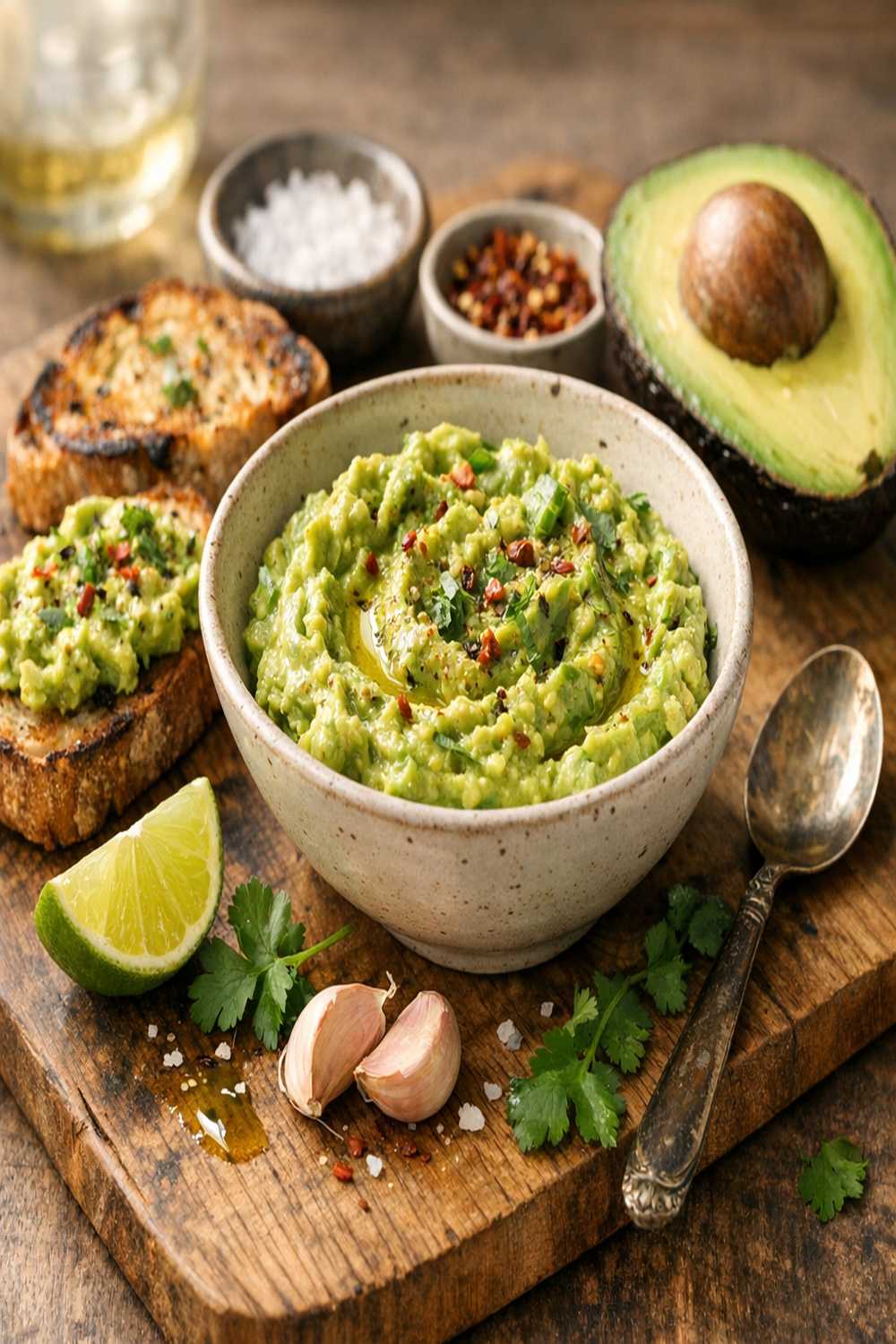

Ingredients
Method
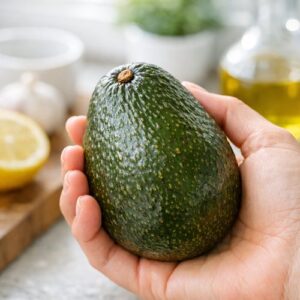
Step 1: Select and Prepare Your Avocado
- Begin by holding your avocado gently in your palm. It should yield slightly to pressure but feel firm—not soft or mushy. A ripe avocado is crucial; an underripe one will taste grassy and won't blend smoothly, while an overripe one will be watery and oxidize rapidly. Cut the avocado lengthwise around the pit, then twist gently to separate the halves. Tap the pit firmly with a sharp knife blade, twist to remove it, and scoop the flesh into your food processor bowl. Work quickly once the flesh is exposed to minimize oxidation.
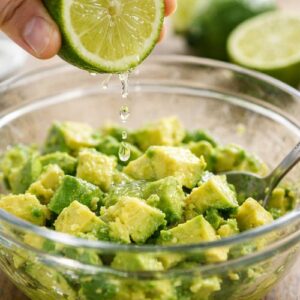
Step 2: Add Your Acidic Component Immediately
- Squeeze your fresh lime juice directly over the avocado flesh. The citric acid immediately begins protecting against browning through a chemical process that prevents enzymatic oxidation. This step is non-negotiable and must happen right away. If you're using bottled lime juice, measure exactly one teaspoon—too much creates bitterness, too little won't provide adequate protection or flavor balance.
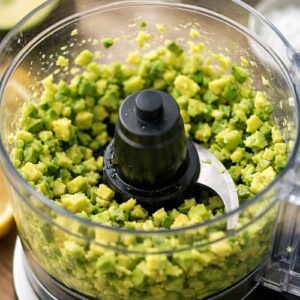
Step 3: Pulse to Break Down the Avocado
- Pulse your food processor 4-5 times, holding each pulse for about one second. You're looking to break the large avocado chunks into quarter-inch pieces. Don't skip this step by diving straight into pureeing—the pulsing action helps incorporate air and creates a naturally light, pleasant texture rather than a dense, pasty spread. Listen to the sound change from a chunky disruption to a smoother, steadier tone.
Step 4: Add Dairy and Seasonings
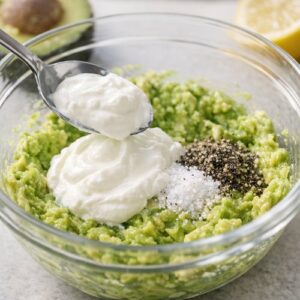
- Spoon your Greek yogurt or sour cream directly onto the pulsed avocado. Add your salt and black pepper. The dairy acts as a stabilizer and prevents the spread from becoming too dense. Greek yogurt adds tanginess and extra protein, while sour cream contributes a richer mouth-feel. Start with the full amount, knowing you can always add more yogurt later if you prefer a thinner, dipping consistency.
Step 5: Puree Until Creamy
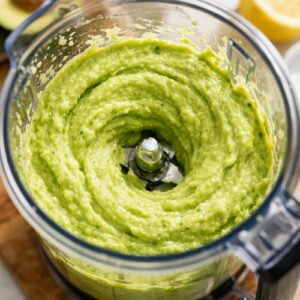
- Process on high speed for 20-30 seconds total, pulsing every few seconds rather than running continuously. You want a texture where the avocado is completely smooth and creamy, but you can still see gentle ripples when you run a spoon through it. It shouldn't look like baby food or be completely uniform. If you see small flecks of avocado texture remaining, that's perfect. Overprocessing creates heat from friction, which can develop bitter, oxidized flavors.
Step 6: Taste and Adjust
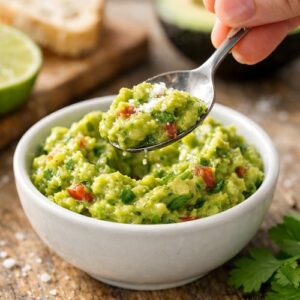
- Transfer your spread to a small bowl or serving spoon and taste. Add a pinch more salt if needed—remember that salt should enhance, not dominate. If you want a thinner consistency for dipping or spreading more easily, pulse in an additional teaspoon of yogurt at a time. The spread will naturally thicken as it sits and cools slightly, so account for that. Serve immediately, or transfer to an airtight container if storing.
Notes
- Choose firm-ripe avocados from the produce section, not the bagged pre-cut ones – Pre-cut avocados oxidize faster and often contain preservatives. Handle whole avocados yourself for superior control and freshness.
- Lime juice is non-negotiable for flavor and preservation – The citric acid does two jobs simultaneously: it prevents browning through chemical protection and adds brightness that makes the spread more interesting. Bottled works, but fresh is worth the squeeze.
- Use full-fat dairy for the best results – Non-fat or low-fat yogurt creates a watery consistency that separates over time. Full-fat provides the creamy texture and stability you're aiming for. Greek yogurt adds beneficial protein and tanginess, while sour cream contributes richness.
- Don't skip the pulsing stage – A food processor's continuous setting can overheat and oxidize your avocado rapidly. Pulse in short bursts to maintain freshness and control texture.
- Taste as you season – The salt should enhance avocado flavor, not announce itself. Add gradually and taste between additions.
- Serve immediately or chill slightly before serving – The spread is most flavorful at room temperature or after just 15 minutes of chilling. Extended refrigeration mutes the delicate avocado flavor.