
Ingredients
Method
Step 1: Heat Your Oil and Build Your Flavor Base
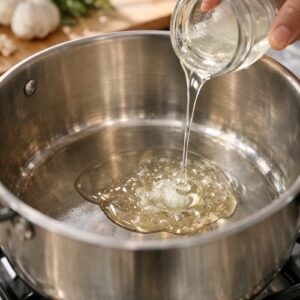
- Pour 3 tablespoons of virgin coconut oil into a deep, heavy-bottomed pot and place it over medium-high heat. Let it warm for about 1 minute—you want it shimmering but not smoking. Never let coconut oil smoke; this creates bitter compounds and damages the nutritional profile. Once ready, add your diced red onion immediately. The onion will sizzle slightly, which is exactly what you want. This is the foundation moment. You're not rushing. Let the onions cook undisturbed for about 2-3 minutes, then stir. This creates caramelization on the cut surfaces, which develops natural sweetness and depth. After stirring, cook for another minute or two before moving to the next step.
Step 2: Add Tomatoes and Create the First Sauce Layer
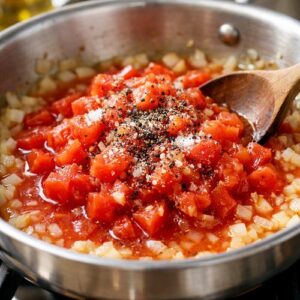
- Add your 14 ounces of diced tomatoes (juice and all) directly to the softened onions. Grind a generous pinch of sea salt and black pepper over the mixture. Salt is crucial here—it draws out the tomato juices and begins the osmotic process that will create your sauce base. Stir everything together thoroughly. Lower your heat to medium and let this simmer without a cover for exactly 10 minutes. During this time, resist the urge to stir constantly. Check it once or twice, give it a gentle stir, then let it be. The tomatoes will break down naturally, their juices will concentrate, and the onions will become translucent and sweet. You'll notice the mixture becoming darker and more paste-like as water evaporates—this is intentional. By minute 10, you should have a thick, flavor-concentrated base.
Step 3: Introduce the Chickpeas and Spice Blend
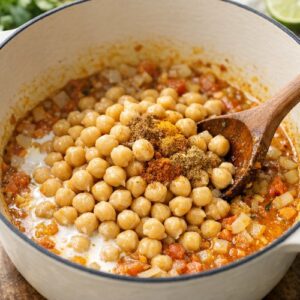
- Add your drained and rinsed chickpeas to the pot. Make sure they're truly rinsed under cold water—this removes excess sodium that can make the final dish taste off. Now add your minced garlic, garam masala, curry powder, and cumin. Stir immediately and continuously for about 1 full minute. This keeps the spices from burning and helps them distribute evenly through the mixture. What you're doing here is called "blooming" the spices. The heat and moisture activate the essential oils in these spices, releasing their aromatic compounds. This is why you'll suddenly smell that intoxicating curry aroma. Don't skip this step or rush it—your nose is your quality control meter.
Step 4: Incorporate the Coconut Milk and Optional Thickener
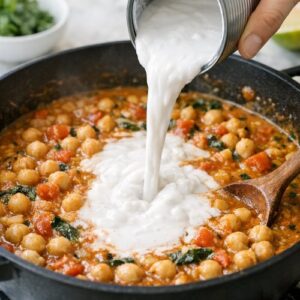
- Pour in your 13.5 ounces of canned coconut milk. Before you open the can, shake it well for 10-15 seconds—this redistributes the fat throughout the liquid. If you skip this, you'll end up with a thin curry and wasted richness. Stir everything together until the coconut milk is fully integrated and no streaks remain. If you're using the coconut flour (which I recommend), dissolve it first in 2 tablespoons of cold water to create a slurry. Add this to the pot now and stir. The coconut flour helps achieve the perfect creamy consistency without affecting flavor—it's basically refined coconut solids that thicken naturally. If you skip it, your curry will be slightly thinner, which is fine, but the mouthfeel won't be quite as luxurious.
Step 5: Simmer and Marry the Flavors
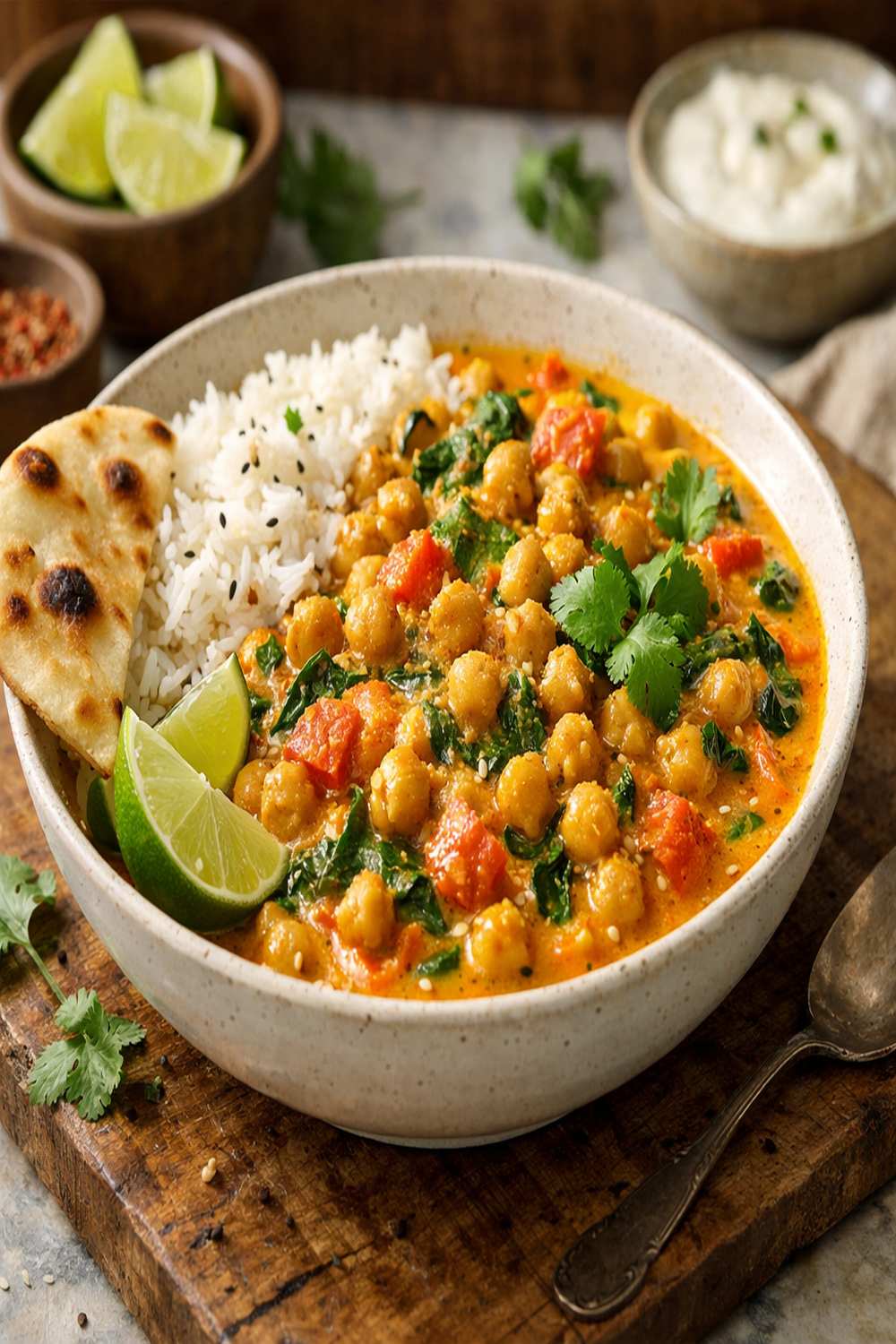
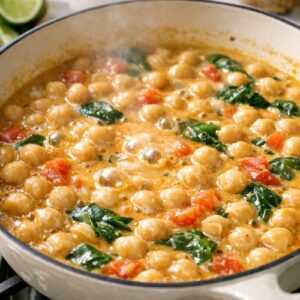
- Bring the entire mixture to a gentle boil, then immediately reduce the heat to medium-low. You want a steady simmer where occasional bubbles break the surface, not a rolling boil. Do not let coconut milk boil vigorously—this can cause it to break or separate. Simmer for 10-12 minutes without covering the pot. During this time, everything is marrying together. The chickpeas are absorbing the flavors. The spices are softening and integrating into the sauce rather than tasting sharp or separate. The coconut milk is getting thicker and creamier as it simmers. Stir occasionally—maybe every 3-4 minutes—but don't obsess over it. This is when you can prepare your rice or naan if serving alongside.
Step 6: Taste, Adjust, and Finish With Lime
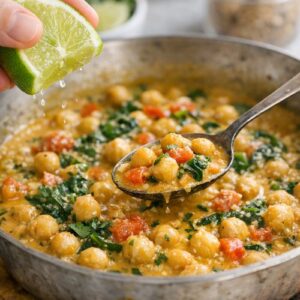
- After 12 minutes, taste your curry. Always taste before adding more seasoning. Ask yourself: Is it salty enough? Does it need more pepper? Is the spice level right for you? Add tiny pinches of salt or pepper if needed, stir, and taste again. Some people like more heat—if that's you, add a pinch more curry powder or garam masala now. Remove from heat. This is critical: don't skip the lime. Cut your lime in half and squeeze the juice directly into the pot, stirring to combine. That acid brightens everything—the spices suddenly sing, the coconut richness becomes balanced, and the whole dish comes alive. This is why lime isn't optional; it's the final seasoning that makes this curry taste like it came from a restaurant. Let it cool for about 5 minutes before serving. This resting period allows flavors to settle and the temperature to become more enjoyable.