
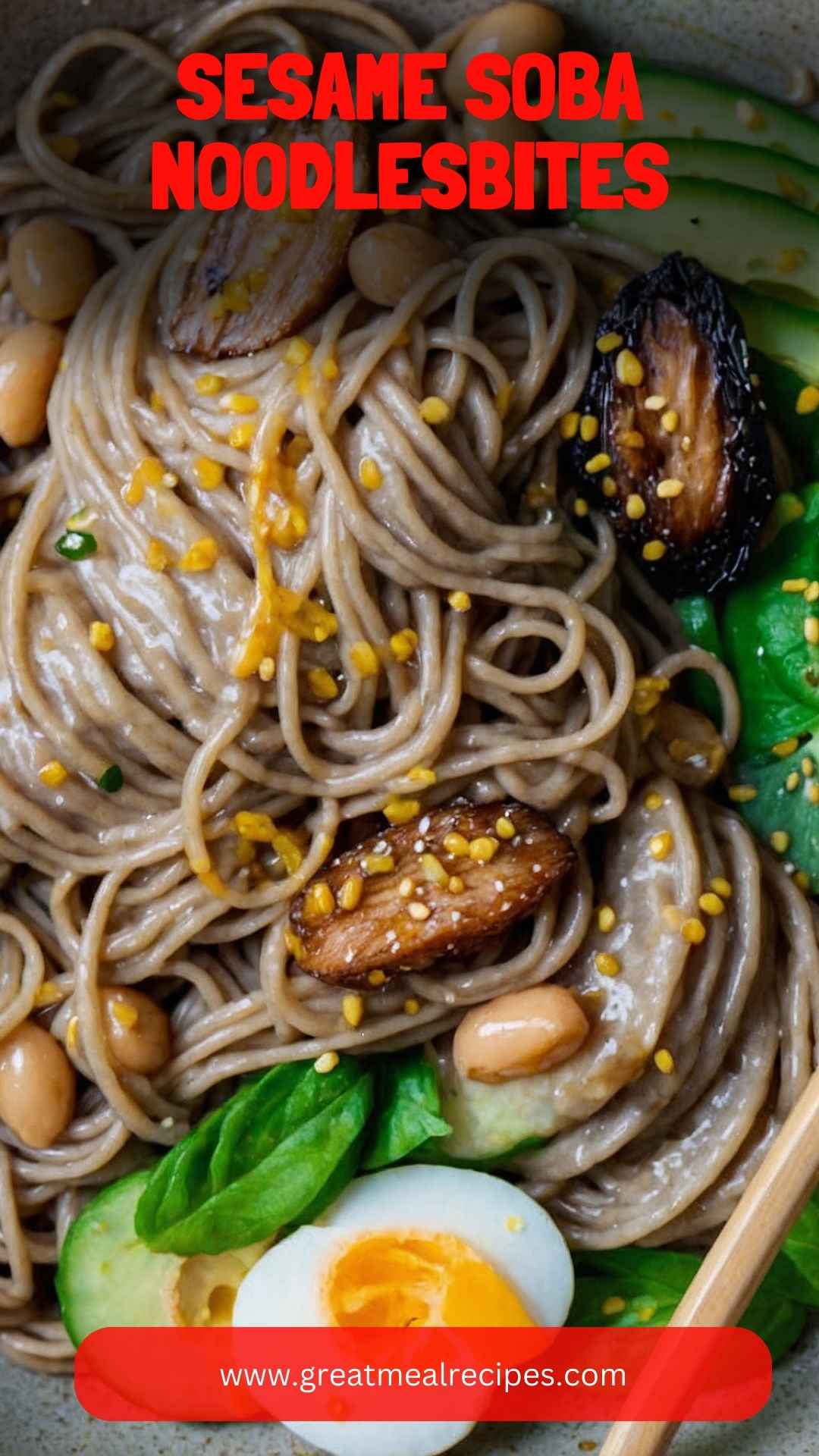
When it comes to sesame soba noodles, the right accompaniments can elevate your dish to new culinary heights. Imagine the vibrant crunch of blanched sugar snap peas paired with the smooth and creamy texture of sliced avocado.
Maybe a sprinkle of toasted pumpkin seeds adds an enticing crunch that contrasts beautifully with the noodles.
Don’t forget the bold flavors of proteins, too! Slices of grilled chicken breast or tofu can personalize your dish, making it even more nutritious and filling.
If you want a little more kick, consider adding a side of pickled vegetables. They’ll bring out the nuttiness of the sesame dressing. Trust me, your taste buds will thank you!
Why This Recipe Works
Creating flavors that resonate is an art form, and this recipe for sesame soba noodles nails it. Here’s why:
1. Nutritionally Balanced:
The ingredients not only taste great but also provide a wholesome balance of nutrients. The buckwheat noodles are high in fiber and protein. They serve as a solid base, while the vegetables add vitamins and minerals.
2. Versatile Ingredients:
You can customize these noodles based on what you have at home. The vegetables and proteins can easily be swapped for whatever is in your fridge, giving you ultimate flexibility.
3. Quick to Prepare:
With only a handful of steps in the cooking process, you will have a delicious meal on your table in no time. Ideal for those hectic weeknights when time is of the essence.
4. Flavor Explosion:
The combination of sesame, garlic, and rice vinegar creates a dressing that sings with umami flavors. It lends itself beautifully to the nuttiness of the buckwheat, making each bite satisfying.
How Does It Taste?
When you first bite into these sesame soba noodles, you’re greeted with a delightful contrast. The nutty flavor of the sesame dressing harmonizes with the earthy taste of the buckwheat noodles.
The slight crunch of vegetables like sugar snap peas and watermelon radish adds an extra layer of dimension to each mouthful.
A squeeze of fresh lemon juice can brighten the entire experience. It’s refreshing yet hearty—an ideal representation of what a well-balanced dish should taste like.
What Sets This Recipe Apart
There are countless variations when it comes to soba noodles, but this sesame version stands out. While some recipes may lean heavily on soy sauce or have overly complex dressings, this one is straightforward.
The ingredients work in harmony without overwhelming your palate. Moreover, the inclusion of fresh mint leaves introduces a refreshing twist that many versions simply overlook.
The Ingredients
Here’s what you’ll need to recreate this delicious dish:
Sesame Dressing
- 1 teaspoon freshly grated ginger
- ½ teaspoon dark sesame oil
- ½ teaspoon maple syrup or agave nectar
- 1 tablespoon tahini
- 1 garlic clove, finely grated
- ¼ cup rice wine vinegar
- 2 tablespoons tamari sauce
For the Soba Noodles
- 6 ounces buckwheat soba noodles
- Lemon wedges for a fresh squeeze
- 2 ripe avocados, thinly sliced
- ¼ cup shelled edamame
- 1 watermelon radish, paper-thin slices
- 2 cups blanched sugar snap peas
- ¼ cup fresh mint leaves, loosely packed
- Sesame seeds for garnish
- 1 tablespoon toasted pumpkin seeds
Instructions
Let’s break down the steps to make these delicious sesame soba noodles.
Step 1: Prepare the Dressing
Start by getting a mixing bowl. Combine the freshly grated ginger, dark sesame oil, maple syrup, tahini, grated garlic, rice wine vinegar, and tamari sauce. Whisk them together until smooth.
Step 2: Cook the Soba Noodles
In a pot, bring water to a boil. Add the buckwheat soba noodles, cooking according to the package directions, usually about 4-6 minutes.
Stir occasionally to prevent sticking. Once cooked, drain and rinse under cold water to halt the cooking process. This step ensures the noodles stay firm.
Step 3: Assemble the Bowls
Take a large bowl and toss the cooled noodles with the sesame dressing. Ensure each noodle is well coated.
Step 4: Add Fresh Ingredients
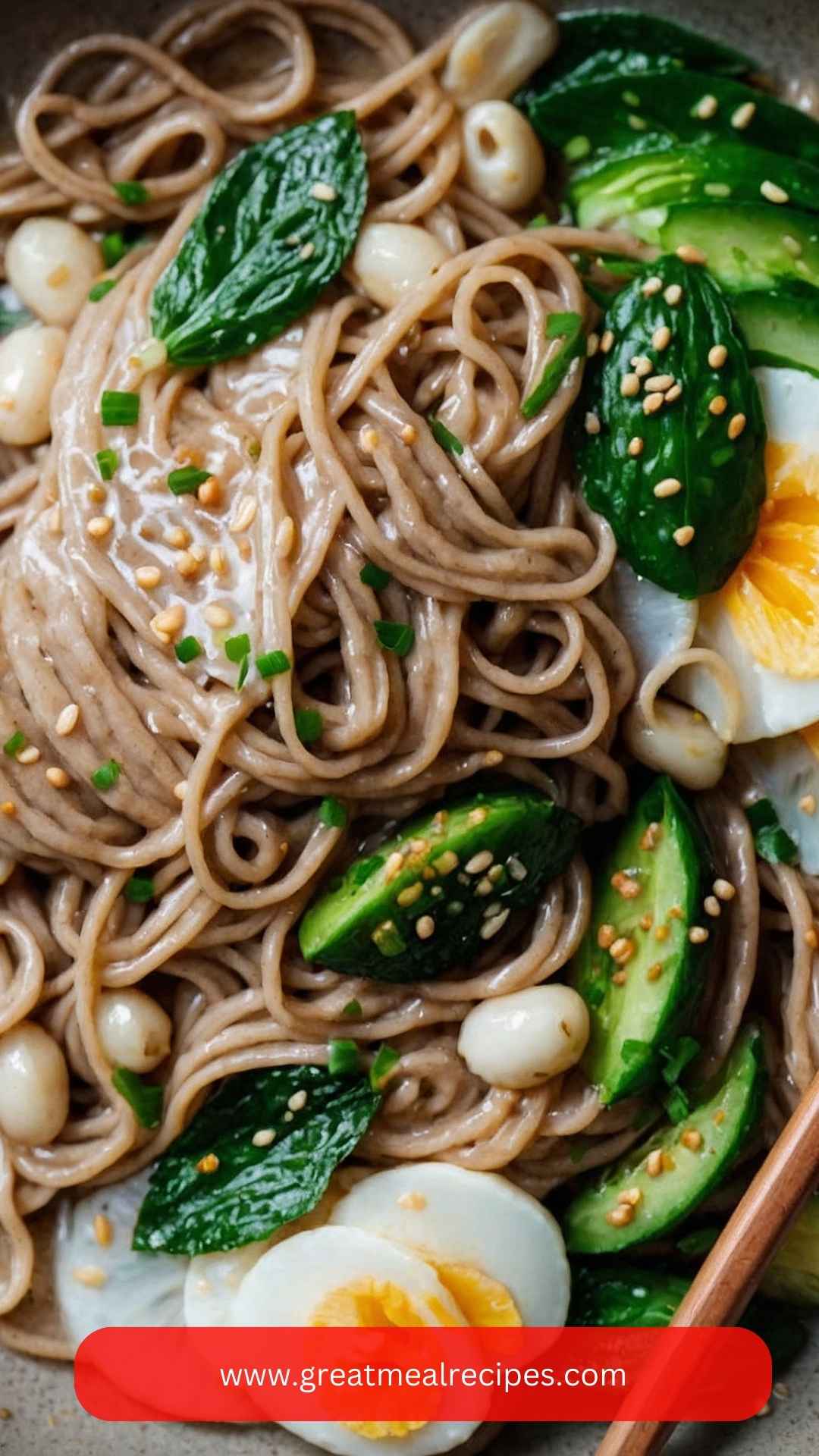
Now, gently fold in the avocado slices, shelled edamame, watermelon radish, sugar snap peas, and mint leaves. The colors will come together beautifully!
Step 5: Serve
Plate your sesame soba noodles. Squeeze some fresh lemon juice on top, sprinkle with sesame seeds and toasted pumpkin seeds for garnish. Voila! Your dish is ready to impress.
Notes
To ensure the best outcome with your sesame soba noodles, keep these tips in mind:
- Fresh Ingredients Are Key: Always use fresh vegetables for maximum flavor.
- Adjust the Dressing: Feel free to experiment with more garlic or ginger if you like a stronger taste.
- Cool the Noodles Properly: Rinsing the noodles in cold water maintains their texture.
- Add Some Heat: If you like a spicy kick, a dash of sriracha can amp up the flavor.
- Meal Prep Friendly: Make the noodles and dressing in advance. Just toss in the veggies before serving!
How Do You Store Sesame Soba Noodles?
Store any leftovers in an airtight container in the fridge. They’ll last for up to three days. Before serving, you may need to toss them with a little extra dressing, as the noodles tend to absorb it over time.
Sides for Sesame Soba Noodles
Here are some side options that pair excellently with sesame soba noodles:
1. Grilled Chicken or Tofu:
Juicy grilled pieces add protein, enhancing the dish’s heartiness. The smoky flavor complements the sesame dressing nicely.
2. Cucumber Salad:
Crispy cucumbers tossed in rice wine vinegar can provide a refreshing palate cleanser alongside the flavors of the noodles.
3. Miso Soup:
This classic Japanese soup emphasizes umami flavors, making the perfect broth to enjoy alongside soba.
What Alternatives Can You Use for the Ingredients?
Sometimes you run out of a specific ingredient, or certain ones don’t suit your tastes. Here’s what you can substitute:
1. Soy Sauce for Tamari:
If you don’t have tamari, soy sauce serves as a solid alternative. It might not be gluten-free, though, so keep that in mind.
2. Almond Butter for Tahini:
In a pinch, you can swap tahini with almond butter for a different nutty flavor.
3. Brown Sugar for Maple Syrup:
If you don’t have maple syrup handy, a bit of brown sugar can lend sweetness to the dressing.
4. Any Fresh Herbs:
Don’t have mint? Try cilantro or basil for a different herby kick in your dish.
Conclusion
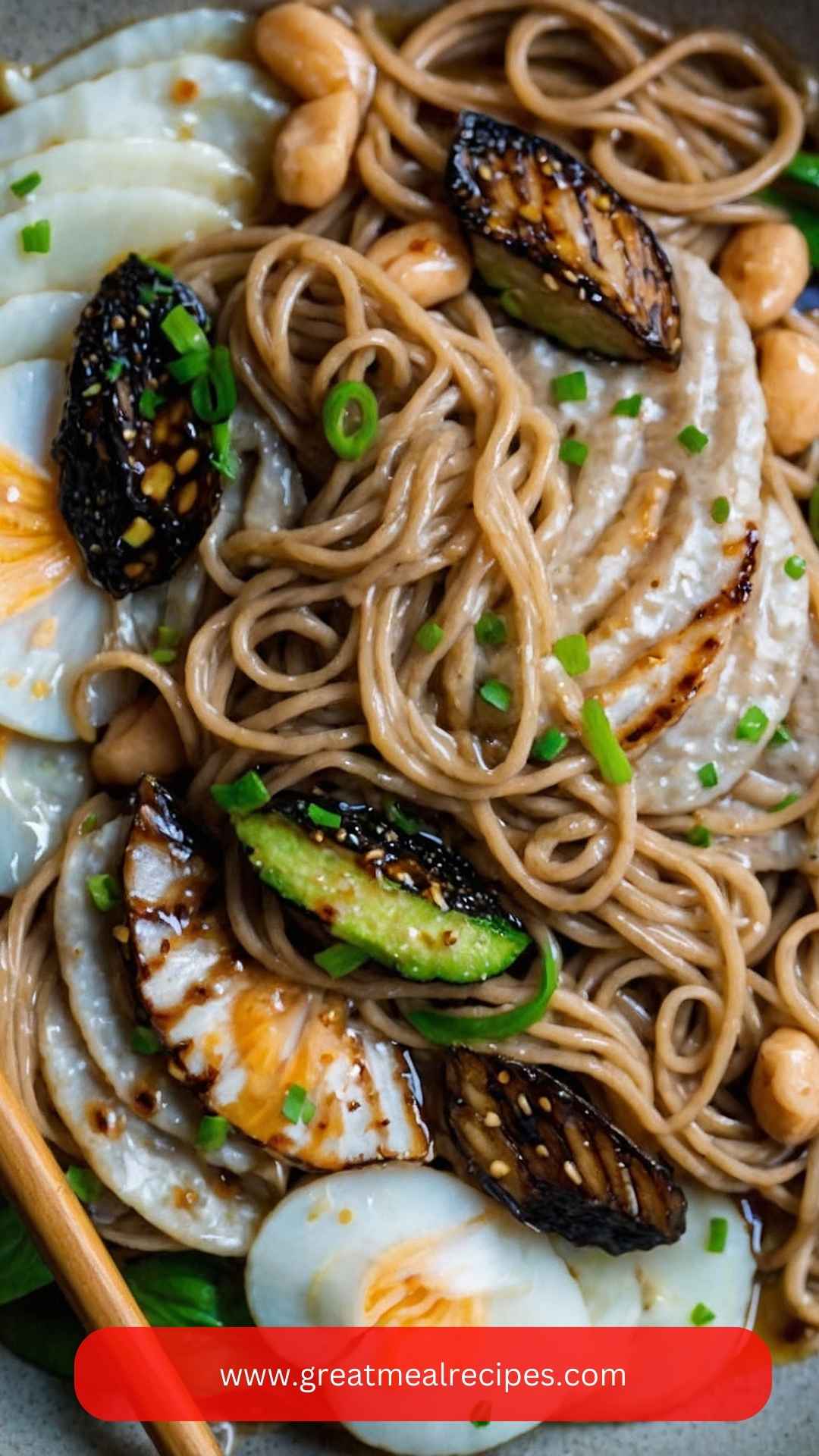
Sesame soba noodles are more than just a meal; they are an experience that marries flavors, textures, and vibrant colors on a plate.
Each ingredient plays a role, from the nutty sesame dressing to the fresh vegetables. This recipe is your ticket to a quick yet fulfilling dish that pleases the palate and nourishes the body.
Whether you’re entertaining guests or enjoying a quiet night in, serve up a big bowl of this delicious creation.
With its numerous health benefits and flexibility, it’s a dish you’ll find yourself craving again and again. So roll up your sleeves, gather your ingredients, and get cooking! You won’t be disappointed.
You’ll also like the following recipes!


Sesame Soba Noodles – Great Meal Recipes
Description
Imagine a dish that brings a burst of flavor, nutrition, and versatility to your table. Enter sesame soba noodles. This delightful dish combines the nutty richness of sesame with the hearty satisfaction of buckwheat noodles.
I first stumbled upon this recipe during my quest for quick, nutritious meals that also taste fantastic. Trust me, there’s nothing quite like it! Every bite is a marriage of textures and flavors that bonds together beautifully.
Made from buckwheat, soba noodles are naturally gluten-free and high in protein. The secret lies not just in the noodles, but also in the sesame dressing—the real star of the show.
With elements like ginger, tahini, and garlic, it’s a dressing that promises depth and complexity. If you’re looking to impress at your next gathering or simply want a go-to meal for your busy weeknights, this recipe has got you covered.
Ingredients
Sesame Dressing
For the Soba Noodles
Instructions
Step 1: Prepare the Dressing
-
Start by getting a mixing bowl. Combine the freshly grated ginger, dark sesame oil, maple syrup, tahini, grated garlic, rice wine vinegar, and tamari sauce. Whisk them together until smooth.
Step 2: Cook the Soba Noodles
-
In a pot, bring water to a boil. Add the buckwheat soba noodles, cooking according to the package directions, usually about 4-6 minutes.
Stir occasionally to prevent sticking. Once cooked, drain and rinse under cold water to halt the cooking process. This step ensures the noodles stay firm.
Step 3: Assemble the Bowls
-
Take a large bowl and toss the cooled noodles with the sesame dressing. Ensure each noodle is well coated.
Step 4: Add Fresh Ingredients
-
Now, gently fold in the avocado slices, shelled edamame, watermelon radish, sugar snap peas, and mint leaves. The colors will come together beautifully!
Step 5: Serve
-
Plate your sesame soba noodles. Squeeze some fresh lemon juice on top, sprinkle with sesame seeds and toasted pumpkin seeds for garnish. Voila! Your dish is ready to impress.
Nutrition Facts
Servings 3
- Amount Per Serving
- Calories 491kcal
- % Daily Value *
- Total Fat 25.5g40%
- Saturated Fat 3.7g19%
- Sodium 588mg25%
- Total Carbohydrate 60g20%
- Dietary Fiber 11g44%
- Sugars 3g
- Protein 14g29%
* Percent Daily Values are based on a 2,000 calorie diet. Your daily value may be higher or lower depending on your calorie needs.
Note
- Fresh Ingredients Are Key: Always use fresh vegetables for maximum flavor.
- Adjust the Dressing: Feel free to experiment with more garlic or ginger if you like a stronger taste.
- Cool the Noodles Properly: Rinsing the noodles in cold water maintains their texture.
- Add Some Heat: If you like a spicy kick, a dash of sriracha can amp up the flavor.
- Meal Prep Friendly: Make the noodles and dressing in advance. Just toss in the veggies before serving!